
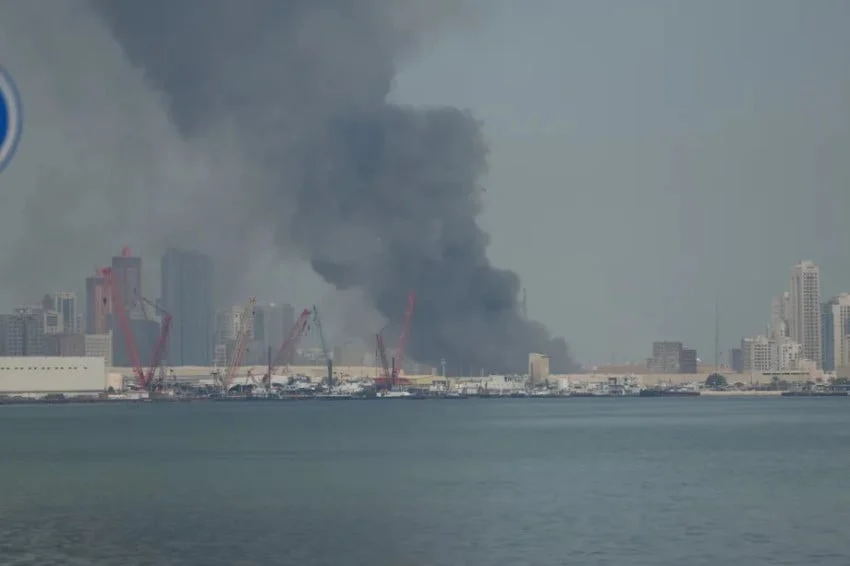
The ongoing military confrontation in the Middle East has entered a critical and financially devastating phase, with recent assessments revealing staggering infrastructural losses. According to a landmark report released by the Pentagon’s Office of the Inspector General, retaliatory missile and drone strikes orchestrated by Iran have inflicted an estimated USD184 million—approximately IDR33 trillion—in damages on United States diplomatic and military installations across four key Gulf nations. This comprehensive audit represents the first official accounting of structural losses published by the inspector general’s office since the outbreak of full-scale hostilities between the United States, Israel, and Iran in late February.
The comprehensive data highlights a wide geographic scope of destruction, affecting vital American diplomatic missions, logistical hubs, and support facilities situated in Iraq, Kuwait, Saudi Arabia, and the United Arab Emirates. As regional tensions continue to boil over, the fallout from these attacks extends far beyond immediate tactical engagements, posing significant diplomatic, financial, and security challenges for Washington’s footprint in the Middle East.
Geographic Breakdown of the Damage
The Pentagon inspector general’s report details a stark disparity in the severity of the damage sustained across the targeted nations, largely reflecting the proximity to Iranian territory and the density of the local U.S. presence.
Iraq bore the heaviest burden of the hostilities. Facilities within the country sustained catastrophic structural losses exceeding USD157 million. The sheer scale of the violence directed at American personnel and infrastructure in Iraq is further underscored by the staggering frequency of the assaults: U.S. diplomatic and military missions in the country were subjected to more than 600 distinct Iranian-backed attacks during the reporting period. These included coordinated barrages of precision-guided munitions, ballistic missiles, and loitering munitions that overwhelmed local air defense perimeters on multiple occasions.
Kuwait emerged as the second-most impacted nation in terms of financial damage. Installations within its borders suffered upward of USD14 million in infrastructure losses. While Kuwaiti authorities maintained a posture of defensive vigilance, the sheer volume of incoming regional projectiles resulted in significant collateral and direct damage to strategic logistics nodes used by American forces.
Saudi Arabia experienced approximately USD11.5 million in damages to facilities linked to U.S. diplomatic operations and bilateral defense infrastructure. Although the Kingdom’s advanced air defense systems successfully intercepted a significant portion of the incoming threat vectors, falling debris and close-proximity detonations still managed to inflict critical structural and technological damage on American compounds.
Meanwhile, the United Arab Emirates recorded the lowest financial impact among the four nations, with damages to U.S. diplomatic facilities estimated at roughly USD125,000. Despite the relatively lower monetary figure, the breach of security perimeters in a major commercial and diplomatic hub like the UAE highlighted the pervasive nature of the regional threat matrix.
Chronology of the Conflict and Escalation
The roots of the current crisis trace back to a volatile escalation in late February, characterized by preemptive and retaliatory military actions between Washington, Jerusalem, and Teheran. On February 28, 2026, the situation deteriorated drastically when Iran launched a massive wave of ballistic missiles and suicide drones targeting key strategic nodes. Among the primary targets was the headquarters of the U.S. Navy’s 5th Fleet stationed in Manama, Bahrain, alongside various auxiliary facilities spanning the wider Persian Gulf theater.
This sweeping barrage was explicitly framed by Tehran as direct retaliation for joint military strikes conducted by the United States and Israel against strategic military and nuclear sites within Iranian borders earlier that month. The late-February strikes shattered a fragile regional deterrence posture that had persisted for years, immediately transforming diplomatic missions and regional outposts into frontline combat zones.
In the weeks following the initial exchange, the frequency of asymmetrical attacks intensified. Non-state actors and proxy networks aligned with Iran leveraged the fog of war to launch persistent micro-drone and rocket attacks against American logistical corridors, particularly testing the resilience of U.S. command-and-control centers embedded within host-nation infrastructure in Iraq and the broader Gulf Cooperation Council (GCC) states.
Official Responses and Regional Reactions
The publication of the inspector general’s report has triggered intensive internal reviews within the Department of Defense and the Department of State. While high-ranking Pentagon officials have declined to discuss specific classified remediation measures, anonymous defense insiders have acknowledged that the security architecture protecting American diplomatic personnel requires an urgent and costly overhaul.
In Washington, lawmakers from both sides of the aisle have expressed grave concern over the vulnerability of overseas diplomatic outposts. Congressional committees have begun scheduling closed-door briefings to question military leadership regarding the adequacy of active-defense systems—such as Patriot and C-RAM (Counter-Rocket, Artillery, and Mortar) batteries—deployed to protect these billion-dollar diplomatic and military assets. Questions are increasingly being raised about whether host nations are providing sufficient security perimeters and whether the U.S. footprint in the Gulf region is sustainable under the current threat environment.
Meanwhile, governments in the host nations—particularly Iraq, Kuwait, Saudi Arabia, and the United Arab Emirates—have walked a delicate diplomatic tightrope. Publicly, regional capitals have reiterated their calls for an immediate cessation of hostilities, emphasizing that their sovereign territories should not be utilized as battlegrounds for foreign powers. Privately, intelligence and defense ministries in these countries have increased intelligence-sharing with Washington to preempt further strikes that threaten both American assets and domestic stability.
Broader Implications for U.S. Foreign Policy and Regional Security
The multi-million-dollar damage bill detailed in the Pentagon report serves as a stark metric of a shifting geopolitical paradigm in the Middle East. For decades, the United States maintained a posture of over-the-horizon deterrence anchored by a robust physical presence in Gulf nations. However, the sheer volume and cost of repairing facilities damaged by Iranian projectiles illustrate the growing vulnerability of fixed-base infrastructure in an era of proliferating precision strike capabilities.
Economically, the physical destruction translates into massive supplementary appropriations bills that the U.S. Congress will eventually need to pass to fund reconstruction, site hardening, and the replenishment of expended missile defense interceptors. Every Patriot missile utilized to intercept an incoming Iranian drone costs millions of dollars, creating an unsustainable cost-exchange ratio that military strategists have warned about for years.
Furthermore, the persistent threat to diplomatic personnel risks triggering a protracted drawdown or relocation of non-essential diplomatic staff from high-risk posts like Baghdad. A diminished American diplomatic presence could severely hamper Washington’s ability to gather on-the-ground intelligence, conduct regional diplomacy, and maintain influence in critical capitals.
As the conflict shows few signs of an imminent diplomatic breakthrough, the findings from the inspector general’s report offer a sobering preview of the long-term costs associated with modern regional warfare. The physical rebuilding of damaged facades in Baghdad, Kuwait City, Riyadh, and Abu Dhabi will be a protracted endeavor, but the psychological and strategic costs inflicted on America’s regional posture will likely resonate far beyond the conclusion of current hostilities.
