
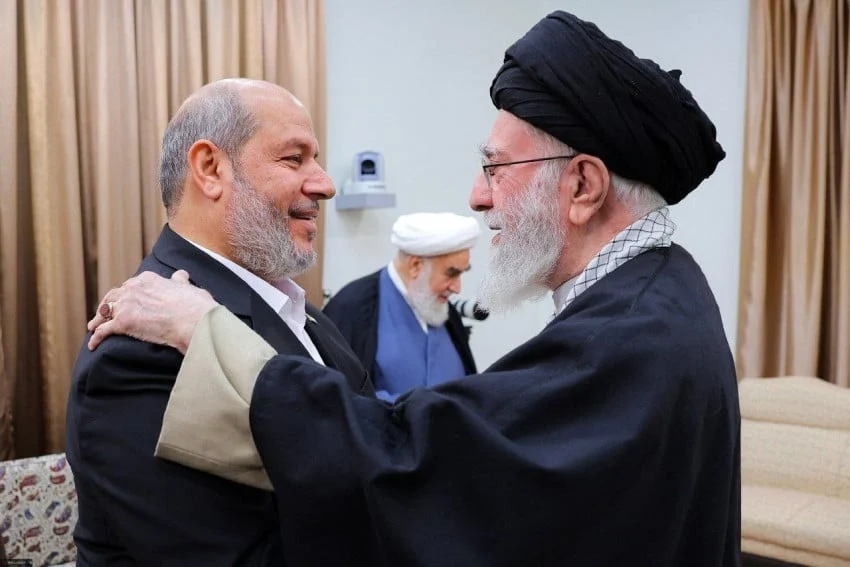
The Palestinian militant group Hamas has officially appointed Khalil al-Hayya as the new head of its political bureau, a move that signals a strategic consolidation of power following a period of unprecedented leadership turnover. Al-Hayya, a long-standing figure within the movement’s upper echelons, steps into the role previously held by Yahya Sinwar, the architect of the October 7 attacks who was killed by Israeli forces in late 2024. This transition comes at a critical juncture for the organization, which finds itself embroiled in a devastating conflict in the Gaza Strip while attempting to maintain its political relevance on the international stage.
Al-Hayya’s ascension was confirmed following a series of internal deliberations and an election process conducted by the group’s Shura Council. He reportedly secured the position over Khaled Meshaal, the former political chief who has long led the movement’s external wing from exile. Analysts view the selection of al-Hayya as a victory for the faction within Hamas that favors maintaining close, unbreakable ties with the Islamic Republic of Iran, earning him the reputation among regional observers as Tehran’s "right-hand man" within the Palestinian movement.
The Profile of Khalil al-Hayya: A Hardline Negotiator
Khalil al-Hayya is not a newcomer to the complexities of Middle Eastern geopolitics. Born in Gaza, he has spent decades climbing the ranks of Hamas, surviving multiple Israeli assassination attempts and witnessing the deaths of several family members in targeted strikes. Before his appointment as the overall political leader, al-Hayya served as the deputy head of the Hamas regional branch in Gaza and acted as the movement’s chief negotiator during indirect ceasefire talks mediated by Egypt and Qatar.
His reputation is one of a "hardliner" who balances ideological rigidity with the pragmatic requirements of high-stakes diplomacy. Unlike some of his predecessors who remained primarily within the borders of the Gaza Strip, al-Hayya has operated extensively from Doha, Qatar, and Istanbul, Turkey. This international presence has allowed him to act as a bridge between the military wing on the ground in Gaza and the political leadership abroad.
According to reports from Arab media outlets and Israeli intelligence assessments, al-Hayya’s ideological alignment is perceived as more radical than that of Khaled Meshaal. While Meshaal has historically navigated a more independent path—occasionally clashing with the Syrian and Iranian regimes—al-Hayya has consistently advocated for a "unity of fronts," a strategy that integrates Hamas into the broader "Axis of Resistance" led by Iran. This alignment is expected to ensure a continued flow of financial and military support from Tehran, even as the group’s infrastructure in Gaza faces systematic destruction.
A Chronology of Leadership Attrition
The appointment of Khalil al-Hayya is the latest chapter in a tumultuous year for the Hamas leadership. The group has seen its command structure decimated by a series of high-profile operations attributed to Israel.
- October 7, 2023: Hamas launches a massive attack on southern Israel, resulting in the deaths of approximately 1,200 people and the taking of over 240 hostages. This triggers a full-scale Israeli military intervention in Gaza.
- January 2024: Saleh al-Arouri, a founding commander of the Izz ad-Din al-Qassam Brigades and a key liaison with Hezbollah, is killed in a drone strike in Beirut, Lebanon.
- July 31, 2024: Ismail Haniyeh, the then-head of the political bureau, is assassinated in Tehran while attending the inauguration of the Iranian president. Hamas and Iran blame Israel for the blast.
- August 2024: Yahya Sinwar, the leader of Hamas within the Gaza Strip, is named as Haniyeh’s successor, effectively merging the political and military leadership of the group.
- October 2024: Yahya Sinwar is killed during a chance encounter with Israeli troops in Rafah, southern Gaza. His death leaves a massive power vacuum.
- Early 2025: After a period of interim management, the Shura Council formally elects Khalil al-Hayya to lead the political bureau.
This rapid succession highlights the precarious nature of the Hamas leadership. Al-Hayya now takes over a movement that is arguably at its weakest military point since its founding in 1987, yet one that remains a central player in the regional security architecture.
The Iranian Influence and Regional Dynamics
The selection of al-Hayya is a clear indicator of Iran’s enduring influence over Hamas. Throughout the ongoing conflict, Tehran has provided diplomatic cover and logistical advice to the group. By elevating a leader known for his loyalty to the Iranian Revolutionary Guard Corps (IRGC) framework, Hamas is signaling that it will not pivot toward the more moderate stances occasionally suggested by some of its regional hosts.
For Iran, al-Hayya represents a reliable partner who can ensure that Hamas remains a functional component of the regional proxy network. This relationship is mutually beneficial; Hamas requires the sophisticated weaponry and funding that only Tehran provides, while Iran requires a Palestinian partner to maintain its leverage against Israel and its influence in the "Palestinian cause."
However, this "hardline" lean presents challenges for regional mediators. Qatar and Egypt, who have been the primary conduits for ceasefire negotiations and hostage releases, now find themselves dealing with a leader who may be less inclined to make concessions that could be perceived as a betrayal of the "resistance" ideology.
Internal Rivalries: Al-Hayya vs. Khaled Meshaal
The internal election was reportedly a contentious affair. Khaled Meshaal, who led Hamas for over a decade before stepping down in 2017, was considered a strong contender. Meshaal’s supporters argued that his vast experience and established relationships with Arab heads of state made him the ideal candidate to navigate the diplomatic minefield of a post-war Gaza.
However, Meshaal’s past friction with the Syrian government during the Syrian Civil War and his perceived distance from the military commanders on the ground in Gaza worked against him. The Shura Council, influenced by the remaining commanders of the al-Qassam Brigades, ultimately favored al-Hayya. The decision suggests that the "Gaza wing" of the party, even while under intense military pressure, still dictates the direction of the political bureau. Al-Hayya’s ability to represent the interests of the fighters in the tunnels while operating in the luxury hotels of Doha makes him a unique, albeit controversial, figure.
Implications for the Gaza Conflict and Ceasefire Hopes
The most immediate question following al-Hayya’s appointment is how it will affect the stalled ceasefire negotiations. As the previous chief negotiator, al-Hayya is intimately familiar with the terms on the table. However, his new role as the ultimate decision-maker may harden his stance.
Israeli officials have expressed skepticism regarding the prospects of a breakthrough. A senior Israeli official, speaking on the condition of anonymity, noted that al-Hayya has been "the face of Hamas’s ‘no’ for months." The Israeli government remains committed to its goal of "total victory," which includes the dismantling of Hamas’s governing and military capabilities. With al-Hayya at the helm, the likelihood of a negotiated settlement that includes the total disarmament of Hamas appears increasingly remote.
Conversely, some analysts suggest that al-Hayya’s elevation could streamline the decision-making process. Previously, negotiators had to send proposals through a convoluted chain of command that ended with Yahya Sinwar in the tunnels of Gaza, often resulting in weeks of delay. With al-Hayya based outside of Gaza, communication with international mediators may become more efficient, even if the underlying positions remain uncompromising.
Data and the Humanitarian Context
As al-Hayya takes office, he inherits a humanitarian catastrophe. The Gaza Ministry of Health reports that the death toll has exceeded 40,000, with a significant portion of the territory’s infrastructure destroyed. The United Nations estimates that over 80% of the population is displaced, and the risk of famine remains a constant threat.
From a military perspective, the Israeli Defense Forces (IDF) claim to have neutralized more than half of Hamas’s 24 battalions. However, the group has shown a persistent ability to regroup in areas previously cleared by the IDF, employing guerrilla tactics and utilizing a vast, albeit damaged, tunnel network. Al-Hayya’s primary challenge will be to manage the transition from a governing body to an insurgent force while attempting to secure the release of Palestinian prisoners in exchange for the remaining Israeli hostages.
International Reactions and Global Standing
The international community remains divided on the implications of al-Hayya’s leadership. The United States, the European Union, and several other nations continue to designate Hamas as a terrorist organization, and the appointment of a known hardliner is unlikely to change this status.
Western diplomats have expressed concern that al-Hayya’s close ties to Iran will further complicate efforts to stabilize the region. There is also the persistent threat of further assassinations. Israeli Prime Minister Benjamin Netanyahu has repeatedly stated that all Hamas leaders are "marked men," regardless of their location. Al-Hayya’s presence in Doha puts the Qatari government in a delicate position, balancing its role as a neutral mediator with the pressure from Washington and Jerusalem to expel or handover Hamas officials.
Conclusion: A Movement at a Crossroads
The selection of Khalil al-Hayya as the head of the Hamas political bureau marks a definitive choice by the movement to double down on its alliance with Iran and its commitment to armed resistance. By choosing a leader who has survived the front lines of Gaza and the political corridors of the Middle East, Hamas is attempting to project a sense of continuity and resilience in the face of immense loss.
Whether al-Hayya can navigate the movement through its most existential crisis remains to be seen. He faces the daunting task of rebuilding a shattered organization, managing a starving and displaced population, and negotiating with an adversary intent on his destruction. As the "right hand of Iran" takes the reins, the path to peace in the region remains as obscured as ever, with the shadow of further escalation looming over the Mediterranean coast.
