JAKARTA — In what is being described as one of the most significant consumer protection and food safety interventions in recent years, Indonesian authorities have launched a sweeping crackdown on the domestic fortified rice market. The Ministry of Agriculture, operating alongside the National Food Agency (Bapanas), revealed that out of 27 fortified rice brands recently subjected to rigorous laboratory testing, an overwhelming 25 brands failed to meet mandatory national standards regarding nutritional composition, labeling accuracy, and quality compliance.
The nationwide enforcement action underscores growing concerns over food fraud and the exploitation of vulnerable demographics who rely on specialized nutritional products for daily sustenance. As government agencies move swiftly to pull non-compliant items from store shelves, the investigation has exposed systemic issues within the production, distribution, and pricing of fortified rice—triggering profound implications for public health policy, consumer rights, and regulatory oversight across the archipelago.
Genesis of the Investigation and Laboratory Findings
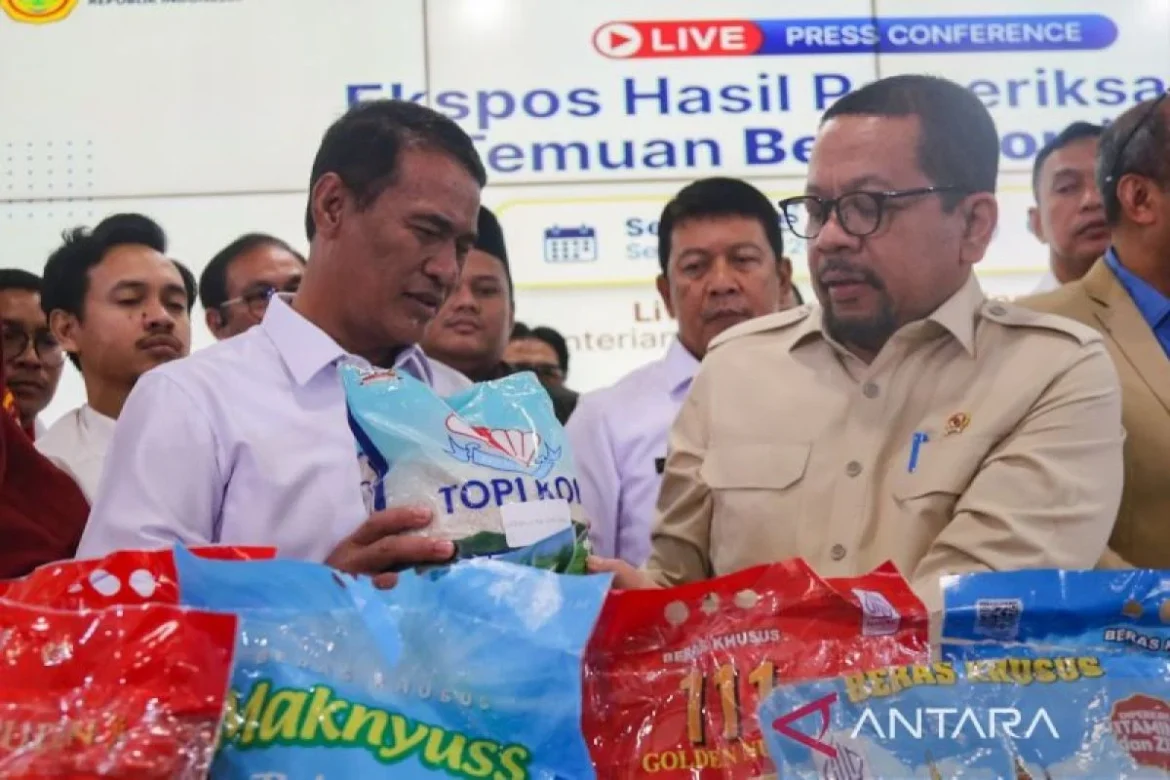
The alarming discrepancy between marketing claims and actual product contents came to light following a comprehensive market surveillance initiative coordinated by federal regulators. On Tuesday, September 15, Minister of Agriculture and concurrent Head of Bapanas, Andi Amran Sulaiman, publicly announced the findings during a high-profile press conference in Jakarta.
To ensure absolute scientific credibility, the government’s evaluation relied on empirical data compiled from four independent, accredited testing facilities: the Bogor Agricultural University (IPB) Laboratory, the Rice Research and Development Center (BRMP), Saraswanti Indo Genetech (SIG), and Eurofins Angler Biochemlab. These laboratories analyzed random commercial samples against strict benchmarks established under Indonesian National Standards (SNI), specifically SNI 9314:2024 for fortified rice kernels and SNI 9372:2025 for finished fortified rice products.
Out of the 27 brands evaluated during this testing phase, only two successfully verified their nutritional claims. The remaining 25 brands were found to possess nutrient concentrations—such as added vitamins and essential minerals—that deviated significantly from the specifications declared on their packaging labels. Regulators noted that these structural deficiencies compromise the fundamental purpose of the product, rendering the nutritional claims misleading to unsuspecting buyers.
Scope of Affected Brands and Product Identification
The disclosure of the 25 implicated brands has sent ripples through the national retail and agricultural sectors. The flagged products encompass a wide variety of commercial names distributed across traditional markets and modern retail chains. Among the publicly identified brands listed in preliminary regulatory disclosures are Idola Fortifikasi, Idola High Quality Whole Grain Rice, Idola Long Grain Rice, Ikan Mas Cupang, AAA Wijaya Kusuma, Cantik Manis, Penari Bangkok, Topi Koki Short Grain, Topi Koki Setra Royale, Topi Koki Long Grain Crystal, HOK-1 Gohan, Maknyuss Pulen Gizi, Anak Raja Fortifikasi, Anak Raja Nusantara, and Top Anak Raja.
Other brands cited in the government overview include PMS Induk Ayam, Sumo, Rasvit, FS Nutri Rice, Pelikan, Rice Rojolele, Super Kepala Beras Premium 111, 111 Golden Number, Putri Koki, and Wellfarm Beras Diabet.
To maintain administrative precision, federal documents also cataloged these entities utilizing standardized enterprise initials—namely WFO, TKS, IMF, NUR, TKL, HOK, BRV, IMR, IHJ, IAK, PBK, GNB, DTR, TKR, WJK, PLK, MKY, IMC, PTK, ARP, ARN, SKM, GNM, TAR, and CMS. Legal counsels and agricultural officials have emphasized that this roster represents a record of products flagged during initial administrative and laboratory audits. It does not constitute a final judicial verdict, as formal investigative and due process procedures remain ongoing.
Understanding Fortified Rice and Target Demographics
To fully grasp the gravity of the regulatory infractions, industry analysts point to the unique function of fortified rice within the broader public health framework. Fortified rice is not marketed as a luxury commodity or a general substitute for standard premium staple rice. Rather, it is a specialized public health intervention product engineered by blending conventional grains with specialized kernels infused with essential micronutrients, including iron, zinc, folic acid, and B-complex vitamins.
The primary target audience for fortified rice comprises nutritionally vulnerable populations. These include low-income households, pregnant women, nursing mothers, young children, and communities experiencing elevated risks of micronutrient deficiencies or stunting. Because these demographics depend heavily on the targeted intake of specific vitamins and minerals to prevent developmental disorders and chronic health issues, deceptive labeling directly endangers public welfare. When a product fails to deliver the promised nutrient profile, it undermines national nutritional security initiatives designed to combat malnutrition and foster healthy human capital development.
Economic Exploitation and Massive Potential Losses
Beyond the biochemical discrepancies discovered in laboratories, the government’s investigation uncovered severe market anomalies concerning retail pricing strategies. While standard regulatory evaluations typically focus on safety and composition, the Bapanas inquiry expanded to scrutinize the economic burden placed on consumers purchasing these specialty goods.
Federal investigators revealed a staggering disparity between the fair market value of fortified rice and the prices charged by certain predatory distributors. Standard baseline figures established by authorities place the fair retail value of such products between Rp13,000 and Rp13,500 per kilogram. However, market surveillance identified instances where unscrupulous vendors inflated prices up to approximately Rp57,000 per kilogram for products exhibiting questionable quality.
Based on cumulative sales volumes, pricing distortions, and nutritional non-compliance, Bapanas calculated an estimated potential consumer loss reaching an astounding Rp89 trillion. While this figure serves as an initial macroeconomic estimation subject to further forensic auditing, it highlights the severe financial exploitation occurring alongside the physical adulteration of staple foods.
Chronology of Enforcement, Product Recalls, and Remedial Actions
The operational response by federal and regional authorities has been swift and systematic. Upon the formal release of laboratory findings in September 2026, Bapanas and the Ministry of Agriculture instituted immediate corrective mandates across the supply chain.
- Production Halt: All 25 implicated brand operators were ordered to immediately suspend the manufacturing and processing of their respective fortified rice lines.
- Issuance of Warnings: Formal administrative warnings and reprimands were dispatched to 11 corporate entities holding the 25 active distribution licenses tied to the flagged products.
- Market Withdrawal: By the first week of September 2026, 12 of the 25 targeted brands had actively initiated voluntary or supervised recalls, pulling existing inventory from commercial channels. The remaining manufacturers remain under strict regulatory compulsion to clear shelves.
- Regional Collaboration: The Regional Food Safety Competent Authority (OKKPD) across various provinces was mobilized to monitor local wet markets, supermarkets, and distribution hubs to ensure non-compliant batches do not evade the recall mandate.
Concurrently, the Ministry of Trade stepped in to reassure the public regarding baseline food availability. Trade authorities confirmed that the large-scale withdrawal of these specific niche brands poses no threat to national food security or general rice supplies, as the core volume of commercial premium and medium rice remains entirely unaffected and abundantly stocked.
Criminal Investigations and Legal Implications
The administrative sanctions imposed by Bapanas represent only the initial tier of governmental accountability. The National Police’s Food Task Force (Satgas Pangan Polri) has formally stepped in to investigate potential criminal culpability among the producers and distributors involved.
Head of Satgas Pangan Polri, Brigadier General Pol. Ade Safri Simanjuntak, confirmed that law enforcement is currently building a rigorous evidentiary case. The investigation relies heavily on multidisciplinary expert testimonies, forensic accounting of pricing structures, and scientific peer review of the laboratory analyses.
Under Indonesian consumer protection laws, commercial fraud, deceptive labeling, and the distribution of substandard nutritional goods intended for vulnerable populations carry severe legal consequences. Officials have reiterated that entities found guilty through formal judicial proceedings will face permanent license revocation, corporate dissolution proceedings, and criminal prosecution for company executives.
Broader Economic and Industrial Implications
The sweeping crackdown is expected to reshape Indonesia’s emerging fortified food sector. For years, advocates of public health programs have championed food fortification as an essential strategy for eliminating hidden hunger. However, the proliferation of substandard products threatens to erode public trust in fortified goods as a whole.
Industry stakeholders and agricultural economists suggest that the scandal will force tighter self-regulation, enhanced traceability protocols, and more stringent third-party auditing within the domestic food processing industry. By establishing clear judicial and regulatory precedents, the government aims to send an unambiguous message: compliance with national safety standards is non-negotiable, and commercial exploitation of public health will be met with uncompromising force. As legal proceedings unfold, federal regulators maintain that consumer protection and nutritional integrity remain paramount to the nation’s sustainable development goals.