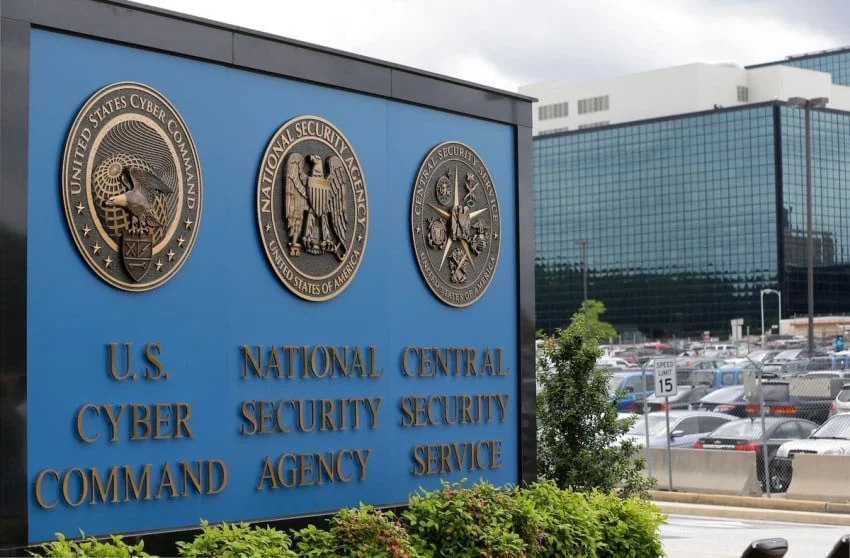
WASHINGTON — In what marks the most significant internal reorganization in at least ten years, the United States National Security Agency (NSA) is fundamentally restructuring its operations to place Artificial Intelligence (AI) and the strategic challenge posed by the People’s Republic of China at the absolute center of its mission. According to reports from the Washington Post citing current and former intelligence officials, the sprawling agency—traditionally known for its dual mandate of signals intelligence (SIGINT) and cybersecurity—is pivoting its massive institutional weight to meet the technological and geopolitical realities of the 21st century.
Under the leadership of NSA Director General Joshua M. Rudd, the agency has set an aggressive timeline to overhaul its bureaucratic architecture. The restructuring plan calls for the establishment of five specialized organizational units within the agency. These newly configured divisions are slated to be officially formed by mid-October, with an ultimate target of reaching full operational capability by early 2027.
The structural pivot underscores a broader, long-term shift within the U.S. intelligence community, moving away from the post-9/11 counterterrorism focus that dominated defense and intelligence policies for two decades, and redirecting resources toward great power competition and advanced technological warfare.
Main Facts of the Reorganization
The sweeping modernization plan orchestrated by General Rudd is designed to streamline how the NSA processes massive volumes of data, defends critical U.S. infrastructure, and supports military operations globally.
According to internal planning documents and intelligence sources, the five core operational areas targeted by the restructuring include:
- Artificial Intelligence Integration: Establishing dedicated commands to research, deploy, and operationalize AI tools across all tiers of intelligence gathering and data analysis.
- Countering Beijing: Creating specialized task forces focused exclusively on tracking, analyzing, and neutralizing cyber and espionage threats emanating from the People’s Republic of China.
- Cybersecurity Enhancement: Consolidating defenses to protect domestic critical infrastructure, federal networks, and defense supply chains from foreign state-sponsored intrusions.
- Combat Support and Warfighting Operations: Aligning intelligence capabilities to directly support military commanders in contested operational theaters.
- Global Intelligence Operations: Maintaining traditional signals intelligence coverage across other priority regions and transnational threats.
With an estimated workforce of approximately 30,000 military personnel and civilian contractors, the NSA is the largest intelligence agency in the United States. Its unique specialization in digital spionase—both overseas and through domestic partnerships—places it at the forefront of America’s digital defense architecture.
Historical Context and Institutional Background
The necessity for this structural overhaul stems from a rapidly evolving threat landscape that has outpaced legacy bureaucratic frameworks. Founded in 1952 during the Cold War, the NSA spent decades focusing primarily on Soviet communications before pivoting sharply toward counter-terrorism in the aftermath of the September 11, 2001, terrorist attacks.
For nearly twenty years, the agency’s primary operational muscle was flexed in the Middle East and Central Asia, tracking communications of extremist networks, supporting counter-insurgency operations, and gathering tactical intelligence for ground forces. However, the rise of China as a near-peer technological competitor, coupled with the exponential growth of cyberspace as a primary domain of warfare, rendered the agency’s traditional structures increasingly obsolete.
The NSA has faced significant historical turbulence that continues to shape its public and internal posture. In 2013, the agency was thrust into the global spotlight when contractor Edward Snowden leaked a trove of classified documents to journalistic outlets. The revelations exposed vast, sweeping electronic surveillance programs conducted by the NSA, leading to intense domestic and international scrutiny, congressional oversight hearings, and subsequent legislative reforms, such as the USA FREEDOM Act, which reined in some of the agency’s domestic data collection authorities.
Despite these historical controversies, the agency has steadily rebuilt its focus around modern cyber defense, creating the Cybersecurity Collaboration Center and the Artificial Intelligence Security Center in recent years. The current restructuring represents the culmination of these incremental steps into a permanent, top-to-bottom institutional transformation.
The Rise of AI and the China Challenge
The decision to elevate AI and the counter-China mandate to the agency’s highest priorities reflects a consensus among U.S. national security strategists that technological superiority will dictate global hegemony in the coming decades.
Beijing has invested heavily in quantum computing, advanced semiconductors, 5G infrastructure, and artificial intelligence, aiming to achieve technological self-sufficiency and military dominance. Chinese state-sponsored cyber actors, such as the groups commonly tracked as Volt Typhoon and APT41, have increasingly targeted U.S. critical infrastructure—including water treatment facilities, power grids, and transportation networks—positioning malware for potential disruption in the event of a geopolitical crisis.
To counter these sophisticated campaigns, traditional human-led intelligence analysis is no longer sufficient. The sheer volume of global data transmitted daily requires automated systems capable of pattern recognition, predictive analysis, and real-time threat neutralization. By establishing a dedicated AI pillar within the NSA, General Rudd aims to institutionalize machine learning and advanced data analytics across every level of the agency’s workflow. This includes automating the processing of intercepted communications, accelerating decryption efforts, and securing proprietary U.S. technological research from foreign intellectual property theft.
Timeline of the Modernization Effort
The path toward the current restructuring has unfolded over several years, driven by successive congressional mandates, presidential directives, and internal evaluations:
- 2019–2021: The NSA establishes foundational artificial intelligence and data strategy frameworks, recognizing the impending need to integrate machine learning into signals intelligence pipelines.
- September 2023: The agency officially launches the Artificial Intelligence Security Center, tasking it with overseeing the secure development and adoption of AI within the national security system and the defense industrial base.
- Late 2023 – Early 2024: Intelligence leadership conducts comprehensive internal reviews to identify structural inefficiencies, bureaucratic bottlenecks, and capability gaps in addressing great power competition.
- Mid-2024: General Joshua M. Rudd initiates planning for the most comprehensive internal reorganization of the agency in over a decade.
- October 2024 (Target): Scheduled formal establishment of the five newly configured organizational units within the agency.
- Early 2027 (Projected): Target date for the restructured organization to achieve full operational capability across all mission sets.
Official Responses and Internal Perspectives
While formal public comments from intelligence leadership regarding internal administrative restructurings are often guarded, statements from congressional defense committees and national security analysts provide insight into the rationale behind the overhaul.
Lawmakers from both sides of the aisle have increasingly pressured the intelligence community to cut through bureaucratic red tape and allocate resources efficiently toward the Indo-Pacific theater. Members of the House Permanent Select Committee on Intelligence and the Senate Select Committee on Intelligence have consistently emphasized that the bureaucratic structures built for the War on Terror are fundamentally unsuited for a conflict involving advanced cyber and AI capabilities.
Defense analysts point out that General Rudd’s aggressive timeline—targeting full operational capability by 2027—is not arbitrary. Many military planners use 2027 as a critical benchmark year, noting statements from Chinese leadership regarding military readiness objectives in the Indo-Pacific region. Consequently, U.S. defense and intelligence agencies are operating under a compressed timeline to harden domestic networks and expand intelligence-gathering capabilities in Asia.
Broader Impact and Geopolitical Implications
The restructuring of the NSA carries profound implications for international relations, global cyber norms, and the domestic tech sector.
Externally, the formal elevation of China as the primary target of the U.S.’s premier signals intelligence agency signals to Beijing that Washington views the strategic rivalry as total and institutionalized. This move will likely prompt reciprocal counter-intelligence measures from Beijing, further hardening digital borders and accelerating the technological decoupling between the world’s two largest economies.
Domestically, the NSA’s pivot toward AI necessitates a deeper, more formalized partnership with Silicon Valley and private sector technology firms. Because cutting-edge AI research is predominantly driven by commercial enterprises rather than government laboratories, the intelligence community must find secure, reliable pathways to leverage commercial innovations while safeguarding sensitive algorithms and classified data from compromise.
Furthermore, the restructuring raises ongoing questions regarding civil liberties and oversight. As the agency deploys more advanced artificial intelligence tools to sift through global communications and defend domestic networks, privacy advocates and legal scholars will closely monitor how the agency balances its expanded technical capabilities with statutory protections for American citizens’ privacy—a delicate balance that has remained a central point of contention since the 2013 Snowden disclosures.
Ultimately, the NSA’s structural overhaul marks a historic turning point. By betting its future on artificial intelligence and a singular focus on great power competition with China, the agency is attempting to re-engineer itself for a digital battlefield where speed, automation, and technological supremacy will determine national security outcomes for generations to come.