
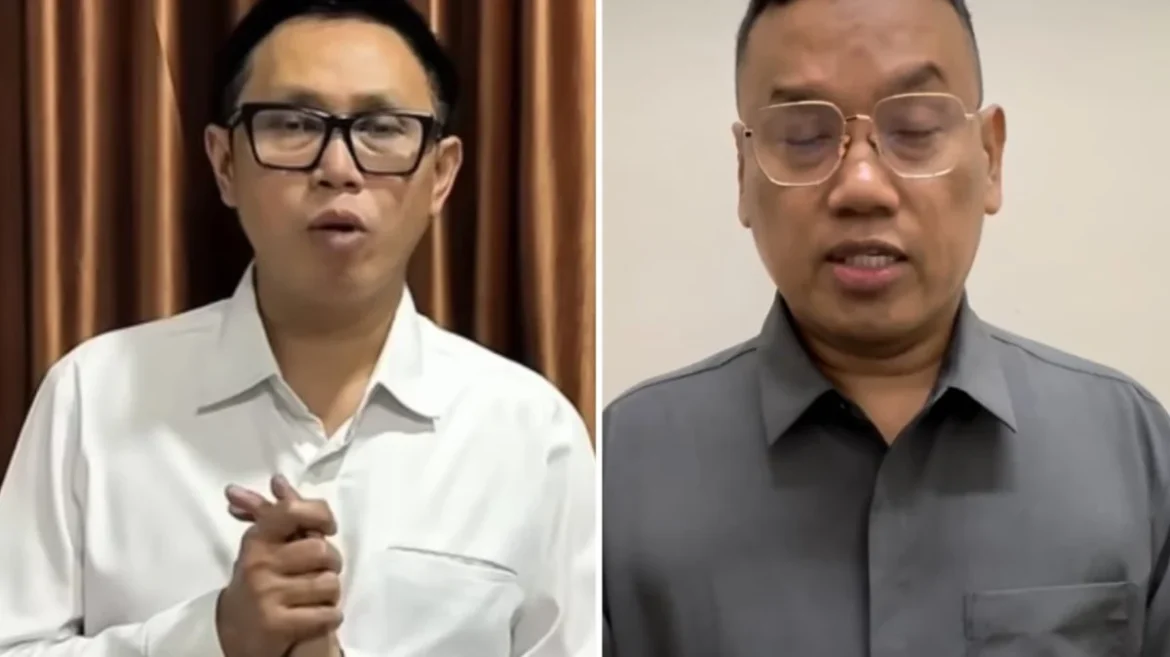
Jakarta, VIVA – The political landscape of Indonesia continues to monitor the status of two prominent celebrity figures, Eko Hendro Purnomo, widely known as Eko Patrio, and Surya Utama, also recognized as Uya Kuya, following their suspension from active duty as members of the House of Representatives (DPR RI). Both individuals, affiliated with the National Mandate Party (PAN), have maintained a relatively low profile since the party’s announcement of their non-active status, prompting public and media inquiries into their current parliamentary roles and future within the party.
On Wednesday, October 22, 2025, the Deputy Chairman of PAN, Eddy Soeparno, provided an update on the situation, confirming that the status of both Eko Patrio and Uya Kuya remains unchanged: they are still designated as non-active members of the DPR RI. This clarification comes nearly two months after the initial announcement by the party’s central leadership council (DPP PAN) to suspend their parliamentary duties. Soeparno emphasized that the decision-making process regarding their future remains an internal party matter, currently awaiting further directives from the highest echelons of PAN leadership.
"As far as this goes, the DPP PAN still maintains their status of non-activating our members," Eddy Soeparno stated to reporters, reiterating the party’s consistent position on the matter. He further elaborated that any developments or final resolutions concerning Eko and Uya’s status would be at the discretion of the Party Chairman (Ketua Umum), Zulkifli Hasan, and would subsequently be communicated to the leadership of the PAN faction within the DPR. "The developments, of course, we are awaiting further direction from the chairman, and it will later be communicated to the leadership of the PAN faction," Soeparno added, indicating a structured approach to the ongoing deliberation.
The Phenomenon of Celebrity Politicians in Indonesia
The presence of celebrities in the Indonesian political arena, particularly within the DPR RI, is not a new phenomenon. Over the past two decades, numerous public figures from the entertainment industry, including actors, musicians, and comedians, have successfully transitioned into politics, leveraging their widespread popularity and public recognition to secure seats in legislative bodies. This trend reflects a broader pattern in many democracies where public figures from non-political backgrounds can appeal directly to voters, often promising a fresh perspective and a more direct connection to the populace.
Eko Patrio, a renowned comedian and television personality, and Uya Kuya, a prominent magician, presenter, and entertainer, are prime examples of this phenomenon. Both built extensive careers in the Indonesian entertainment industry before venturing into politics. Eko Patrio, with his long-standing career in comedy and television production, has been a familiar face to Indonesian households for decades. His entry into politics under the PAN banner was seen as a strategic move by the party to attract a broader electorate through popular appeal. Similarly, Uya Kuya, known for his charismatic on-screen presence and engaging talk shows, brought a significant following when he joined PAN and subsequently secured a parliamentary seat.
Their transition into legislative roles brought both opportunities and challenges. While their celebrity status often facilitated easier public engagement and media attention for their respective parties, it also subjected them to heightened scrutiny regarding their legislative performance, policy contributions, and adherence to political ethics. The expectation from the public for celebrity politicians often extends beyond traditional legislative duties, encompassing roles as public advocates and representatives of popular sentiment.
Chronology of Events and the "Non-Active" Status
The decision by PAN to non-activate Eko Patrio and Uya Kuya first came to public light through a press release issued by the DPP PAN on Sunday, August 31, 2025. This official communication, widely disseminated to media outlets, explicitly stated the party’s decision to suspend both individuals from their roles as DPR RI members representing the PAN faction. The press release was notably signed by two of the party’s most senior figures: Chairman Zulkifli Hasan and Deputy Chairman Viva Yoga Mauladi, underscoring the weight and official nature of the decision.
The non-activation was officially declared effective from Monday, September 1, 2025. The statement accompanying this decision urged the public to remain calm, exercise patience, and maintain trust in the government of President Prabowo Subianto. It also emphasized PAN’s unwavering commitment to aligning itself with the interests of the people and supporting the government’s agenda.
The term "non-active" in the context of Indonesian parliamentary membership typically implies a temporary suspension of duties, privileges, and potentially benefits, pending further review or a final decision by the party or relevant authorities. It is distinct from a permanent dismissal or resignation, suggesting that the individuals retain their formal membership within the party but are temporarily relieved of their parliamentary responsibilities. This status allows the party to conduct internal evaluations, address specific issues, or await the resolution of external matters without immediately severing ties or taking definitive disciplinary action. The specific reasons for such a decision are often internal party matters, which are not always disclosed publicly in detail, leading to speculation and public interest.
Understanding Internal Party Disciplinary Actions
Political parties in Indonesia, like in many other parliamentary democracies, possess internal mechanisms for maintaining discipline among their members, especially those holding public office. These mechanisms are crucial for ensuring party cohesion, adherence to party ideology and policies, and upholding the party’s public image. Disciplinary actions can range from warnings and reprimands to suspensions (like "non-active" status) and, in more severe cases, expulsion from the party.
Reasons for such actions can be diverse, including:
- Breach of Party Regulations: Violating internal party rules, codes of conduct, or directives.
- Poor Performance: Perceived underperformance in legislative duties or failure to adequately represent the party’s interests.
- Ethical Violations: Involvement in scandals, unethical conduct, or actions that damage the party’s reputation.
- Policy Dissent: Publicly opposing major party policies or aligning with rival factions without party approval.
- Legal Issues: Facing criminal charges or being implicated in legal investigations, even if not yet convicted.
- Strategic Realignment: Internal party restructuring or strategic decisions that necessitate changes in parliamentary representation, although less common for "non-active" status specifically.
Given that the official statements from PAN have not specified the exact reasons for Eko Patrio and Uya Kuya’s non-activation, it remains an internal matter for the party to clarify. The vagueness, while common in internal party affairs, often fuels public curiosity and necessitates a clear communication strategy from the party to manage perceptions.

Implications for PAN and the Political Landscape
The decision to non-activate two prominent figures like Eko Patrio and Uya Kuya carries significant implications for PAN. Firstly, it signals the party’s commitment to internal discipline and its willingness to take action against members, regardless of their public profile. This can be viewed as an attempt to project an image of a serious and disciplined political entity, particularly crucial in the aftermath of a general election cycle and in the lead-up to future political contests. By demonstrating an ability to enforce its internal rules, PAN might aim to strengthen its credibility among its members and the broader electorate.
Secondly, the handling of this situation could influence public perception of PAN. While some might applaud the party for its adherence to internal regulations, others might question the transparency surrounding the decision, especially given the public nature of the individuals involved. The call for public calm and trust in the Prabowo Subianto administration, included in PAN’s initial press release, also ties this internal party decision to a broader national political narrative. PAN is a coalition partner in the current government, and maintaining internal stability and projecting a united front is vital for its role within the ruling coalition.
From a broader perspective, this incident contributes to the ongoing discourse about the role and responsibilities of celebrity politicians. It underscores the challenges faced by parties in balancing the popular appeal of such figures with the need for rigorous parliamentary conduct and party loyalty. While celebrities can bring media attention and a fresh voter base, they are also expected to conform to the standards of political professionalism and party discipline once in office. This case serves as a reminder that even highly popular public figures are subject to the internal mechanisms of their political parties.
Looking Ahead: The Path Forward
As of October 22, 2025, the fate of Eko Patrio and Uya Kuya’s parliamentary careers within the PAN faction remains in limbo, contingent upon the decisions of the party’s top leadership. Deputy Chairman Eddy Soeparno’s statements confirm that the ball is firmly in Chairman Zulkifli Hasan’s court, who will ultimately guide the party’s next steps. This could involve a range of outcomes: a lifting of the non-active status and their full reinstatement, a more permanent suspension, or even a different internal party role.
The situation highlights the dynamic and often opaque nature of internal party politics in Indonesia. While the public and media await further announcements, the incident serves as a significant case study in party discipline, the management of celebrity politicians, and the ongoing efforts by political parties to maintain internal cohesion and public trust within Indonesia’s vibrant democratic landscape. The final resolution will undoubtedly be closely watched, not only by political observers but also by the electorate, who continue to scrutinize the conduct of their elected representatives and the parties they represent.
