
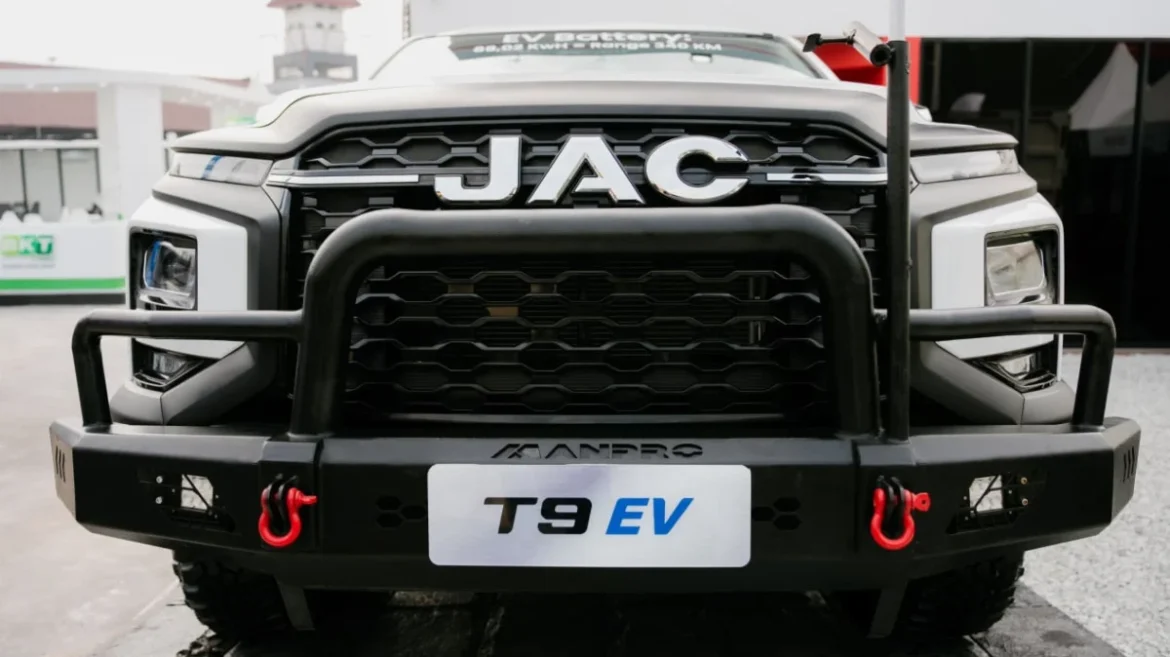
The landscape of the Indonesian mining industry is undergoing a significant transformation as the traditional reliance on internal combustion engine (ICE) vehicles begins to wane in favor of sustainable, high-performance electric alternatives. At the Mining Indonesia 2026 exhibition held at JIExpo Kemayoran, Jakarta, from September 9 to September 12, JAC Motors signaled a paradigm shift by unveiling the Trekker T9 EV, a specialized double-cabin electric pickup truck engineered specifically to conquer the unforgiving terrain of mining sites. This launch represents a milestone in the electrification of heavy-duty industrial transport, proving that zero-emission vehicles can compete with, and potentially outperform, their diesel counterparts in harsh operational environments.
Bridging the Gap Between Sustainability and Heavy-Duty Performance
For years, the adoption of electric vehicles (EVs) in the commercial sector was largely confined to urban logistics and last-mile delivery services, where road conditions are predictable and charging infrastructure is relatively accessible. The mining sector, however, presents a unique set of challenges characterized by steep inclines, deep mud, sharp rocks, and long-distance hauling. Historically, these environments have been the domain of heavy-duty diesel engines, which are valued for their high torque and mechanical durability.
JAC Motors has addressed these challenges head-on with the Trekker T9 EV. The inclusion of an advanced Differential Lock system is the centerpiece of this technological upgrade. In standard four-wheel-drive vehicles, the differential allows wheels to rotate at different speeds when turning, which is ideal for pavement but detrimental in loose or slippery conditions. When one wheel loses traction—a common occurrence in the muddy or uneven paths of a mine site—a standard differential would send all the power to that spinning wheel, leaving the vehicle immobilized. The Differential Lock in the T9 EV forces both wheels on an axle to rotate at the same speed, ensuring that torque is effectively transferred to the wheel with the most grip. This capability allows the T9 EV to navigate terrains that would otherwise leave a standard electric vehicle stranded.
A Strategic Deployment: The 150-Unit Handover
The introduction of the Trekker T9 EV is not merely a showcase of future potential; it is a live, commercial deployment. During the Mining Indonesia 2026 event, JAC Motors confirmed the immediate integration of 150 units of the T9 EV into the fleets of three major Indonesian mining companies. These companies operate in diverse and geographically challenging regions, including Aceh, the coal-rich Berau district in East Kalimantan, and the mining hubs of Banyuwangi, East Java.
This deployment serves as a real-world stress test for the vehicles. By operating across such a wide geographical spread, JAC Motors will gather crucial telemetry and performance data regarding battery longevity in tropical humidity, motor efficiency under continuous load, and the durability of the chassis against corrosive soil conditions. The handover ceremony, held on the opening day of the exhibition, serves as a testament to the growing confidence that industry leaders place in the reliability of JAC’s electric drivetrain.
Official Perspective and Market Implications
Reggie Kurnia, Chief Operating Officer of Indomobil JAC, underscored the significance of this move during his address at the Jakarta event. "The integration of our vehicles into mining operations across the archipelago is a validation of our strategic focus," Kurnia stated. "Our objective has never been just to sell a vehicle; it is to provide a comprehensive mobility solution that aligns with the specific operational mandates of Indonesian industry. Seeing our Trekker T9 EVs deployed in Berau and Aceh proves that the transition to green energy is not just a policy target, but a practical reality for the mining sector."
From an analytical perspective, the shift toward electric utility vehicles in mining is driven by several converging factors. First, the Indonesian government’s push for "Green Mining" initiatives places pressure on corporations to reduce their Scope 1 and Scope 2 carbon emissions. Second, the long-term operational costs of electric fleets are increasingly attractive. While the upfront investment for an electric pickup like the T9 EV is higher than a diesel equivalent, the reduction in maintenance costs—due to fewer moving parts, no oil changes, and less stress on the braking system through regenerative braking—creates a favorable total cost of ownership (TCO) over a five-to-seven-year operational cycle.
Technical Specifications and Operational Resilience
The Trekker T9 EV is built on a ruggedized ladder-frame chassis designed to withstand the structural stresses of heavy cargo and off-road impacts. The electric motor provides instantaneous torque, a distinct advantage over diesel engines which require a "spool-up" time for turbochargers to reach peak output. This immediate power delivery is particularly beneficial when climbing steep ramps or navigating deep mud pits.
Battery management is another critical component of the T9 EV. To operate in remote mining locations, the vehicle is equipped with a high-density lithium iron phosphate (LFP) battery, chosen for its thermal stability and longer cycle life compared to traditional nickel-manganese-cobalt (NMC) chemistries. These batteries are encased in a reinforced, IP67-rated protective housing to prevent water ingress and mechanical puncture, essential features for vehicles operating in wet and debris-filled environments.
The Broader Context: Mining Indonesia 2026
The Mining Indonesia 2026 event itself serves as a barometer for the industry’s direction. With over 500 exhibitors from across the globe, the focus this year has shifted noticeably from heavy machinery fossil fuel optimization to electrification and automation. The presence of JAC Motors and the successful deployment of their electric pickup highlights that the electrification trend is no longer confined to passenger cars or light-duty logistics; it is rapidly moving into the heavy industrial sector.
The event also facilitated discussions regarding the supporting infrastructure needed for such a transition. Mining companies are increasingly looking into decentralized energy solutions, such as on-site solar farms and battery swapping stations, to ensure that their electric fleets remain operational 24/7. The success of the JAC T9 EV will likely influence other manufacturers to accelerate their R&D in heavy-duty electric utility vehicles.
Future Outlook and Industry Impact
Looking ahead, the next 24 months will be a decisive period for the adoption of electric vehicles in the mining sector. If the 150 units currently being deployed demonstrate consistent uptime and performance, it is highly probable that other major players in the nickel, coal, and gold mining sectors will follow suit. The adoption of these vehicles contributes directly to the Environmental, Social, and Governance (ESG) scores of these mining companies, which is increasingly vital for securing financing and maintaining international partnerships.
Furthermore, the domestic production and assembly of such vehicles in Indonesia represent a significant boost to the local automotive industry. By moving away from imported diesel vehicles, Indonesia can foster a local ecosystem of EV component manufacturers, battery recyclers, and specialized maintenance technicians, ultimately creating a more self-reliant industrial supply chain.
Conclusion
The debut of the Trekker T9 EV at Mining Indonesia 2026 is more than a product launch; it is an indicator of the evolution of heavy industry. By integrating advanced traction control, robust chassis engineering, and high-performance electric powertrains, JAC Motors has successfully challenged the narrative that EVs are unsuitable for the world’s most demanding work sites. As these vehicles begin their service in the rugged landscapes of Kalimantan, Sumatra, and Java, they carry the weight of an industry-wide transition toward a cleaner, more efficient, and technologically advanced future. The success of this endeavor will undoubtedly set the standard for the next generation of industrial transport in Indonesia and beyond.
