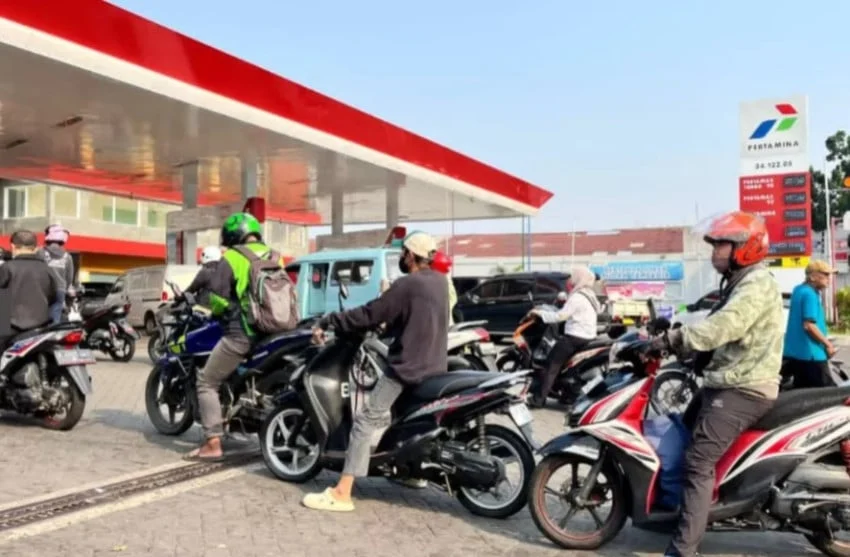
JAKARTA – The Indonesian government is currently formulating a series of comprehensive Anggaran Pendapatan dan Belanja Negara (APBN), or State Budget, scenarios to proactively mitigate the cascading effects of global crude oil prices once again breaching the critical USD100 per barrel threshold. Amidst this significant surge in international energy costs, authorities have unequivocally affirmed their commitment to preserving energy subsidy allocations, thereby guaranteeing that the price of subsidized fuel, specifically Pertalite, will remain stable for the public.
Minister of Finance Purbaya Yudhi Sadewa, speaking from the Ministry of Finance headquarters in Jakarta on Friday, July 24, 2026, underscored the government’s steadfast resolve. "We will continuously safeguard energy subsidies. However, during a recent cabinet meeting, President Prabowo instructed us to conduct simulations for various oil price scenarios—whether a single scenario or multiple—to determine the optimal budgetary response. We are currently engaged in these calculations," Minister Sadewa elaborated. The directive from President Prabowo emphasizes a proactive and adaptable fiscal strategy to navigate the inherent volatility of global energy markets. These simulations are poised to form the bedrock of the government’s fiscal policy decisions, particularly if the upward trend in oil prices persists, threatening to impose substantial burdens on the national budget. The government’s commitment remains centered on ensuring the continuity of energy subsidies, thereby shielding the populace from the adverse impacts of global oil price fluctuations. Despite this unwavering dedication, a meticulous evaluation of various potential shifts in oil price assumptions is underway to ensure the nation’s fiscal space remains robust and sustainable.
The Global Oil Market Resurgence: A Return to $100 and Beyond
The recent resurgence of crude oil prices above the USD100 per barrel mark signals a return to levels not consistently seen since the tumultuous period following Russia’s invasion of Ukraine in early 2022. This latest spike is primarily attributed to a confluence of escalating geopolitical tensions and supply chain disruptions, particularly in the vital maritime arteries of the Middle East. The primary catalyst, as highlighted by market analysts, is the intensification of attacks on commercial shipping in the Red Sea. These incidents, involving tanker vessels, have compelled major shipping lines and oil transporters to reroute their voyages, bypassing the Suez Canal and instead opting for the longer, more costly passage around the Cape of Good Hope. This extended transit time not only increases fuel consumption and operational expenses but also introduces significant delays, tightening global supply and driving up freight and insurance costs for crude oil shipments.
Brent crude, the international benchmark, along with West Texas Intermediate (WTI), the U.S. benchmark, have both seen their values appreciate sharply. The Red Sea region, a critical choke point for global trade, especially for oil and gas shipments between Asia and Europe, has become a focal point of instability. Any disruption there sends immediate ripples across energy markets worldwide, fueling speculative buying and pushing prices upwards. Beyond geopolitical factors, underlying supply-demand dynamics also play a role. While global economic growth projections for 2026 might be varied, a steady recovery in key economies, particularly in Asia, contributes to robust demand for energy. Furthermore, the disciplined production cuts by OPEC+ member countries, aimed at stabilizing the market, also limit the available supply, amplifying the impact of demand surges or geopolitical shocks.
Historically, oil prices have exhibited extreme volatility. Peaks were observed during the 2008 financial crisis, the Arab Spring uprisings in 2011, and the pre-pandemic era in 2014. The 2022 surge, pushing prices well over $100, demonstrated the profound impact of major geopolitical conflicts on energy security. The current situation in 2026 echoes these past challenges, presenting a renewed test for nations heavily reliant on oil imports.
Indonesia’s Fiscal Architecture Under Pressure: Navigating Subsidy Commitments
Indonesia’s state budget is intrinsically linked to global commodity prices, particularly crude oil. While higher oil prices can theoretically boost state revenues from oil and gas exports and taxes, this benefit is often significantly outweighed by the increased cost of energy subsidies. The APBN relies on a set of macroeconomic assumptions, including an assumed oil price (Indonesia Crude Price or ICP), which typically ranges lower than international benchmarks. When actual global prices exceed this assumption, the government faces a substantial fiscal challenge.
The primary mechanism for shielding Indonesian consumers from direct price shocks is the extensive energy subsidy program. This program encompasses not only subsidized fuels like Pertalite but also liquefied petroleum gas (LPG) and electricity tariffs. For Pertalite, the government sets a fixed retail price, irrespective of market fluctuations, and covers the difference between this fixed price and the actual market cost of production and distribution. This commitment, while socially beneficial, can lead to massive unbudgeted expenditures if global oil prices rise sharply and remain elevated for extended periods.
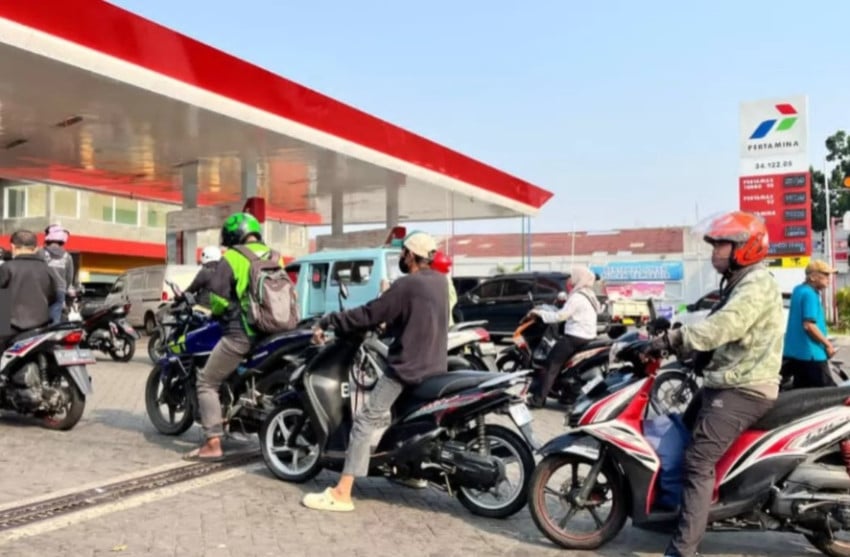
In previous years, particularly in 2022, Indonesia allocated unprecedented amounts to energy subsidies, reaching over IDR 500 trillion (approximately USD 34 billion at the time), primarily to cushion the impact of the Ukraine war-induced price spike. This historical precedent underscores the government’s consistent strategy to prioritize public welfare over immediate fiscal savings in times of crisis. However, such large expenditures inevitably strain the national coffers, potentially diverting funds from other critical development priorities such as infrastructure, education, and healthcare.
Official Responses and Strategic Considerations
Beyond the Ministry of Finance, other key governmental and state-owned entities are closely monitoring the situation and formulating their responses:
- Ministry of Energy and Mineral Resources (ESDM): Officials from the ESDM Ministry are expected to reaffirm the nation’s commitment to energy security and affordability. They may also emphasize ongoing efforts to diversify Indonesia’s energy mix, reducing reliance on fossil fuels in the long term. Strategies for enhancing domestic oil and gas production, as well as accelerating renewable energy development, will likely be highlighted as crucial for future resilience against global price shocks.
- Bank Indonesia (BI): The central bank is highly attentive to the inflationary pressures stemming from elevated energy costs. Even with subsidized fuel prices, higher crude oil costs impact non-subsidized fuels (like Pertamax), transportation, logistics, and manufacturing, leading to broader price increases across the economy. Bank Indonesia is expected to closely monitor core inflation and potentially adjust its monetary policy stance, including interest rates, to manage these inflationary risks and maintain macroeconomic stability.
- Pertamina: As the state-owned energy giant responsible for distributing subsidized fuels, Pertamina faces significant operational challenges. While the government compensates Pertamina for the subsidy gap, delays in reimbursement can strain the company’s liquidity and investment capacity. Pertamina would be working closely with the government to ensure seamless supply chains and distribution networks across the archipelago, preventing fuel scarcity despite the volatile international market.
- Parliament (DPR): Members of Parliament, particularly those on the budget committee, will likely scrutinize the government’s fiscal management. There may be calls for greater transparency in subsidy calculations, efficiency in distribution, and a review of the targeting mechanisms to ensure subsidies primarily benefit those who truly need them, rather than a broad segment of society. Discussions around the long-term sustainability of blanket subsidies versus more targeted social assistance programs are also anticipated.
- Economists and Policy Analysts: Independent economists generally laud the government’s immediate commitment to protecting consumers but often raise concerns about the long-term fiscal implications of large, untargeted subsidies. They advocate for a balanced approach that combines social protection with fiscal prudence, potentially through gradual subsidy reforms or more efficient allocation mechanisms. The debate often centers on whether subsidies are the most effective way to alleviate poverty or if direct cash transfers would be more impactful and less distortive to market signals.
Broader Economic and Social Implications
The sustained high global oil prices, even with Pertalite subsidies, cast a long shadow over Indonesia’s economic outlook for 2026:
- Inflationary Pressures: While Pertalite prices are stable, the cost of other fuels, transportation, and raw materials will inevitably rise. This "second-round effect" translates into higher prices for food, consumer goods, and services, eroding the purchasing power of households. This disproportionately affects lower and middle-income families, who spend a larger percentage of their income on essential goods.
- Fiscal Burden: The expanded energy subsidy budget will undoubtedly put pressure on the APBN. This could lead to a widening of the fiscal deficit if not offset by other revenue streams or expenditure cuts. A larger deficit could raise concerns among international rating agencies, potentially impacting Indonesia’s sovereign credit rating and borrowing costs in global markets. Furthermore, increased subsidy spending may divert critical funds away from productive investments in infrastructure, human capital development, and poverty alleviation programs, potentially slowing long-term economic growth.
- Economic Growth Dampening: Higher energy costs across the board can stifle business activity. Industries reliant on fuel for operations, such as manufacturing, logistics, agriculture, and fisheries, will face increased input costs, potentially reducing profitability, investment, and job creation. Consumer spending, a major driver of Indonesia’s economy, could also decelerate as households grapple with higher overall living costs.
- Challenges to Energy Transition: The need to fund substantial fossil fuel subsidies paradoxically complicates Indonesia’s ambitious energy transition goals. The financial resources allocated to propping up fossil fuel consumption could otherwise be invested in accelerating the development of renewable energy infrastructure, promoting energy efficiency, and fostering green technologies. This situation highlights the inherent tension between immediate energy affordability and long-term sustainability objectives.
- Social Equity and Targeted Support: The continued discussion around fuel subsidies also brings to the forefront the issue of social equity. Critics often argue that blanket subsidies disproportionately benefit wealthier segments of society who consume more fuel. This prompts ongoing calls for a more targeted subsidy system, perhaps through direct cash transfers or smart card systems, to ensure that aid reaches the most vulnerable populations effectively and efficiently.
Future Outlook and Policy Challenges
Looking ahead, the Indonesian government faces a complex balancing act. The immediate priority is to maintain economic stability and protect its citizens from the brunt of global energy shocks, a commitment that aligns with President Prabowo’s broader vision for social welfare and economic resilience. However, the recurring volatility of global oil prices underscores the urgent need for long-term strategic solutions.
Policy discussions will likely intensify around:
- Subsidy Reform: While politically sensitive, the long-term sustainability of substantial energy subsidies remains a critical fiscal challenge. Future administrations may need to revisit and refine subsidy mechanisms to make them more targeted, efficient, and less burdensome on the APBN, potentially by linking them to specific income brackets or social assistance programs.
- Energy Diversification: Accelerating the transition away from fossil fuels towards indigenous renewable energy sources (geothermal, hydro, solar, wind) is paramount. This not only enhances energy security by reducing reliance on imported oil but also aligns with global climate commitments and creates new economic opportunities.
- Fiscal Resilience: Strengthening the APBN’s ability to absorb external shocks through prudent fiscal management, revenue diversification, and building fiscal buffers will be crucial. This includes maintaining healthy tax revenues and controlling non-essential expenditures.
- Public Communication: Transparent and consistent communication with the public about the rationale behind government policies, the challenges faced, and the long-term benefits of reforms will be vital for maintaining public trust and support.
In conclusion, Indonesia finds itself at a critical juncture, navigating the immediate pressures of surging global oil prices while simultaneously charting a course towards sustainable energy security and fiscal health. The government’s unwavering commitment to shielding its citizens from price hikes through subsidies reflects a deep understanding of social welfare. Yet, the ongoing simulations and strategic deliberations underscore a proactive approach to managing the nation’s finances, preparing for a future where global energy markets are likely to remain a source of significant challenge and opportunity. The decisions made in 2026 will undoubtedly shape Indonesia’s economic trajectory for years to come.