
The landscape of digital media and celebrity culture faced another intersection of modern technology and misinformation as prominent Indonesian content creator and public figure Atta Halilintar found himself at the center of a fabricated scandal. On Thursday, September 10, 2026, details emerged regarding a viral photograph that circulated extensively across various social media platforms, falsely depicting Atta Halilintar in an intimate posture with an unidentified woman while attending a football match in Italy. The image quickly triggered widespread speculation and baseless rumors concerning his marriage to fellow public figure Aurel Hermansyah. However, intense scrutiny from sharp-eyed internet users, followed by a direct and unequivocal denial from Atta himself, exposed the image as a malicious product of artificial intelligence manipulation designed to mislead the public and damage his reputation.
The Anatomy of a Viral Misinformation Campaign
The controversy began when a photograph surfaced online showing Atta Halilintar inside a stadium in Italy, accompanied by a woman who was not wearing a hijab. The proximity of the two figures in the frame immediately drew the attention of digital sleuths and gossip channels. Within hours, the image was shared across platforms like TikTok, Instagram, and X (formerly Twitter), accompanied by speculative captions suggesting an alleged affair.
However, the rapid spread of the image was met with immediate skepticism. Digital literacy advocates and observant social media users pointed out various visual anomalies typical of early-to-mid generation synthetic media, such as unnatural lighting, blending errors around the subjects’ edges, and distorted facial expressions. A TikTok user operating under the handle @kevinnyaa12 was among the first to publicly question the legitimacy of the image, posting a breakdown that cast doubt on the narrative of infidelity while noting strong indicators of artificial intelligence generation.
Despite these warnings, the sensational nature of the claim allowed it to gain significant traction. The psychological inclination of internet users to latch onto dramatic celebrity gossip often supersedes initial analytical caution, creating an environment where unverified digital artifacts can inflict reputational damage before facts can be established. The incident underscores a growing vulnerability among high-profile public figures in the era of accessible generative AI tools, where anyone with a computer can fabricate highly convincing yet entirely false photographic evidence.
Chronology of Events and the Italian Football Trip
To understand the context of the controversy, it is necessary to examine the timeline surrounding Atta Halilintar’s international itinerary. Weeks prior to the viral explosion, Atta traveled to Italy to attend a major global creator event. This gathering brought together digital content creators, influencers, and media personalities from numerous countries to collaborate, network, and engage in international cultural exchanges.
As part of the itinerary, attendees were invited to various public and private outings, including a high-profile football match inside an Italian stadium. Given the collaborative nature of such international summits, interactions among creators from diverse cultural backgrounds are standard. It is customary for attendees to pose for photographs with peers, fans, and colleagues met during the events.
According to reports, Atta willingly obliged when asked to take standard photographs with fellow creators during the trip. In a normal context, these images are harmless mementos of professional networking. However, malicious actors evidently took a benign, legitimate photograph—or used footage from the event—and fed it into advanced generative AI models. The resulting deepfake manipulation dramatically altered the original context, fabricating a scenario that never occurred and injecting fabricated intimacy into a professional setting.
Atta Halilintar’s Official Response and Condemnation
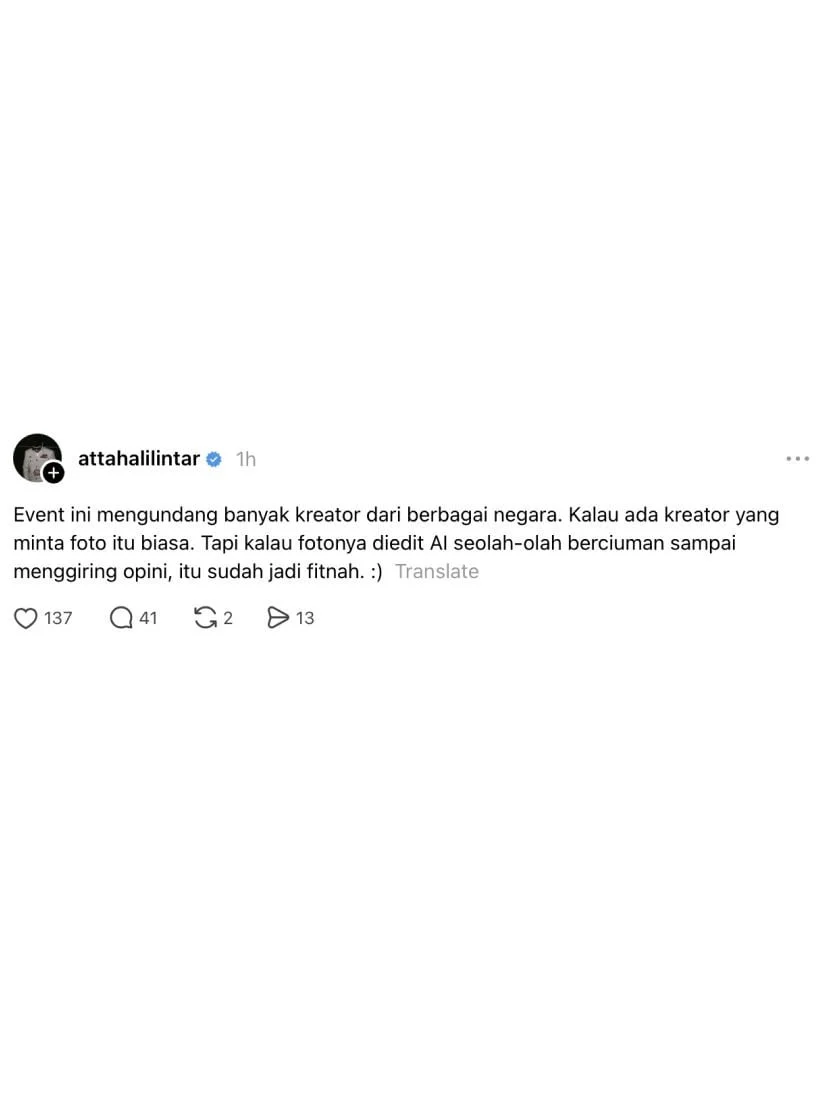
Confronted with the escalating rumors and the widespread circulation of the manipulated image, Atta Halilintar took to his official social media channels, specifically utilizing the Threads platform, to address the issue head-on. Maintaining a firm and transparent stance, he categorically denied the authenticity of the photograph and expressed deep concern over the malicious intent behind its creation.
"This event invited many creators from various countries. If there is a creator who asks for a photo, that is normal," Atta explained in his statement released on Thursday, September 10, 2026. He elaborated that as a public figure and a content creator who frequently travels internationally, interacting with diverse groups of people and participating in photographic sessions is an unavoidable and routine aspect of his profession.
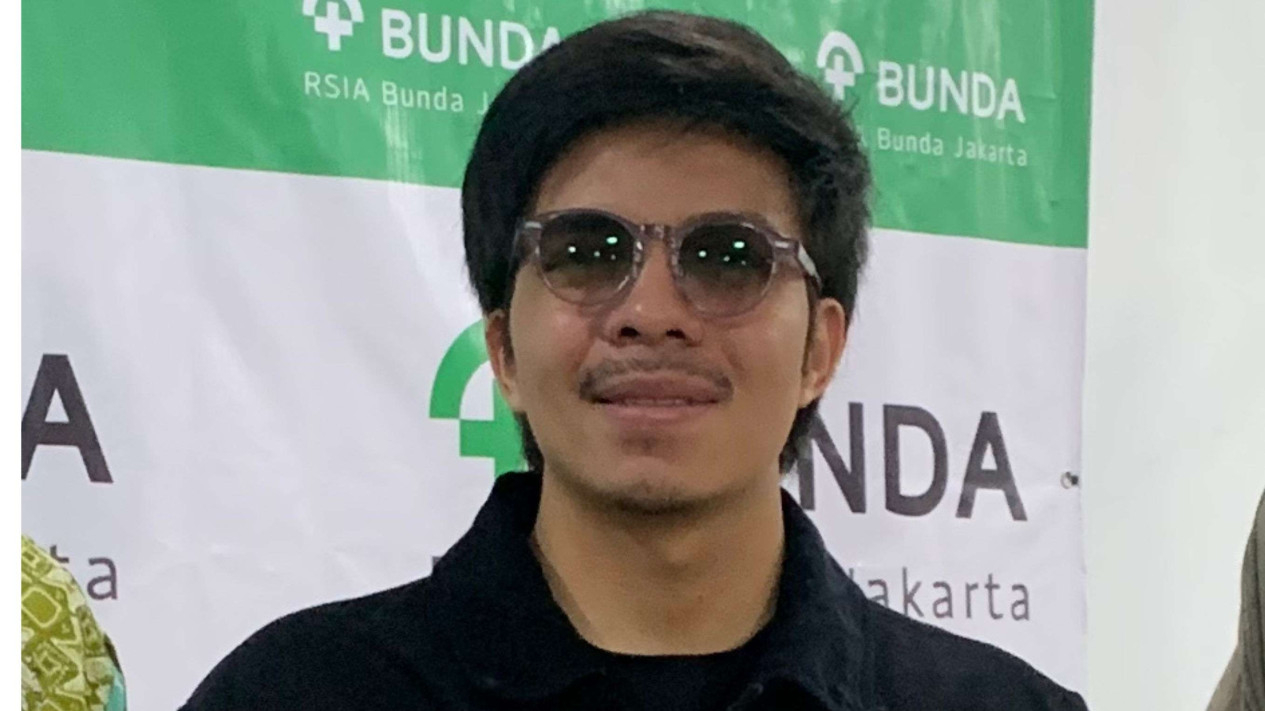
Atta drew a sharp distinction between harmless professional interactions and deliberate digital fabrication. He acknowledged that while taking photographs with others is a normal part of attending international gatherings, twisting those images through technological manipulation crosses a dangerous ethical line. He emphasized that utilizing artificial intelligence to superimpose actions—such as a fabricated romantic gesture or a kiss—into an otherwise innocent photo constitutes an active effort to manufacture a scandal.
"But if the photo is edited with AI to look like we are kissing, up to the point of steering public opinion, that has already become defamation," Atta asserted, highlighting the severe personal and social consequences of the act. By categorizing the incident as defamation rather than mere gossip, the creator underscored the legal and ethical boundaries that online manipulators routinely cross in pursuit of viral engagement.
The Broader Implications of AI Manipulation in Celebrity Culture
The incident involving Atta Halilintar serves as a textbook case study of the escalating threat posed by synthetic media and deepfake technology to public figures, journalists, and everyday citizens alike. As generative AI tools become increasingly sophisticated, accessible, and difficult to trace, the verification of digital evidence has transitioned from a routine journalistic task into a complex forensic challenge.
In the realm of entertainment and celebrity journalism, the weaponization of AI threatens to destabilize reputations instantaneously. Historically, photographic evidence carried an implicit weight of truth under the legal and journalistic principle that "seeing is believing." However, the proliferation of deepfakes has fundamentally shattered this paradigm. Today, visual content can no longer be accepted at face value without rigorous metadata analysis, source verification, and contextual corroboration.
Media analysts and digital rights experts have repeatedly warned that the ease of creating convincing synthetic media will lead to an increase in targeted harassment, extortion, and character assassination. Public figures, due to their constant exposure and high visibility, remain primary targets for malicious actors seeking social media clout, financial gain through engagement metrics, or deliberate reputational harm.
Furthermore, the psychological toll on the victims of such digital manipulation cannot be overstated. Even when a falsehood is thoroughly debunked, the initial shock wave of a viral scandal often leaves a lingering stain in the public consciousness. Families are forced to navigate intense public scrutiny, manage emotional stress, and expend valuable time and resources issuing clarifications rather than focusing on their professional and personal lives.
Moving Forward: Digital Literacy and Accountability
As the digital ecosystem continues to evolve, responses to incidents like the Atta Halilintar photo hoax highlight the urgent need for enhanced digital literacy among internet users and stronger accountability mechanisms across social media platforms.
The successful debunking of the false image in this case was largely driven by the collective vigilance of discerning social media users who questioned the visual anomalies of the synthetic photo before the official clarification was issued. This grassroots skepticism represents a vital first line of defense against the tidal wave of misinformation. However, relying solely on community-led fact-checking is insufficient given the speed at which algorithms propagate sensational content.
Social media platforms face mounting pressure to implement more robust detection algorithms capable of flagging or labeling AI-generated media before it achieves viral velocity. Simultaneously, legal frameworks worldwide are beginning to adapt to the realities of digital defamation via synthetic media, exploring stricter penalties for individuals and networks that deliberately manufacture and distribute deepfakes with malicious intent.
For public figures like Atta Halilintar, the strategy moving forward involves proactive communication, swift legal or public relations responses, and maintaining open channels of transparency with supporters. By directly addressing the fabrication and framing it accurately as an act of defamation rather than a private transgression, Atta successfully neutralized the narrative trajectory of the hoax, reinforcing the importance of critical thinking in an era where digital reality is increasingly fluid and prone to manipulation.
