
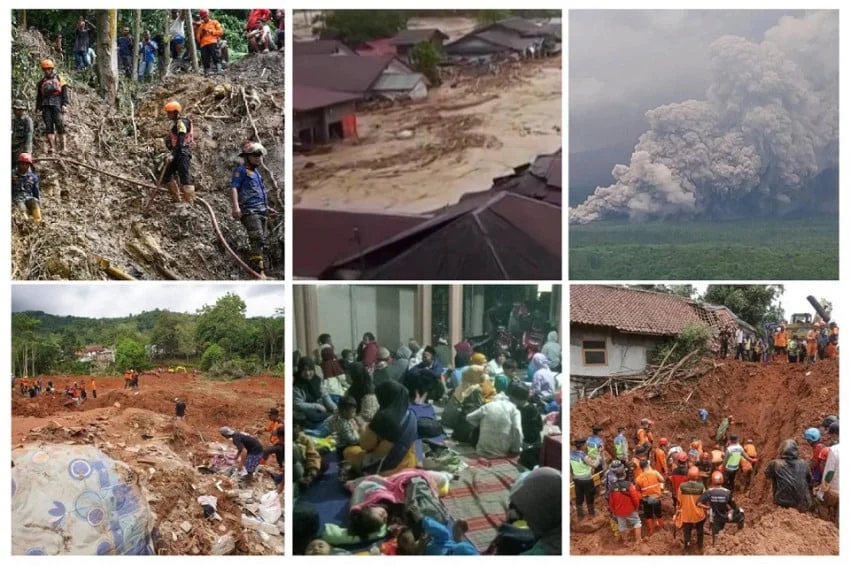
Natural disasters—ranging from volcanic eruptions and devastating earthquakes to forest fires, flash floods, and landslides—are recurring phenomena that frequently result in profound human tragedy and loss of life. As communities grapple with the aftermath of these catastrophic events, questions regarding the spiritual standing of those who perish often emerge, particularly within the framework of Islamic theology. The concept of "mati syahid" or martyrdom is a central pillar in Islamic eschatology, and scholars have long debated and clarified the classifications of those who, while not falling in direct combat, are granted the honorific status of a martyr in the eyes of the divine.
The Theological Foundation of Martyrdom Outside of Conflict
In Islamic tradition, the term "syahid" (martyr) literally denotes one who witnesses or is witnessed. While the term is commonly associated with those who perish while defending the faith in a state of sanctioned conflict, Islamic jurisprudence—rooted in the teachings of the Prophet Muhammad—recognizes that martyrdom is not limited to the battlefield. The Prophet explicitly identified several categories of individuals whose deaths, while tragic and often sudden, are imbued with the spiritual status of a martyr, thereby offering solace and theological assurance to the families of those who perish in non-combat circumstances.
The primary evidence for this categorization is found in authentic Hadith collections, specifically those recorded by Bukhari and Muslim. In a narration attributed to Abu Hurairah RA, the Prophet Muhammad stated that there are five categories of individuals who qualify for the reward of martyrdom: those who die from the plague (tha’un), those who die from abdominal illnesses, those who drown, those who die from being crushed under debris, and those who are killed in the cause of God. This foundational text provides the theological bedrock for understanding that the mode of death, when characterized by suddenness, trauma, or internal suffering, carries a specific spiritual distinction.
Expanding the Scope: Seven Categories of Martyrdom
Beyond the initial five categories, secondary Hadith literature further expands the definition of martyrdom. A narration recorded by Abu Dawud and An-Nasa’i, attributed to Jabir bin ‘Atik RA, enumerates seven specific causes of death that qualify an individual for the status of a martyr, in addition to those killed in the path of Allah. This list includes:
- Death caused by a plague or epidemic.
- Death resulting from internal abdominal diseases.
- Death by drowning.
- Death caused by being crushed under falling structures or debris.
- Death resulting from ailments originating in the body’s internal organs.
- Death by fire or burning.
- Death of a woman during or as a result of childbirth.
This comprehensive classification is categorized by theologians as "Shahid al-Akhirah" (a martyr in the afterlife). Unlike those who fall in direct combat, whose bodies are treated with specific burial rites and legal status in the world, the "martyr in the afterlife" is granted the divine reward of martyrdom, while their worldly funeral processes remain consistent with standard Islamic practices.
Applying Theology to Modern Disaster Scenarios
When applying these historical theological frameworks to the realities of the 21st century, the correlation between natural disasters and the status of martyrdom becomes clear. Modern disasters often subject victims to exactly the conditions described in the Prophetic traditions.
For instance, victims of major earthquakes frequently perish due to "shahibul hadm," or being crushed under the weight of collapsing buildings and concrete structures. Similarly, those caught in catastrophic floods or tsunamis fall under the classification of "al-ghariq," those who lose their lives by drowning. Victims of wildfires or forest fires, which are becoming increasingly frequent due to climate change and environmental degradation, fall under the category of those who perish by fire.
From an analytical perspective, this theological classification serves a vital psychological and social function. In the wake of large-scale disasters, affected communities face immense grief and a sense of existential fragility. The recognition that these victims are afforded the rank of martyrs serves as a source of emotional comfort for the survivors, providing a sense of divine justice and purpose amidst the chaos of environmental destruction.
Data and Environmental Context
The frequency of these events has seen a documented increase over the last two decades. According to the United Nations Office for Disaster Risk Reduction (UNDRR), the global occurrence of natural disasters has surged, with climate-related events accounting for a significant portion of mortality. In 2023 alone, the world witnessed high-magnitude earthquakes in Turkey and Syria, as well as unprecedented flooding in regions of Libya and South Asia.
These disasters often leave behind thousands of victims, and the challenge for religious leaders is to address the spiritual needs of the affected population. Islamic scholars in these regions have consistently reinforced the message that those who perish in these events are "martyrs of the afterlife." This perspective shifts the narrative from one of senseless loss to one of spiritual transition, helping to mitigate the trauma associated with sudden and violent death.
Official Responses and Communal Support
Islamic organizations and government religious bodies, such as the Indonesian Ulema Council (MUI) or similar entities in the Middle East, frequently issue statements during periods of disaster. These statements generally emphasize the obligation of the living to support the victims’ families, while simultaneously offering spiritual counsel.
The focus of these official responses is twofold: first, to ensure the prompt and dignified handling of remains, and second, to provide theological framing that assists in mourning. By classifying disaster victims as martyrs, religious institutions encourage a culture of communal empathy, where the survivors feel a religious duty to care for the widows, orphans, and displaced persons left behind by the disaster.
The Implication of "Ecological Repentance"
A growing trend in contemporary Islamic discourse is the concept of "Tobat Ekologi" or ecological repentance. While the status of the victim is confirmed as one of martyrdom, religious scholars are increasingly emphasizing that the prevention of these disasters is a moral obligation. The argument is that while the victim’s death is honored, the destruction of the environment—which leads to floods, landslides, and forest fires—is contrary to the Islamic mandate of being stewards (khalifah) of the earth.
This creates a dual approach: mourning the victims with the respect afforded to martyrs while simultaneously advocating for sustainable environmental policies. It reframes the disaster not just as a "test from God," but as a call to human accountability. The intersection of theological status and environmental responsibility suggests that while the death of a victim is a tragedy, the society has a duty to minimize the risks that lead to such deaths.
Sociological Impact and Long-term Recovery
The designation of disaster victims as martyrs has significant sociological implications. In many traditional societies, the stigma associated with certain types of death—such as drowning or burning—can sometimes manifest as a feeling of incomplete closure for the family. By explicitly placing these modes of death within the esteemed category of martyrdom, Islamic teachings provide a standardized, dignified status for all victims, regardless of the specific nature of the disaster.
Furthermore, this status influences the charity and aid sectors. Islamic philanthropy (Zakat and Sadaqah) often prioritizes the families of those who have died in catastrophic circumstances. The theological recognition of the deceased as martyrs serves as a catalyst for increased donation and support from the global Muslim community, ensuring that survivors receive the necessary material aid to rebuild their lives.
Conclusion
The theological classification of natural disaster victims as martyrs is a sophisticated aspect of Islamic law that addresses the human need for meaning in the face of inevitable tragedy. By categorizing death by fire, drowning, or building collapse as forms of martyrdom, the tradition ensures that those who perish in natural disasters are remembered with honor and spiritual significance.
As the global community faces an era of increasing environmental volatility, the intersection of these ancient teachings with modern disaster management becomes increasingly relevant. While science and technology work to mitigate the physical impact of earthquakes, floods, and fires, the spiritual framework provided by these traditions remains essential for the resilience and psychological recovery of the survivors. Ultimately, the classification is not merely a label, but a testament to the Islamic value placed on every human life and the belief that even in the most chaotic moments of death, there is a place of honor for the innocent.
