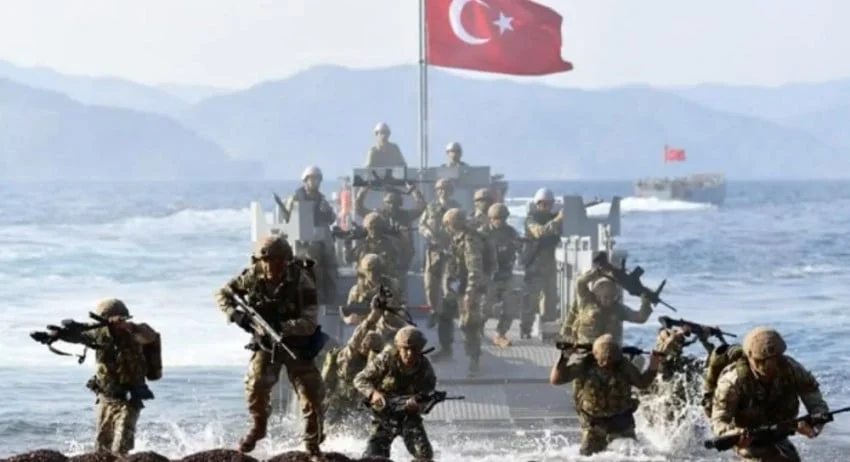
The geopolitical landscape of the Middle East has entered a delicate and volatile phase as Turkey formally declares its readiness to support Saudi Arabia’s military requirements. This diplomatic and strategic overture comes at a time when the Kingdom faces an intensified wave of aerial assaults orchestrated by the Houthi movement in Yemen. The development is widely perceived by international observers and defense analysts as the inaugural stress test for the newly minted Mecca Joint Defense Agreement, a tripartite security pact forged between Saudi Arabia, Turkey, and Pakistan.
As missile and drone incursions increasingly threaten Saudi cities, critical energy infrastructure, and vital maritime trade corridors, the commitment of Ankara to Riyadh’s territorial integrity signals a profound shift in regional alliances. This article explores the background of the conflict, the specifics of the Mecca Defense Pact, the statements issued by key diplomatic figures, the broader geopolitical implications, and the potential economic fallout for global energy markets.
Background Context and Regional Escalation
The friction along the southern borders of Saudi Arabia is intrinsically linked to a wider, multi-layered regional conflict that has expanded exponentially over recent months. The operational tempo of the Houthi movement—an Iran-aligned political and military organization based in Yemen—has escalated following a broader confrontation ignited earlier this year. The persistent launching of sophisticated ballistic missiles and kamikaze drones toward Saudi territory has transformed the Bab el-Mandeb Strait and the southern Red Sea into high-risk zones.
For years, the Saudi-led coalition has sought to stabilize Yemen and protect its own borders from cross-border incursions. However, the alignment of regional proxy forces with broader geopolitical friction points has rendered traditional defense mechanisms increasingly strained. The Red Sea serves as a critical artery for international commerce and hydrocarbon exports. With the Strait of Hormuz facing periodic security challenges, Saudi Arabia has increasingly relied on Red Sea maritime routes to transport crude oil to international markets. The tightening grip of the Houthis over these shipping lanes has directly threatened not only Saudi national security but also global energy security.
The Genesis of the Mecca Joint Defense Agreement
Recognizing the mutating threat matrix, diplomatic and military officials from Saudi Arabia, Turkey, and Pakistan engaged in high-level consultations that culminated in a historic security framework signed last month. Dubbed the Mecca Joint Defense Agreement, the pact establishes a mutual defense guarantee among the three nations. Under the core tenets of the treaty, any armed attack against the sovereign territory, military installations, or critical infrastructure of any member state is formally classified as an assault against all three signatories.
The inclusion of Turkey—a NATO member with a formidable defense industrial base and advanced unmanned aerial vehicle technology—alongside Pakistan, a recognized nuclear-armed state with extensive conventional military capabilities, creates a formidable deterrent framework. The alliance represents an indigenous Middle Eastern and South Asian security architecture designed to address regional contingencies independently of traditional Western security guarantees.
However, theoretical defense pacts are only as strong as their operational implementation during times of crisis. The sustained drone and missile campaigns executed by the Houthi movement against Saudi population centers and energy hubs have now provided the exact operational crucible needed to test the mettle, resolve, and logistical efficacy of the Mecca Pact.
Official Statements and Strategic Intentions
The readiness of Ankara to operationalize the agreement was articulated clearly by Turkish Foreign Minister Hakan Fidan during an interview with Turkish broadcaster NTV. Fidan addressed the mounting security challenges facing the Kingdom, emphasizing that Turkey views the ongoing aerial strikes as a direct violation of Saudi sovereignty and territorial integrity.
"We see very serious attacks targeting the territorial integrity and sovereignty of Saudi Arabia," Fidan stated. He further elaborated that Ankara has identified specific areas where Riyadh may require specialized external assistance, particularly concerning technical military requirements, integrated air defense cooperation, and intelligence sharing. Fidan confirmed that Turkey harbors no hesitation in fulfilling its obligations under the framework established with Riyadh and Islamabad.
The Turkish Foreign Minister’s remarks underscore a pragmatic approach to foreign policy, where defense diplomacy is leveraged to ensure regional stability. While Turkey has maintained complex diplomatic ties with various actors in the Middle East, its commitment to the security of the Gulf Cooperation Council (GCC) states—particularly Saudi Arabia—highlights a shared interest in containing asymmetric threats posed by non-state actors operating with external state backing.
Implications for Regional Dynamics and Global Energy
The unfolding situation carries profound implications for the balance of power in the Middle East. Should Turkish military advisors, technical specialists, or defense hardware be deployed to assist Saudi Arabia in neutralizing Houthi projectiles, it would mark a significant deepening of bilateral military ties between Ankara and Riyadh. This cooperation builds upon previous defense industry agreements, which saw Saudi Arabia express keen interest in procuring advanced Turkish Unmanned Combat Aerial Vehicles (UCAVs) and electronic warfare systems.
-
Enhanced Air Defense Capabilities
Saudi Arabia operates a sophisticated, multi-layered air defense network comprising American-made Patriot missile systems and other interceptor platforms. However, the sheer volume and low radar cross-section of modern loitering munitions and asymmetric drone attacks necessitate continuous technological upgrades and technical support. Turkey’s proven expertise in counter-drone technologies and electronic countermeasures could provide a vital technological bridge for Saudi defense forces. -
Deterrence and Multilateral Solidarity
The operationalization of the Mecca Pact sends an unequivocal signal to hostile non-state actors and their state sponsors. By demonstrating that an attack on Saudi Arabia automatically activates the diplomatic and potentially military backing of regional heavyweights like Turkey and Pakistan, the coalition aims to alter the cost-benefit calculus of groups engaging in cross-border aggression. -
Global Energy Market Stability
Any disruption to Saudi Arabia’s energy infrastructure—such as the infamous 2019 attacks on Abqaiq and Khurais, or more recent threats to Red Sea shipping—sends immediate shockwaves through global crude markets. By helping to secure Saudi energy installations and maritime export routes, Turkish involvement indirectly contributes to the stabilization of global petroleum supplies and helps mitigate inflationary pressures on international markets.
Fact-Based Analysis of Potential Challenges
Despite the robust framework of the Mecca Defense Agreement, analysts point out several logistical, political, and strategic hurdles that must be navigated carefully:
- Command and Control Integration: Integrating Turkish military hardware, personnel, or intelligence assets into existing Saudi operational structures requires seamless interoperability and advanced communication protocols.
- Diplomatic Balancing Acts: Turkey maintains intricate diplomatic and economic relationships with various regional powers. Ankara will need to calibrate its involvement to ensure that defensive assistance does not trigger a wider, unmanageable escalation with external patrons of the Houthi movement.
- Scope of the Pact: A critical question remains regarding whether the agreement encompasses purely defensive assistance within sovereign borders or if it extends to proactive offensive operations within Yemen—a distinction that will define the political limits of the coalition’s mandate.
Conclusion
As the security situation along Saudi Arabia’s southern frontier remains tense, the international community watches closely to see how the Mecca Joint Defense Agreement transitions from parchment to practice. Foreign Minister Hakan Fidan’s reaffirmation of Turkey’s willingness to support Saudi defense needs demonstrates a serious, institutionalized commitment to collective security among Muslim-majority regional powers.
Whether this diplomatic and military alignment successfully deters further Houthi escalation and safeguards critical infrastructure will depend on the speed, scale, and effectiveness of the cooperative measures implemented by Riyadh, Ankara, and Islamabad in the coming weeks. What is certain is that the geopolitical architecture of the Middle East is evolving, with regional actors taking increasingly proactive ownership of their collective security and strategic destiny.