
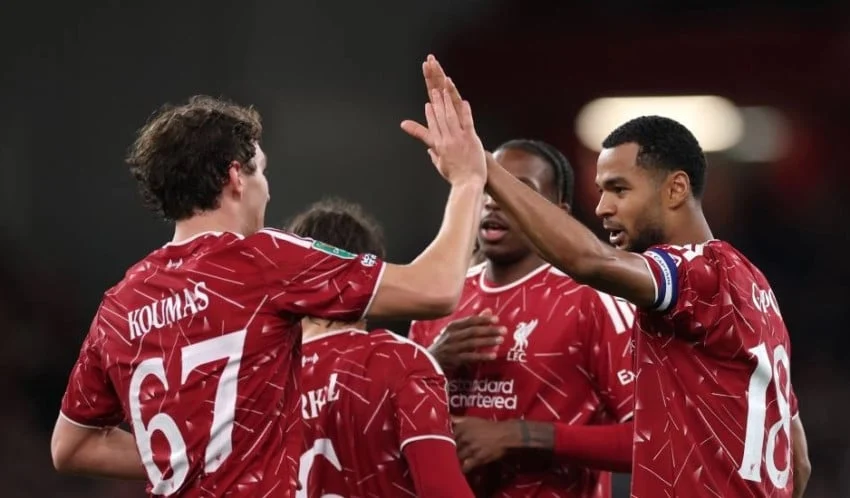
The English domestic football calendar delivered another captivating chapter under the Anfield floodlights as Liverpool Football Club secured a commanding and hard-fought 3-1 victory over Tottenham Hotspur. This high-stakes fixture in the 2026/2027 edition of the League Cup—historically known as the Carabao Cup—underscored the tactical evolution of both sides while highlighting the depth of talent available to the Merseyside outfit. Played on a crisp Wednesday evening, September 16, 2026, the match provided a microcosm of modern English football: high-intensity pressing, tactical flexibility, moments of individual brilliance, and a tense conclusion that tested the resolve of the tournament hosts.
With this result, Liverpool advances seamlessly into the fourth round of the competition, keeping alive their ambitions of adding another domestic trophy to their storied cabinet. For Tottenham Hotspur, the exit represents a premature end to their League Cup campaign, shifting their immediate focus back to the demanding rigors of the English Premier League and continental commitments. The fixture not only showcased established world-class talents but also offered a platform for emerging stars to leave an indelible mark on a classic domestic cup tie.
Main Facts and Match Overview
The fixture at Anfield was characterized by a distinct tactical battle between two of the Premier League’s most ambitious clubs. Liverpool, playing under the weight of home expectations, sought to establish territorial dominance early on, while Tottenham deployed a structured, counter-attacking shape designed to exploit any lapses in defensive concentration.
Liverpool’s 3-1 triumph was anchored by clinical finishing in the final third and resilient defensive organization during periods of sustained second-half pressure. Midfield maestro Alexis Mac Allister opened the scoring in the first half with a sublime piece of technical execution, setting the tone for the evening. Forward Cody Gakpo doubled the advantage shortly after the interval, capitalizing on a rapid transition orchestrated by Mac Allister.
Tottenham, demonstrating commendable tactical resilience, refused to capitulate. Midfielder Conor Gallagher halved the deficit in the 69th minute, capitalizing on a rare defensive miscalculation by Liverpool’s newly acquired goalkeeper, Giorgi Mamardashvili. The goal injected a fresh wave of momentum into the North London side, turning the final twenty minutes into a nerve-wracking affair for the Anfield faithful. However, Liverpool extinguished any hopes of a late comeback deep into stoppage time, sealing the victory and confirming their progression to the next phase of the tournament.
Chronology of Events
The narrative of the match unfolded through a series of pivotal incidents that dictated the rhythm and ultimate outcome of the tie.
The first half began with both sides sparring for control in the middle of the third. Tottenham’s midfield sought to disrupt Liverpool’s buildup play through aggressive pressing, but the home side’s technical security gradually unlocked the visitors’ defensive block. The breakthrough arrived in the 21st minute. A fluid passing sequence orchestrated down the right flank allowed young winger Rio Ngumoha to carve out space. The teenager delivered a precise, measured cutback toward the edge of the penalty area. Alexis Mac Allister, reading the flight of the ball with immaculate timing, met it with a ferocious first-time strike. The Argentine’s effort arrowed unerringly into the top corner of the Tottenham net, leaving the visiting goalkeeper rooted to the spot and sending the Anfield crowd into raptures.
Armed with a 1-0 lead, Liverpool controlled the remainder of the first half, restricting Tottenham to speculative efforts from outside the penalty area.
As the teams emerged for the second half, Tottenham attempted to assert themselves higher up the pitch, leaving spaces in behind their defensive line. Liverpool ruthlessly exploited this tactical vulnerability in the 54th minute. Mac Allister, pulling the strings from a deeper central position, threaded a incisive pass out to Cody Gakpo on the left wing. The Dutch international used his physicality and close-control dribbling to bypass his marker, driving diagonally toward the box before unleashing a lethal, curling effort across goal into the far corner. The scoreline read 2-0, and Liverpool appeared to be cruising toward a comfortable victory.
Football, however, rarely follows a predictable script. Trailing by two goals, Tottenham shifted into a more aggressive, high-risk tactical posture, committing bodies forward and targeting set-pieces as a primary avenue back into the match. The pressure yielded dividends in the 69th minute. Following a well-delivered corner kick into a crowded six-yard box, Liverpool’s Georgian international goalkeeper, Giorgi Mamardashvili, misjudged the flight of the cross, failing to secure a clean catch under pressure. The loose ball dropped invitingly in the danger zone, where Conor Gallagher reacted quickest, powering a header past the scrambling defense and into the back of the net to make it 2-1.
The goal transformed the dynamic of the encounter. Tottenham sensed vulnerability, launching wave after wave of attacks, while Liverpool was forced into a deep defensive block to protect their slender lead. The closing stages witnessed sustained visiting pressure, with Tottenham pinning the hosts inside their own half and forcing a series of corner kicks and dangerous crosses.
Yet, Liverpool’s backline, marshaled with veteran composure, absorbed the blows. As Tottenham poured every available player forward in search of an equalizer deep into stoppage time, the hosts exploited the vast expanses left in the visitors’ half. In the 91st minute, a swift counter-attack caught Tottenham structurally exposed, allowing Liverpool to net their third goal of the evening, definitively extinguishing the threat and sealing a hard-earned 3-1 victory.

Background Context of the League Cup Encounter
The League Cup occupies a unique and fiercely contested space in English football. While often viewed by elite clubs as an opportunity to rotate squads and grant valuable minutes to emerging academy prospects and fringe players, the tournament simultaneously offers the first realistic piece of silverware available in the domestic calendar.
For Liverpool, the competition has historically served as a fertile ground for blending seasoned veterans with exceptionally talented youth prospects. The inclusion of Rio Ngumoha in the starting lineup highlighted the club’s ongoing commitment to a pathway from the youth academy to the senior first team—a philosophy that has yielded significant dividends in recent seasons.
Tottenham Hotspur entered this fixture with a distinct mandate under their coaching staff to break a long-standing domestic trophy drought. The League Cup represents one of the most accessible routes to domestic glory for clubs competing at the upper echelon of the Premier League. Consequently, manager Ange Postecoglou deployed a competitive, experienced starting XI, signaling that the North London club was treating the competition with the utmost seriousness.
The tactical matchup between the two sides added another layer of intrigue. Both managers are renowned for demanding high-octane, possession-based, and vertically ambitious football. This tactical alignment virtually guaranteed an open, entertaining contest devoid of the cautious conservatism that occasionally defines high-stakes knockout matches.
Supporting Data and Tactical Analysis
A detailed statistical review of the match reveals a remarkably balanced contest in terms of general possession, though Liverpool displayed superior clinical efficiency in the critical moments of the game.
- Possession: Liverpool held approximately 52% of possession over the course of the 90 minutes, reflecting their ability to dictate the tempo during the first half and periods of the second half.
- Shots on Target: Both teams managed a high volume of attempts, with Liverpool registering 7 shots on target compared to Tottenham’s 5. This metric underscores the porous nature of both defensive structures when subjected to rapid transitions.
- Expected Goals (xG): Liverpool’s higher shot quality was reflected in their xG rating of 2.14, buoyed by high-percentage opportunities created by Mac Allister and Gakpo. Tottenham posted an xG of 1.42, heavily skewed by Gallagher’s opportunistic goal and late-game pressure.
- Individual Standouts: Alexis Mac Allister delivered a masterclass in midfield control, registering a goal, an assist, a 91% passing accuracy, and three key passes. Rio Ngumoha’s performance justified his selection, showcasing fearless dribbling and tactical maturity that troubled Tottenham’s left-hand side throughout his time on the pitch.
Tactically, the game was decided in the transitional phases. Liverpool’s ability to bypass Tottenham’s initial press through quick, vertical combinations caught the visitors’ midfield out of shape on multiple occasions. Conversely, Tottenham’s success arrived primarily through physical dominance in central areas and capitalizing on set-piece vulnerabilities—an area that Liverpool’s coaching staff will undoubtedly review in subsequent training sessions.
Statements and Reactions from Related Parties
Following the conclusion of the match, both managers offered candid assessments of a contest that tested the physical and emotional limits of their respective squads.
Liverpool’s manager addressed the media with a mixture of satisfaction regarding the result and constructive criticism concerning the nervy conclusion to the match. "We played some exceptional football for the first hour of this match," the manager remarked during the post-match press conference. "The technical quality of the goals from Alexis and Cody demonstrated what we are capable of when our spacing and movement are synchronized. However, cup football is always about survival when the momentum shifts. Tottenham threw everything at us after their goal, and we had to show resilience, defensive commitment, and maturity to see the game out. We are delighted to be in the next round."
On the opposing side, Tottenham’s manager expressed pride in his team’s relentless fighting spirit while lamenting the defensive errors that ultimately proved costly. "We are bitterly disappointed with the result, because we came here to win and progress," he stated. "For large periods, particularly in the second half, we showed incredible character to get back into the game and put them under immense pressure. We got ourselves within touching distance after Conor’s goal, but at this level, against opponents of Liverpool’s caliber, small defensive lapses are punished instantly. We must learn from this, dust ourselves down, and redirect our full focus toward the challenges ahead in the league."
Broader Impact and Implications
The immediate consequence of this League Cup fixture is Liverpool’s safe passage into the fourth round, where they await the draw to determine their next domestic hurdle. The victory provides a valuable psychological boost following a demanding stretch of fixtures, validating the tactical adjustments made by the coaching staff and reinforcing the integration of younger squad members into high-pressure environments. For players like Rio Ngumoha, performances of this caliber accelerate development and earn the trust required for sustained first-team involvement.
For Tottenham Hotspur, the elimination is undoubtedly a bitter pill to swallow, particularly given their stated ambitions of securing silverware this season. However, eliminating the distraction of a demanding domestic cup run could inadvertently provide tactical and physical benefits as the Premier League season intensifies. With a less congested midweek schedule in the months ahead, Tottenham can focus their resources on securing a top-four finish and progressing in European competition.
As the 2026/2027 football season progresses, matches like this one at Anfield serve as a reminder of the unrelenting competitiveness of English domestic football. Every trophy is hard-won, every tactical nuance is ruthlessly exploited, and the margins between victory and defeat remain razor-thin. Liverpool marches on, while Tottenham must regroup, ensuring that the lessons learned under the Anfield lights translate into improved execution when the stakes are raised once again.
