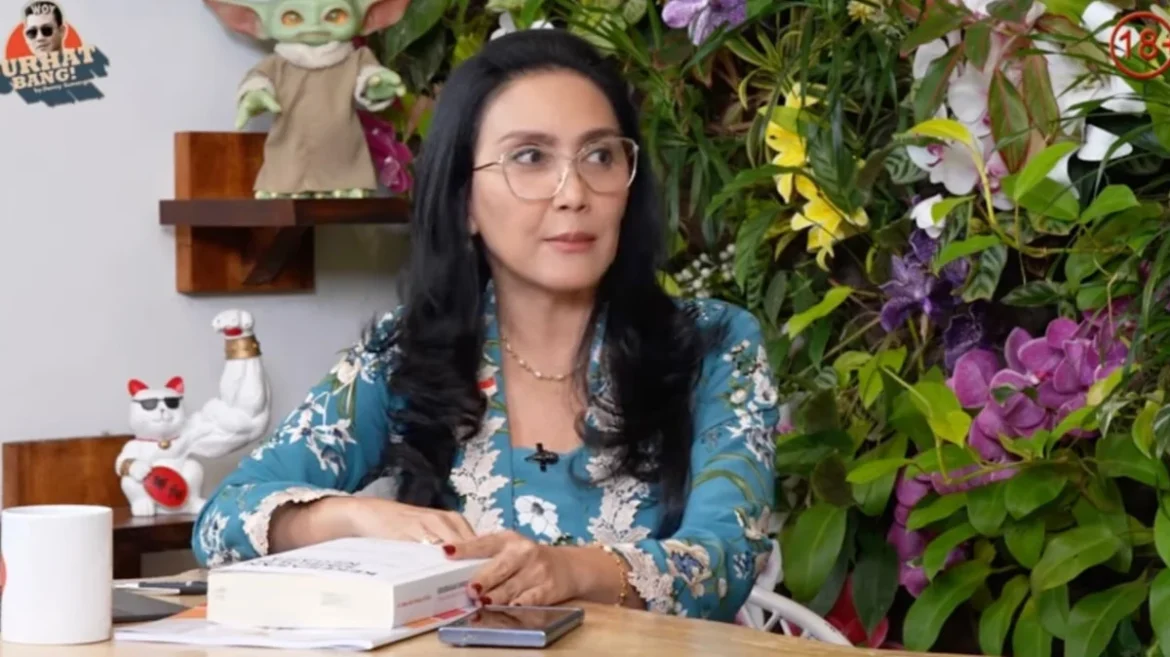
The escalating legal dispute between Rien Wartia Trigina, widely known as Erin Taulany, and her former domestic worker, identified as Herawati, has taken a significant turn into the political arena. On Monday, September 21, 2026, the legal counsel representing Erin Taulany officially filed a formal complaint with the House of Representatives’ Honorary Court (Mahkamah Kehormatan Dewan or MKD) against Rieke Diah Pitaloka, a prominent member of the Indonesian House of Representatives (DPR RI) from the Indonesian Democratic Party of Struggle (PDI-P). The complaint centers on allegations of procedural overreach, with the legal team arguing that Rieke’s active involvement in accompanying Herawati to police headquarters constitutes an inappropriate use of legislative influence.
Chronology of the Dispute
The origins of this conflict trace back to a series of employment-related grievances lodged by Herawati against her former employer, Erin Taulany. Following the termination of her employment, Herawati sought legal recourse, claiming various workplace violations. The situation gained national attention when Rieke Diah Pitaloka, known for her long-standing advocacy for the rights of domestic workers and labor empowerment, appeared alongside Herawati during the latter’s visit to the South Jakarta Metropolitan Police (Polres Metro Jakarta Selatan).
This public appearance served as the primary catalyst for the current friction. Misyal B. Achmad, representing Erin Taulany’s legal interests, argued that while every Indonesian citizen is entitled to legal representation and advocacy, the presence of a high-ranking legislative official creates an inherent power imbalance. The legal team contends that Rieke’s physical presence at the police station could be perceived as an attempt to exert pressure on the investigative process, thereby compromising the neutrality of the law enforcement authorities.
Legal and Ethical Arguments Presented by the Defense
In his statement to the press in the Cilandak area of South Jakarta, Misyal B. Achmad emphasized that the core of their grievance is not the act of advocacy itself, but the "overlap" of roles performed by a public official. According to the defense, there is a clear distinction between a citizen exercising their right to report a grievance and an elected official using their stature to intervene in ongoing police investigations.
"We have filed a report to the MKD regarding the actions of the honorable member, which we believe have crossed the line," Misyal stated. "We respect the right of any individual to seek justice. However, when a member of the DPR RI enters the scene as a companion in a criminal investigation, it changes the nature of the interaction. A legislator represents hundreds of thousands of constituents; their words carry significant weight and, if not carefully managed, can inadvertently influence the trajectory of an investigation."
The legal team further argued that the separation of powers is a fundamental tenet of the Indonesian legal system. They posited that if members of the legislature were permitted to act as quasi-judicial overseers or advocates in private disputes, it would undermine the authority of the judiciary. Misyal’s statement, "If the DPR RI could determine who is right or wrong, we might as well disband the courts and hold trials in the legislative chamber," reflects the gravity of the legal team’s concerns regarding the potential erosion of judicial independence.
The Role of Legislators in Public Advocacy
Rieke Diah Pitaloka has long been a vocal proponent of domestic worker rights, having spent years campaigning for the ratification of legislation aimed at protecting household employees. Her supporters often point to her track record as a legislator who is "on the ground" and accessible to the common person. In the context of the Indonesian political landscape, it is not uncommon for legislators to accompany constituents who claim to have been mistreated by influential figures or corporations.
However, the case of Erin Taulany highlights the fine line between "constituent advocacy" and "political interference." Political analysts suggest that the ethics of such actions depend heavily on whether the official is acting in an oversight capacity—ensuring that the police follow correct procedures—or if they are actively positioning themselves as a party to the dispute.
From a regulatory standpoint, the MKD is tasked with ensuring that members of the DPR RI adhere to a code of ethics that prohibits the abuse of power. The complaint filed by the Erin Taulany camp will require the MKD to determine whether Rieke’s presence was a legitimate exercise of legislative oversight or if it constituted an improper attempt to leverage her position to achieve a specific outcome in a private civil or criminal matter.
Broader Implications for Law Enforcement and Governance
The tension between Erin Taulany’s camp and Rieke Diah Pitaloka serves as a case study for the complexities of high-profile legal disputes in Indonesia. Several factors contribute to the complexity of this situation:
- Public Perception and Media Influence: In high-profile cases, the involvement of a public figure or politician often shifts the narrative from the facts of the case to the character of the individuals involved. This creates an environment where legal proceedings are conducted in the court of public opinion simultaneously with the court of law.
- Institutional Integrity: The South Jakarta Metropolitan Police now face the challenge of conducting an impartial investigation while being observed by the public and potentially influenced by political actors. The police have maintained that they will proceed based on the evidence presented, regardless of the involvement of third parties.
- Legislative Ethics: The MKD’s response to this case will set a precedent for future interactions between lawmakers and the judicial system. If the court rules that Rieke’s actions were inappropriate, it may lead to stricter guidelines for how members of the DPR RI engage in public advocacy cases.
Expected Procedures at the MKD
Following the formal filing of the complaint, the Mahkamah Kehormatan Dewan is expected to initiate a verification process. This involves determining whether the complaint meets the necessary requirements for a formal investigation. If the committee decides to proceed, they will invite the complainant (Erin Taulany’s legal team) and the respondent (Rieke Diah Pitaloka) to provide testimony and evidence.
The process typically involves:
- Verification: Assessing whether the report falls within the jurisdiction of the MKD.
- Clarification: Summoning the parties involved to explain their actions and arguments.
- Adjudication: A final determination by the MKD board as to whether there was an ethical violation.
As of September 22, 2026, Rieke Diah Pitaloka has not issued a detailed public rebuttal to the specific claims made by Misyal B. Achmad. It is anticipated that her team will defend her actions as part of her duty to assist a constituent in need, a role she has performed throughout her tenure in the legislature.
Conclusion
The friction between the legal team of Erin Taulany and the political efforts of Rieke Diah Pitaloka underscores a recurring theme in Indonesian public life: the intersection of personal legal battles and the influence of political figures. By escalating the matter to the MKD, Erin Taulany’s legal counsel has effectively shifted the focus from the initial employment dispute to a broader constitutional question regarding the role of members of parliament in ongoing criminal proceedings.
The outcome of this investigation will likely have lasting implications for how members of the DPR RI conduct their constituent outreach and legal advocacy. As the nation observes these proceedings, the central question remains: how can public officials fulfill their duty to represent the marginalized without overstepping the boundaries of their authority and interfering with the impartiality of the justice system? The MKD’s impending review will be critical in providing clarity on these ethical boundaries, ensuring that both the rights of the accused and the rights of those seeking justice are protected within the framework of Indonesian law.