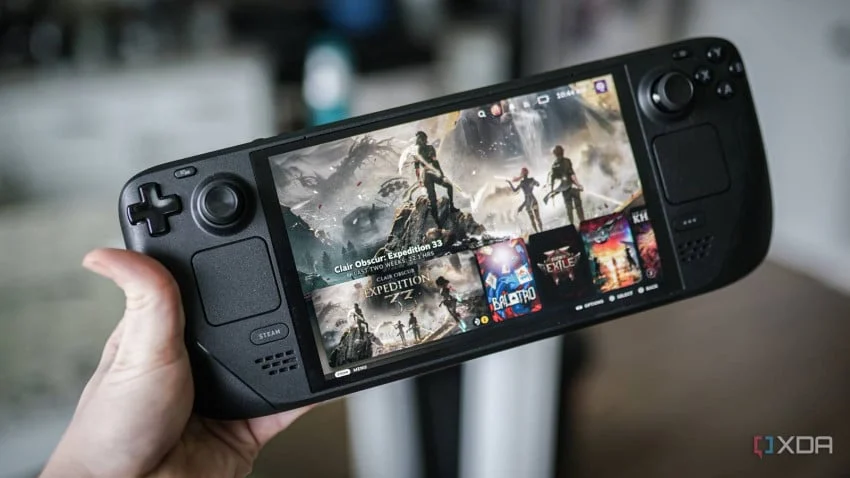
The development of Valve Corporation’s highly anticipated second-generation portable gaming console, provisionally known as the Steam Deck 2, is progressing precisely according to schedule, according to recent statements from the company’s engineering division. This milestone arrives despite persistent global market challenges concerning the procurement and supply of advanced memory components. Valve, a prominent developer and digital distributor based in Bellevue, Washington, initiated the comprehensive research, design, and conceptualization phases for the successor to its groundbreaking handheld gaming personal computer some time ago. Current projections from industry analysts and internal company disclosures suggest that the device is on track for a commercial introduction around the year 2028.
The confirmation of the timeline serves to alleviate widespread apprehension within the consumer technology and video game hardware sectors. Over the past several years, global semiconductor supply chains have experienced unprecedented volatility, characterized by surging demand for high-bandwidth memory, disruptions in raw material acquisition, and fluctuating manufacturing capacities. Observers had previously expressed concern that these macroeconomic headwinds might force hardware manufacturers to delay product roadmaps or significantly increase consumer pricing. However, Valve’s proactive stance indicates that the company has successfully navigated these early logistical hurdles, ensuring that the engineering pipeline for its next-generation hardware remains unobstructed.
Chronology of Evolution: From the Original Steam Deck to the Next-Generation Handheld
To understand the strategic significance of the Steam Deck 2, it is essential to examine the chronological progression of Valve’s hardware ecosystem. The journey began in July 2021 with the initial announcement of the original Steam Deck. Positioned as a revolutionary hybrid between a traditional handheld console and an open-architecture personal computer running SteamOS—a Linux-based operating system—the device captured the imagination of the global gaming community. Upon its commercial launch in February 2022, following minor pandemic-related delays, the original Steam Deck redefined portable PC gaming by offering access to vast Steam libraries in a mobile form factor.
Building upon this momentum, Valve introduced an iterative hardware refresh in November 2023 with the launch of the Steam Deck OLED. While not a generational successor in terms of raw processing power, the OLED model addressed key consumer feedback by introducing a vibrant HDR OLED display, improved battery life, faster Wi-Fi connectivity, and a slightly larger screen within a lighter chassis. This mid-generation upgrade demonstrated Valve’s commitment to refining its hardware architecture while simultaneously gathering invaluable user data and manufacturing expertise.
Throughout 2024 and 2025, Valve engineers focused heavily on software optimization through continuous updates to SteamOS, expanding compatibility with an ever-growing catalog of Windows-based titles through Proton compatibility layers. Concurrently, preliminary conceptualization for the true successor, the Steam Deck 2, commenced. By insulating the early design phases from immediate supply chain shocks, Valve has maintained a deliberate and methodical development cadence. Current internal milestones place the hardware maturation phase in the late 2020s, aligning with the projected 2028 release window.
Engineering Insights and Supply Chain Resilience
The assurance regarding the Steam Deck 2 timeline was underscored by comments from key technical figures within Valve. Pierre-Loup Griffais and Jeff Leinbaugh, both senior software engineers at the company, addressed industry anxieties during recent technical discussions. They clarified that, as of the current development phase, Valve has not encountered structural component shortages or supply chain bottlenecks severe enough to impede the progression of the device. This stability stands in stark contrast to the experiences of other consumer electronics manufacturers, many of whom have struggled to secure consistent allotments of high-performance DRAM and flash memory amid competing demands from artificial intelligence infrastructure developers and data center operators.
The resilience of Valve’s supply chain strategy can be attributed to several factors. As a privately held corporation with substantial revenue streams generated by its dominant digital storefront, Steam, Valve possesses significant financial flexibility. This autonomy allows the company to establish long-term vendor contracts and secure production capacity well in advance of commercial assembly phases. Furthermore, Valve’s measured approach to hardware iterations ensures that components are selected not merely for bleeding-edge novelty, but for long-term manufacturing viability and cost-to-performance efficiency.
Despite these positive updates, Valve has maintained strict confidentiality regarding the specific silicon architecture that will power the Steam Deck 2. Industry analysts and hardware enthusiasts continue to speculate on the choice of the central processing unit and graphics processing unit. However, logical deductions based on historical precedent and software compatibility strongly suggest that the device will continue to utilize a custom Accelerated Processing Unit (APU) developed in close collaboration with Advanced Micro Devices (AMD).
Technical Expectations: The Case for Continued AMD Partnership
The partnership between Valve and AMD has been a cornerstone of the Steam Deck’s commercial and technical success. The original Steam Deck was powered by a custom Van Gogh APU, combining Zen 2 CPU cores with RDNA 2 graphics architecture. This custom silicon was specifically engineered to deliver optimal power efficiency within a restricted thermal design power (TDP) envelope, typically ranging between 4 and 15 watts. This delicate balance of performance and battery longevity is the primary design challenge inherent to handheld gaming hardware.
For the Steam Deck 2, industry observers anticipate that Valve will transition to a more advanced AMD architecture, likely leveraging newer Zen CPU microarchitectures alongside advanced RDNA graphics capabilities. Maintaining a custom AMD APU offers profound technical and economic advantages for Valve. Primarily, it ensures architectural continuity. By remaining within the x86 ecosystem and retaining compatibility with AMD’s instruction sets and software development kits, Valve preserves backward compatibility with the thousands of games already optimized for the original Steam Deck and SteamOS.
Transitioning to a different semiconductor vendor—such as an ARM-based architecture—would necessitate complex emulation layers or extensive recompilation of existing x86 Windows and Linux titles, introducing significant friction for developers and consumers alike. By opting for a custom AMD solution, Valve can streamline software optimization, minimize development costs, and ensure that the Steam Deck 2 delivers a generational leap in graphical fidelity and frame-rate stability without sacrificing the user-friendly, console-like experience that defined its predecessor.
Market Context and Competitive Landscape
The announcement that the Steam Deck 2 is progressing on schedule arrives within a rapidly maturing and increasingly crowded portable PC gaming market. When Valve launched the original Steam Deck in 2022, it essentially created a modern mainstream market category. In the intervening years, numerous competitors have entered the space, seeking to capture market share with their own handheld gaming devices.
Major hardware manufacturers, including ASUS with its ROG Ally series, Lenovo with the Legion Go, and MSI with the Claw, have introduced Windows-based handheld gaming computers. These competing devices often boast higher peak performance figures, faster refresh rate screens, and direct compatibility with Windows-native game launchers such as Xbox Game Pass, Epic Games Store, and EA Play. However, these competitors also face distinct challenges, particularly regarding the complexity of navigating a desktop operating system on a small, controller-based screen, as well as managing battery efficiency.
Valve’s unique market position relies heavily on the symbiotic relationship between its hardware and SteamOS. Unlike competitors tethered to the resource-heavy Windows operating system, Valve exercises end-to-end control over the user experience through a tailored Linux distribution designed specifically for handheld gaming. This optimization allows the Steam Deck to extract maximum performance from modest hardware specifications. Consequently, the anticipated arrival of the Steam Deck 2 around 2028 is viewed by analysts as a pivotal moment that will likely reset performance expectations and form-factor standards across the entire portable gaming industry.
Broader Economic and Consumer Implications
The steady development of the Steam Deck 2 carries significant implications for the broader video game industry, software developers, and consumers. From an economic perspective, Valve’s ability to insulate its hardware pipeline from memory market volatility demonstrates the maturation of the portable PC hardware sector. As demand for mobile computing power surges globally, driven by technological integration and remote work trends, the ability of hardware developers to forecast component needs accurately is critical to maintaining accessible consumer pricing.
For software developers, the confirmation of a future generational successor provides long-term confidence. Game studios and independent developers have increasingly factored the Steam Deck compatibility baseline into their optimization pipelines, recognizing the platform’s substantial installed user base. Knowing that Valve is committed to a multi-year hardware lifecycle culminating in a backward-compatible successor encourages studios to continue investing in performance scaling, graphical presets, and controller integration tailored for handheld play.
For consumers, the primary takeaway is reassurance. Prospective buyers who may have hesitated to invest in current-generation hardware out of fear of immediate obsolescence now have a clearer timeline. With the Steam Deck 2 not expected until approximately 2028, the original Steam Deck and the Steam Deck OLED retain a long, viable operational lifespan supported by ongoing software updates, driver improvements, and community-driven optimization.
Ultimately, Valve’s methodical approach to the Steam Deck 2 underscores a corporate strategy that prioritizes technical refinement and ecosystem stability over rushed product cycles. By successfully navigating global supply chain hurdles and maintaining a clear engineering trajectory, Valve is positioning its next-generation portable console to build decisively upon the legacy of its predecessor, cementing handheld PC gaming as a permanent and thriving pillar of the modern interactive entertainment landscape.