
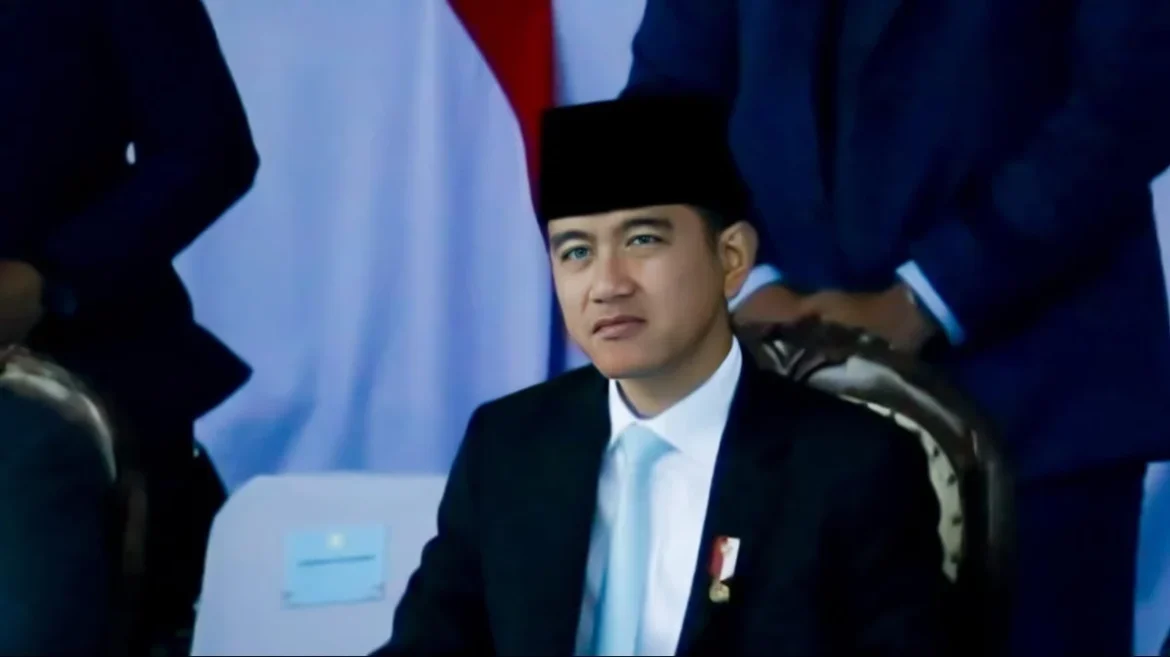
Jakarta – The legal challenge concerning the educational qualifications of Vice President Gibran Rakabuming Raka, currently reviewed at the Constitutional Court (Mahkamah Konstitusi or MK), has sparked widespread public debate and political analysis across Indonesia. While the petitioners argue that procedural mandates under the election laws were compromised, legal and political experts have increasingly characterized the petition as a strategic maneuvers directed toward the 2029 Presidential Election rather than a legitimate constitutional grievance.
Political and legal analyst Boni Hargens recently expressed that the petition goes far beyond a routine judicial review. According to Hargens, the ongoing challenge against the Vice President’s academic credentials functions primarily as a calculated political instrument designed to test the stability and resilience of the current governing coalition under President Prabowo Subianto.
The legal challenge itself has drawn significant media scrutiny due to the prominent figures spearheading the petition. The legal team representing the plaintiffs includes high-profile constitutional lawyers and advocates such as Denny Indrayana, Refly Harun, and Bambang Widjojanto. Together, this coalition of legal minds has formally questioned the absolute validity of the minimum educational requirements mandated for vice-presidential candidates. Specifically, the challenge targets Gibran’s high school diploma and academic background, alleging that they failed to meet the imperative thresholds stipulated under Article 169, letter r, of the General Elections Law (Undang-Undang Pemilihan Umum) prior to and during the initial candidate registration phase.
Chronology of the Legal Challenge and Formal Jurisdictional Hurdles
The controversy surrounding Vice President Gibran Rakabuming Raka’s academic qualifications is not entirely new; however, the escalation of the dispute into a formal constitutional review represents a critical juncture in post-election jurisprudence. The sequence of events traces back to the registration phase of the 2024 Presidential Election, during which the General Elections Commission (Komisi Pemilihan Umum or KPU) verified and subsequently approved the candidacy pairs, culminating in the official inauguration of Prabowo Subianto and Gibran Rakabuming Raka.
Months after the inauguration and deep into the administrative term, the petitioners lodged their formal request with the Constitutional Court. From a formalistic legal standpoint, however, institutional defenders and independent analysts argue that the petition suffers from fundamental procedural flaws.
Boni Hargens, aligning his assessment with the established legal framework and the institutional position of the KPU, emphasized that the petition has fundamentally bypassed the jurisdictional boundaries and statutory deadlines explicitly set forth by national legislation. Consequently, legal experts argue that the Constitutional Court lacks the requisite authority to adjudicate the substance of the claim.
To support this assertion, legal analysts point to two primary statutory pillars governing election disputes and the jurisdiction of the Constitutional Court:
- The General Elections Law (UU No. 7 Tahun 2017): Article 475, paragraph (1), explicitly dictates that any formal objections or challenges regarding the official determination of the election results for the President and Vice President must be submitted to the Constitutional Court no later than three (3) days following the official announcement of the election results by the KPU.
- The Constitutional Court Law (UU No. 24 Tahun 2003 and its subsequent amendments): Article 74, paragraph (3), mirrors the strict limitation, establishing that petitions concerning presidential election results are bound by a rigid timeframe of 3 x 24 hours (three days) from the moment the KPU officially declares the national election tally.
Because the current petition was filed long after the expiration of these statutory deadlines, legal scholars argue that the action is legally time-barred.
Constitutional Limits on the Authority of the Constitutional Court
Beyond the question of timelines, the legal debate centers heavily on the constitutional boundaries that define the powers of the Constitutional Court itself. Boni Hargens elaborated on this constraint by referencing the 1945 Constitution of the Republic of Indonesia (UUD 1945).
"If certain parties argue that the object of the lawsuit is no longer a traditional election dispute, but rather the legitimacy of a constitutional office, we must look directly to Article 24C, paragraph (1) of the 1945 Constitution, jo. Article 10, paragraph (1) of the Constitutional Court Law," Hargens stated in a written release.
Under these foundational legal provisions, the jurisdiction of the Constitutional Court in matters concerning general elections is strictly limitative. The court’s primary authority in this domain is confined exclusively to resolving disputes regarding election results—namely, the vote tallies and the official tabulation certified by the election organizer.
Hargens further noted that if the underlying objective of the petitioners is to fundamentally challenge the sitting Vice President’s tenure or to initiate an impeachment or dismissal process, the Constitutional Court is procedurally incorrect as the primary venue. The removal or dismissal of a sitting president or vice president is governed by separate, highly specific constitutional mechanisms that require substantive political processes through the People’s Consultative Assembly (MPR) and specific legal findings regarding treason, corruption, bribery, other severe criminal offenses, or moral turpitude, following a formal review by the House of Representatives (DPR) and a subsequent ruling by the Constitutional Court regarding the specific legal grounds for impeachment—not a retrospective challenge to pre-registration administrative qualifications.
Political Implications and the 2029 Horizon
The decision by prominent legal figures to bring this petition before the MK has generated intense speculation regarding its broader political ramifications. While the legal merits of the case face steep procedural hurdles, the political utility of the challenge operates on an entirely different plane.
Political observers suggest that high-profile legal challenges against key figures in the executive branch serve multiple strategic functions for opposition factions or critical civil society groups:
- Testing Coalition Cohesion: By targeting the Vice President directly, legal challenges can create friction within the ruling "Red and White Cabinet" (Kabinet Merah Putih) and test the loyalty and unity of the diverse political parties allied with President Prabowo Subianto.
- Narrative Setting: Even if a lawsuit is dismissed on technical or jurisdictional grounds, the filing itself generates extensive media coverage, keeping contentious narratives alive in the public consciousness and framing the administration’s legitimacy as an ongoing subject of debate.
- Positioning for the 2029 Election Cycle: As Boni Hargens pointed out, legal maneuvering of this scale is frequently designed as a long-term play to shape political alignments, influence public perception, and set the electoral battlefield well in advance of the 2029 presidential contest.
Institutional Response and Public Sentiment
Thus far, the official response from the election administration has remained consistent with prior validations. The KPU maintains that all candidate dossiers processed during the 2024 election cycle underwent rigorous administrative verification in strict compliance with the prevailing legal framework at the time. The submission of educational documents, identity checks, and formal clearances were subjected to statutory scrutiny before any candidates were cleared to participate in the democratic process.
Public reaction, meanwhile, remains polarized. Supporters of the administration view the petition as an unnecessary distraction from pressing national issues, particularly economic development, job creation, and social welfare programs prioritized by the Prabowo-Gibran administration. Conversely, critics and proponents of the legal challenge argue that absolute adherence to administrative transparency and educational prerequisites is vital for upholding the integrity of high public office, regardless of temporal deadlines.
Conclusion
As the Constitutional Court reviews the procedural validity of the petition, legal experts anticipate that the case will likely face dismissal based on the strict statutory timelines governing election disputes and the limitative jurisdiction of the court. However, the ripple effects of the challenge extend far beyond the courtroom walls.
The ongoing controversy highlights the complex interplay between law and politics in contemporary Indonesia. As political actors begin positioning themselves for the future, maneuvers such as the educational qualification challenge against Vice President Gibran Rakabuming Raka demonstrate that legal institutions will frequently remain the arena of choice for broader political struggles, underscoring the delicate balance between judicial oversight and political strategy as the nation looks toward the political landscape of 2029.
