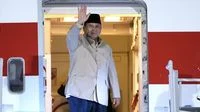
President Prabowo Subianto, who assumed the presidency of Indonesia for the 2024–2029 term, has offered a rare glimpse into his personal life and the strategies he employs to manage the immense psychological demands of leading a nation of over 278 million people. In an exclusive segment of the program titled "President Prabowo Menjawab" (President Prabowo Answers), the head of state articulated his approach to stress management, highlighting physical activity, rest, and literature as his primary mechanisms for maintaining mental clarity.
The Sanctuary of Water: Swimming as Meditative Practice
For President Prabowo, swimming serves as more than mere physical exercise; it acts as a form of "healing" and active meditation. Speaking on the necessity of mental equilibrium for a national leader, he identified the water as a unique environment that facilitates psychological decompression.
"Swimming is, for me, essential. It is meditation in the water," Prabowo stated during the broadcast. His perspective aligns with a growing body of psychological research that emphasizes the sensory benefits of immersion. Prabowo noted that human affinity for water may be rooted in the most primal stage of life—the embryonic state—where a fetus is protected and sustained by amniotic fluid. This biological connection, he suggests, provides an inherent sense of security and restoration when an adult returns to the water.
Psychological experts have long supported the idea that hydrotherapy and swimming can significantly reduce cortisol levels, the body’s primary stress hormone. By engaging in a rhythmic, repetitive motion in a weightless environment, individuals can achieve a "flow state" that allows the mind to disengage from the frantic pace of executive governance. For a president tasked with navigating complex geopolitical shifts and domestic policy challenges, such a ritualized disconnection is considered a vital component of sustainable leadership.
Rest as a Strategic Asset
Beyond aquatic exercise, President Prabowo emphasized the critical importance of sleep discipline. Managing the stamina required for the presidency—a role that demands near-constant availability and rapid decision-making—requires a highly adaptable approach to rest.
Prabowo described himself as an individual capable of falling asleep rapidly, an ability he has cultivated throughout his decades-long career in the military and politics. He noted that he maximizes any available window of downtime, whether it be ten, fifteen, or twenty minutes, to recharge. This ability to "micro-sleep" in transit—aboard vehicles, helicopters, or aircraft—allows him to maintain cognitive sharpness despite a rigorous schedule.
The logistical demands of the presidency involve frequent travel across the Indonesian archipelago and international summits. For a leader who served as the Minister of Defense before ascending to the presidency, the ability to compartmentalize and rest under pressure is a documented survival trait. In leadership psychology, this is often referred to as "strategic recovery," where the capacity to switch off quickly prevents burnout and ensures that the leader remains composed during high-stakes diplomatic or security briefings.
Intellectual Refuge: The Role of Literature
Literature serves as the final pillar of Prabowo’s mental resilience framework. He identified history as a preferred genre, reflecting his background as both a military strategist and a political observer. Among the various works he has engaged with, Paulo Coelho’s Warrior of the Light holds a significant place in his personal library.
Prabowo shared that the book, a thin volume of reflective prose, resonates deeply with his own journey. He first encountered the work during a period of profound personal and professional upheaval in the late 1990s and early 2000s. Following the 1998 political transition in Indonesia, Prabowo faced immense scrutiny, including allegations regarding his military career and his tenure in the Indonesian Armed Forces.
"I was at my lowest point," Prabowo reflected. "I was accused of various things—coups, kidnappings, everything. I was at the nadir." He noted that reading Coelho’s work during that era felt like a personal conversation, providing him with the philosophical fortitude to navigate the "wilderness" of his political exile before eventually returning to public service as Defense Minister and subsequently winning the presidency.
Contextualizing the Presidential Burden
The presidency of Indonesia is historically characterized by intense public scrutiny and a relentless schedule. Since the democratic reforms of 1998, each president has grappled with the challenge of managing the "Istana" (Presidential Palace) culture while attempting to maintain personal well-being.
Data from the Executive Office of the President indicates that the workload involves presiding over multiple cabinet meetings, regional development reviews, and foreign policy engagements weekly. Prabowo’s public admission regarding his mental health practices represents a shift in the discourse surrounding the Indonesian presidency. Historically, leaders have maintained a stoic, inaccessible image. By humanizing his experiences, Prabowo is setting a precedent that acknowledges the psychological toll of the office.
Implications for Leadership and Public Perception
The disclosure of these "healing" methods carries broader implications for how the public perceives the capacity of their leader. Observers note that by discussing his vulnerability and his methods of recovery, Prabowo is signaling a focus on sustainable governance.
Furthermore, his endorsement of reading and swimming as essential tools for resilience may encourage a more holistic approach to mental health among the Indonesian populace. In a country where the conversation around mental health has traditionally been stigmatized, the president’s openness serves as a potential catalyst for destigmatization.
Analysis: Balancing Strategy and Serenity
Political analysts suggest that Prabowo’s focus on meditation and rest is a pragmatic response to the realities of modern statecraft. In an era of digital hyper-connectivity, the ability of a head of state to detach is increasingly rare.
From a historical perspective, many successful leaders have relied on specific habits to maintain their sanity. Winston Churchill, for instance, famously relied on painting and afternoon naps to manage the pressures of World War II. Similarly, Prabowo’s reliance on short, high-efficiency naps and meditative swimming suggests a disciplined approach to internal energy management.
However, the effectiveness of these methods remains tethered to the external performance of his administration. While the public may appreciate the transparency regarding his self-care routines, the ultimate metric of his success will be the government’s ability to deliver on campaign promises, economic growth, and the maintenance of national security.
Chronology of Public Service
To understand the weight of the burdens Prabowo references, one must look at the trajectory of his career:
- 1970s–1998: A prominent military career in the Indonesian National Armed Forces, rising to the rank of Lieutenant General.
- 1998–1999: A period of intense professional and political crisis following the collapse of the New Order regime.
- 2008: Co-founded the Gerindra Party, marking his formal transition into national politics.
- 2014–2019: Led significant opposition movements and contested the presidency in two consecutive general elections.
- 2019–2024: Served as the Minister of Defense under the administration of Joko Widodo, bridging political divides.
- 2024: Inaugurated as the 8th President of the Republic of Indonesia.
Conclusion
President Prabowo Subianto’s reflections provide a window into the private mechanisms of a public figure navigating the highest office in the nation. By emphasizing the necessity of physical movement, the discipline of rest, and the intellectual sustenance of literature, he outlines a framework for endurance that is both personal and strategic. As he continues his term, these practices will likely remain the silent engine behind his public-facing duties, serving as a buffer against the persistent pressures of governing one of the world’s most populous and complex nations. Whether these habits will continue to provide the required clarity for the challenges ahead remains a subject of ongoing observation, but for now, they form the cornerstone of his approach to the presidency.