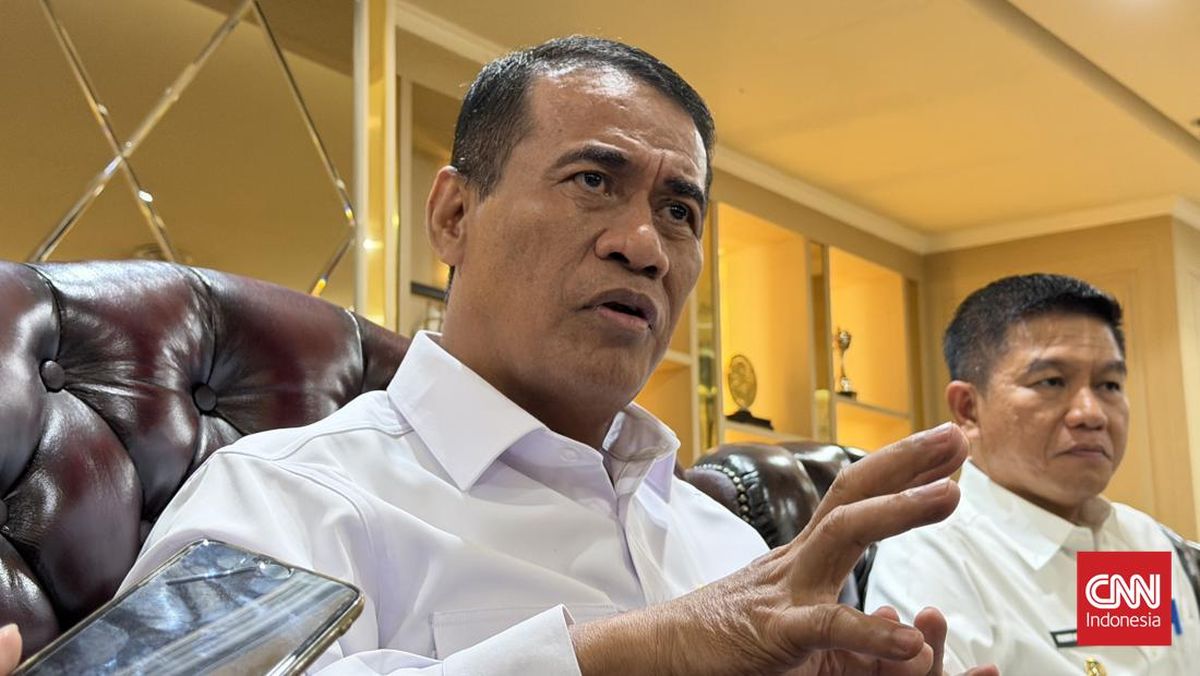
Jakarta, Indonesia – In a decisive move to counter pervasive misinformation, Indonesia’s Minister of Agriculture, Andi Amran Sulaiman, unequivocally rejected claims that the government is acquiring community land in Papua for an astonishingly low price of Rp 100,000 per hectare. Speaking emphatically on Sunday, July 19, 2026, the Minister branded these allegations as "cruel slander" against the government and its agricultural development programs in the easternmost region of the archipelago. He firmly asserted that all agricultural land developed under government initiatives remains unequivocally the property of the local communities.
Combating Disinformation at a National Youth Forum
The strong rebuttal came during the 65th Milad Reception of the Ikatan Pelajar Muhammadiyah (IPM), or Muhammadiyah Student Association, and its National Work Meeting. Held at the Universitas Muhammadiyah Jakarta, the event, themed "Resonansi Algoritma Pelajar Berdampak" (Resonance of Impactful Student Algorithms), gathered approximately 2,000 IPM cadres from across Indonesia. The forum served as a significant platform for youth engagement and discussion on national issues, making it a crucial venue for a high-ranking official like Minister Amran to address sensitive topics and clarify government policies.
The Minister’s remarks were a direct response to a question posed by Muhammad Tamim Setiaji, an IPM delegate from South Tangerang, Banten. Setiaji highlighted the widespread circulation of information suggesting that land in Papua was being unjustly taken from communities for less than Rp 100,000 per hectare. He appealed to the Minister for clarification, emphasizing the urgent need for young people to discern rational facts amid a deluge of often-misleading information. This exchange underscored the increasing challenge of disinformation in the digital age and the critical role of informed public discourse.
The Genesis of the "Cruel Slander"
Minister Amran’s use of the term "fitnah" (slander or baseless accusation) underscored the severity with which the government views these allegations. The narrative of land being forcibly or unfairly acquired at negligible prices is particularly potent and damaging in Papua, a region historically sensitive to land rights issues and resource exploitation. Over decades, land disputes, often involving indigenous customary rights (hak ulayat) versus state or corporate interests, have been a recurring source of tension. The perpetuation of such narratives, regardless of their veracity, can easily erode public trust and exacerbate existing social challenges.
The Minister clarified that the government’s approach to agricultural expansion in Papua is diametrically opposed to these accusations. Rather than land acquisition, the strategy focuses on land development in partnership with and for the benefit of local communities. This involves transforming unproductive or underutilized land into fertile agricultural zones, primarily for rice cultivation, while ensuring that ownership rights remain firmly with the indigenous population.
Trillions in Investment, Zero Land Acquisition
Detailing the government’s extensive commitment, Minister Amran revealed that approximately 137,000 hectares of agricultural land have been developed in Papua to date. Crucially, he reiterated that "the rice fields belong to the people. None of it belongs to the state." This statement directly refutes the core of the land acquisition allegations.
The development efforts are not merely about clearing and planting. They encompass a comprehensive package of support designed to uplift the productivity and welfare of Papuan farmers. This includes:
- Infrastructure Development: Extensive irrigation networks are built to ensure consistent water supply, a fundamental requirement for modern agriculture, especially rice cultivation. This infrastructure is often a significant investment, transforming rain-fed or uncultivated areas into productive farmland.
- Provision of Agricultural Machinery: Hundreds of pieces of agricultural machinery, ranging from tractors and harvesters to planters and processing equipment, are provided to local communities free of charge. This aims to modernize farming practices, reduce manual labor, increase efficiency, and ultimately boost yields.
- Financial and Technical Assistance: The Minister highlighted that the total value of assistance provided to Papuan communities for agricultural development amounts to "trillions of rupiah." This substantial investment covers various aspects, including seeds, fertilizers, training programs, and market access support.
- Support for Local Commodities: Beyond staple crops like rice, the government also actively supports the development of indigenous commodities that align with local wisdom and ecosystems, such as sago and coconut. These crops are vital for the local economy and food security, reflecting a culturally sensitive approach to agricultural development.
- Formation of Food Brigades: The establishment of "Brigade Pangan" (Food Brigades) signifies a structured approach to agricultural support, likely involving teams dedicated to assisting farmers with planting, harvesting, and addressing various agricultural challenges.
Papua’s Strategic Role in National Food Security
The government’s intensified focus on agricultural development in Papua is not isolated but forms a crucial component of Indonesia’s broader national food security strategy. Papua, with its vast land resources and relatively low population density compared to other major islands, holds immense potential to become a significant food basket for the nation, particularly for staple crops and certain plantation commodities.
Indonesia, as an archipelagic nation, faces persistent challenges in ensuring equitable food distribution and reducing reliance on imports. Developing frontier regions like Papua is seen as a strategic imperative to diversify food production centers, enhance resilience against climate change impacts, and empower local economies. The 137,000 hectares of developed land represent a substantial step towards realizing this vision, contributing to national rice self-sufficiency targets and providing sustainable livelihoods for Papuan communities.
However, developing agriculture in Papua also presents unique challenges, including logistical complexities due to its rugged terrain, varying climatic conditions, and the need to respect diverse customary land practices and cultural sensitivities. The government’s emphasis on community ownership and free provisions aims to address these challenges by fostering local participation and ensuring that development benefits directly accrue to the indigenous population.
The Broader Implications: Trust, Transparency, and Sustainable Development
Minister Amran Sulaiman’s robust denial and detailed explanation carry significant implications across several fronts:
- Restoring Public Trust: Directly addressing and refuting "cruel slander" is vital for maintaining public trust in government programs, especially in regions like Papua where historical grievances can easily be exploited by misinformation. Transparency about financial investments and land ownership is paramount.
- Countering Disinformation: The incident underscores the pervasive nature of disinformation campaigns and the necessity for public officials to proactively engage and provide factual counter-narratives. The question from an IPM delegate highlights the role of youth in seeking truth and the importance of media literacy.
- Ensuring Program Effectiveness: By clarifying the nature of its interventions, the Ministry of Agriculture aims to ensure that its efforts are understood correctly, thereby fostering greater community cooperation and ensuring the successful implementation of agricultural projects. The commitment of "trillions of rupiah" in aid signifies a long-term, substantial investment that requires clear communication to justify its scale and impact.
- Promoting Equitable Development: The government’s emphasis on community ownership and free provision of resources aligns with principles of equitable development, aiming to empower local farmers rather than displacing them. This approach is critical for fostering sustainable economic growth that truly benefits the local population.
- Setting a Precedent for Future Engagements: This open dialogue at the IPM event could serve as a model for future engagements between government officials and civil society, encouraging direct communication to address concerns and build consensus around national development initiatives.
Looking ahead, the success of these agricultural programs in Papua will depend not only on the scale of investment and infrastructure development but also on continuous dialogue, transparent governance, and genuine community participation. Ensuring that the benefits reach all segments of the local population, coupled with environmental sustainability practices, will be key to transforming Papua into a thriving agricultural hub that contributes significantly to Indonesia’s food security while uplifting its people. The Minister’s firm stance is a critical step in setting the record straight and reinforcing the government’s commitment to responsible and inclusive development in Papua.