
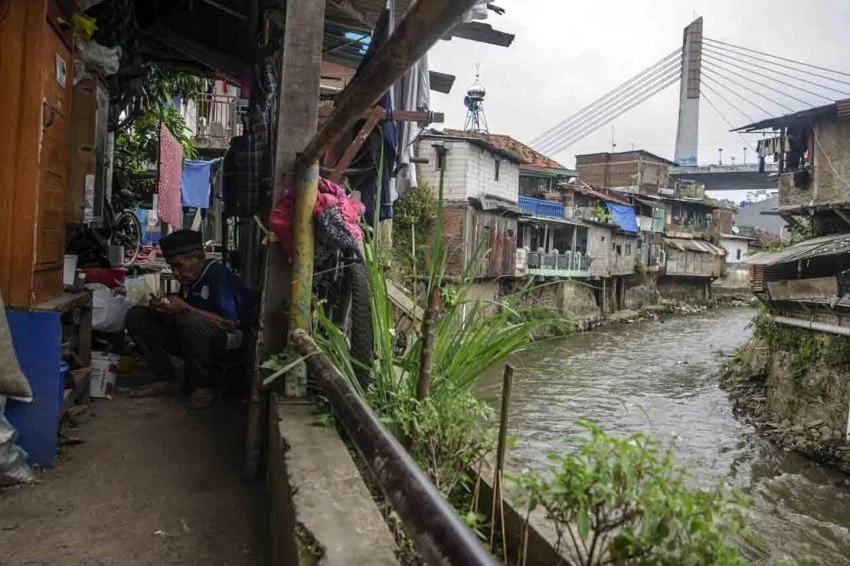
The accuracy of national poverty targeting and social assistance distribution relies fundamentally on the continuous updating of grassroots socioeconomic data rather than mere adjustments to mathematical calculation models, according to the Central Statistics Agency (BPS). Speaking in Jakarta, senior statistical officials underscored that the integrity of the decile (desil) ranking system—which categorizes the Indonesian population based on welfare levels from the poorest ten percent to the wealthiest ten percent—is directly proportional to the freshness and precision of the underlying data fields. This realization has taken center stage as the Indonesian government prepares to overhaul its social protection architecture through the implementation of the National Single Social and Economic Data System (Data Tunggal Sosial dan Ekonomi Nasional – DTSEN).
The ongoing debate surrounding poverty measurement and subsidy distribution has intensified as policymakers seek to eliminate leakage, misallocation, and bureaucratic inefficiencies that have historically plagued state aid programs. By shifting the primary focus from purely methodological refinements to rigorous, ongoing data collection, BPS aims to provide a definitive statistical foundation that can withstand rigorous public scrutiny and accurately capture the economic realities of millions of households across the archipelago.
The Core Problem: Why Data Freshness Trumps Methodological Tweaks
During a recent high-level discussion focusing on decile determination methodologies and poverty measurement frameworks in Jakarta, BPS Director of Statistical Methodology and Data Science, Setia Pramana, addressed the fundamental misconceptions surrounding how households are ranked. For years, critics and even some policymakers assumed that discrepancies in social assistance targeting were primarily the result of flawed algorithmic formulas or inadequate statistical weighting. However, Pramana challenged this assumption, arguing that even the most sophisticated econometric models will yield inaccurate results if fed outdated information.
The crux of the argument lies in the dynamic nature of poverty and household economics. Families move in and out of financial vulnerability due to job losses, health emergencies, inflation, regional economic shifts, and seasonal labor market fluctuations. If a national database relies on census figures that are several years old, it fails to capture newly impoverished populations—often referred to as the "new poor"—while continuing to allocate resources to households whose economic standing has improved.
Consequently, Pramana stressed that the reform must target the information pipeline rather than getting bogged down in endless debates over ranking formulas. The objective is to ensure that the data being processed reflects the actual, day-to-day conditions of citizens on the ground. This perspective marks a significant shift in how Indonesia’s statistical agency approaches the governance of its massive welfare databases, signaling a move toward agile, real-time data administration.
Deconstructing the Decile: More Than Just Income or Expenditure
A common misconception among the general public is that the decile ranking system functions strictly as a wealth ladder determined by monthly household income or direct consumption expenditures. In reality, the DTSEN utilizes a multidimensional approach to poverty and welfare assessment.
Pramana clarified that the determination of decile rankings within the national database does not rely on a single monetary threshold. Instead, the algorithm processes more than 40 distinct socioeconomic indicator variables to construct a holistic profile of each household. These variables encompass a wide array of living conditions, including:
- Household Characteristics: Family size, dependency ratios, educational attainment of household heads, and employment status.
- Housing Infrastructure: Structural integrity of dwellings, flooring and roofing materials, and the physical security of the home.
- Asset Ownership: Possession of durable goods such as motorcycles, television sets, refrigerators, smartphones, and agricultural or business equipment.
- Basic Amenities: Access to safe drinking water, electricity sources, cooking fuel types, and adequate sanitation facilities.
Because the system evaluates this expansive matrix of variables, there is no single, rigid income cutoff that automatically consigns a family to a specific decile. For instance, a family with a modest cash income but secure access to land, durable assets, and proper sanitation may be ranked differently than a family living in an urban slum with sporadic cash inflows but zero assets and inadequate housing infrastructure. This multidimensional complexity reinforces why periodic updates to all 40-plus variables are strictly necessary to maintain the integrity of the decile structure.
The Evolution of the National Single Social and Economic Data System
The establishment of the DTSEN represents a major milestone in Indonesia’s administrative reform, born out of a long-standing historical challenge: data fragmentation across different government ministries and agencies. For decades, various state institutions maintained independent registries for their respective social programs. The Ministry of Social Affairs managed the Integrated Social Welfare Data (DTKS), while regional governments maintained localized poverty databases, and various economic stabilization programs relied on distinct household surveys.
This fragmentation led to significant systemic inefficiencies. Beneficiary registries frequently overlapped, administrative costs soared due to redundant data collection efforts, and countless vulnerable citizens fell through the cracks because they were registered in one database but excluded from another. Recognizing these systemic vulnerabilities, the Indonesian government initiated a structural consolidation drive to establish a unified, interoperable single source of truth for all social protection initiatives.
The integration process involves bridging data streams across 18 separate ministries and state institutions. However, this cross-agency data sharing must navigate stringent legal and technical frameworks to protect personal data privacy, aligning with national regulations on information governance. The BPS serves as the methodological backbone of this consolidation, ensuring that data contributed by diverse entities is harmonized, cleaned, and standardized before being processed into decile rankings.
Chronology of Reform and Future Rollout Milestones
The current emphasis on data freshness is tightly synchronized with the government’s broader timeline for reforming social assistance distribution. The reform agenda features several critical milestones leading up to the targeted rollout of next-generation digital welfare programs:
- Mid-2024 to Late 2025: Intensified harmonization of legacy databases, bridging disparate ministerial registries into the unified DTSEN framework, and conducting localized data verification pilots.
- September 2026: BPS leadership publicly articulates the necessity of prioritizing continuous data updates over methodological alterations during statistical seminars in Jakarta.
- Late 2026: Finalization of data infrastructure upgrades to support high-frequency updates and seamless cross-institutional data integration.
- Early 2027: Projected rollout of advanced digital social assistance (bansos digital) disbursements, specifically targeted at households categorized within Decile 1 through Decile 5, as spearheaded by coordinating ministries including the Coordinating Ministry for Maritime Affairs and Investment.
This timeline highlights the urgency with which BPS and collaborating agencies must operate. With digital social assistance scheduled for deployment in early 2027, the underlying database must be rigorously cleansed, updated, and validated to ensure that funds reach the intended recipients without administrative delay or leakage to ineligible households.
Operationalizing High-Frequency Updates: The Three-Month Cycle
To effectively capture the fluid dynamics of community welfare, BPS has instituted an ambitious operational model: updating core database components every three months. Traditional census methods, which historically relied on massive, decennial or quinquennial headcounts, are fundamentally unsuited for managing modern economic shocks or fast-moving urban poverty trends.
Under the three-month update cycle, statistical field officers and data systems are designed to ingest new administrative records, civil registry updates, and localized reporting on a rolling quarterly basis. This high-frequency cadence allows the government to respond dynamically to macro-level economic disruptions, such as sudden spikes in food inflation, global supply chain shocks, or localized natural disasters that destabilize regional labor markets.
Furthermore, BPS is actively opening channels for participatory data reporting. Recognizing that government enumerators cannot monitor every household continuously, the agency encourages citizens and local community leaders to report significant changes in their socioeconomic status through designated administrative channels.
"The hope is that with up-to-date data, we can capture the evolving dynamics of community conditions," Setia Pramana noted. "If something changes, citizens need to report it. When discussing data, it is entirely feasible for us to collaborate with all ministries and institutions to verify these reports."
This feedback loop between citizens, local administrative units, and central statistical processors is designed to minimize inclusion and exclusion errors—the twin nemeses of social protection policy. Exclusion errors occur when genuinely impoverished households are left off the registry and denied vital aid, while inclusion errors occur when well-off households wrongfully receive government subsidies.
Broader Implications for National Policy and Fiscal Efficiency
The resolute focus on data freshness and multidimensional decile accuracy carries profound implications for Indonesia’s macroeconomic stability and fiscal management. State budgets allocated for energy subsidies, direct cash transfers (BLT), conditional cash transfers (Program Keluarga Harapan – PKH), and educational assistance represent hundreds of rupiah trillions annually.
When these massive fiscal outlays are guided by inaccurate or stagnant data, the opportunity cost for national development is immense. Misallocated subsidies strain the state budget, reduce the fiscal space available for productive infrastructure investments, and fail to achieve their primary objective of accelerating poverty alleviation and reducing income inequality.
By transitioning to the DTSEN framework backed by quarterly BPS updates, the government anticipates several key structural benefits:
- Optimized Fiscal Targeting: Subsidies and digital social assistance can be precisely calibrated to reach Decile 1 through Decile 5—spanning from the extreme poor to the vulnerable lower-middle class—without bleeding resources into upper deciles.
- Enhanced Crisis Resilience: In the event of a sudden economic crisis or pandemic-style disruption, the government can leverage the high-frequency database to deploy targeted economic stimulus and safety nets within weeks rather than months.
- Administrative Streamlining: Eliminating duplicate registries and harmonizing data across 18 ministries reduces bureaucratic overhead, minimizes inter-agency friction, and creates a transparent audit trail for public expenditures.
- Strengthened Public Trust: Accurate and transparent allocation of state aid builds civic confidence in government institutions, mitigating social tensions arising from perceived unfairness in assistance distribution.
Challenges in Implementation and Data Governance
Despite the clear strategic advantages of the DTSEN framework, experts and institutional stakeholders acknowledge that significant operational hurdles remain. Coordinating data flows across 18 distinct ministries and agencies requires overcoming institutional silos, incompatible legacy software systems, and varying standards of data hygiene at the regional government level.
Data security and privacy represent another critical dimension of the reform. As the database integrates sensitive personal information—ranging from housing conditions and asset ownership to civil registry identifiers—it must comply strictly with Indonesia’s Personal Data Protection (PDP) law. Ensuring that decentralized access points across multiple ministries do not compromise citizen data security requires robust cybersecurity architecture, encrypted transmission protocols, and strict access governance.
Moreover, local government buy-in is essential. District and village-level administrators play a frontline role in validating household reports and identifying families whose circumstances have changed. If local authorities fail to maintain objective reporting standards or allow political interference in local data collection, the integrity of the higher-level decile rankings can be compromised before the data even reaches BPS servers.
Conclusion: A Paradigm Shift in Statistical Governance
The insistence by BPS that data freshness supersedes methodological tinkering marks a mature turning point in Indonesia’s approach to social welfare administration. By moving away from static, outdated registries and embracing a multidimensional, high-frequency updating model, the state is laying the groundwork for a more resilient and equitable society.
As Indonesia marches toward the implementation of digital social assistance targeting Deciles 1 through 5 in early 2027, the success of these ambitious policies will ultimately rest on the quality, accuracy, and currency of the data coursing through the DTSEN. Through sustained inter-agency collaboration, rigorous quarterly updates, and active public participation, BPS aims to ensure that no citizen is left behind simply because their changing economic reality failed to make it onto an aging spreadsheet.
