
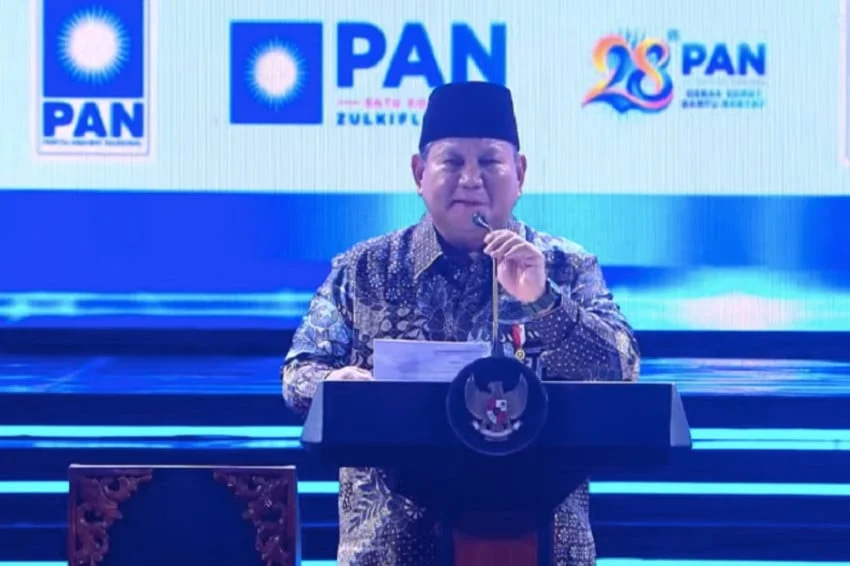
President Prabowo Subianto has signaled a transformative shift in Indonesia’s national education policy, announcing his intention to convene a cabinet-level limited meeting (ratas) to deliberate on the implementation of free education across all levels of state-run institutions. This directive encompasses elementary, middle, and high schools, as well as public universities, aiming to alleviate the financial burden on millions of Indonesian households. The announcement was made during the 28th-anniversary celebration of the National Mandate Party (PAN) held at the Jakarta International Convention Center in Senayan, Jakarta, on Friday, September 18, 2026.
The President’s commitment underscores a broader administration strategy to prioritize human capital development as a cornerstone of Indonesia’s goal to become a high-income nation. By targeting the total removal of tuition fees in public institutions, the government seeks to ensure equitable access to quality education, regardless of socioeconomic background.
The Urgency of Educational Reform
During his address, President Prabowo emphasized that the government is operating under a sense of urgent necessity. He noted that the needs of the populace, particularly regarding foundational infrastructure and human development, cannot be postponed. His rhetoric reflects a transition from long-term planning to immediate, actionable implementation.
"I will hold a limited meeting soon to ensure that the cost of public education is free. Education in state-run SD (elementary), SMP (middle school), SMA (high school), and state universities must be free," the President stated. This bold policy shift is framed as part of an aggressive two-year push to address systemic gaps in the nation’s infrastructure and social welfare systems.
The President further clarified that the government’s focus extends beyond mere tuition costs. The initiative includes comprehensive improvements to physical school infrastructure, the modernization of sanitation facilities, and a renewed emphasis on the welfare of educators, which the administration identifies as a critical pillar for improving national learning outcomes.
Chronology of Policy Development
The path toward this announcement has been marked by several key milestones in the current administration’s education agenda:
- Initial Campaign Pledges (2024): During the presidential campaign, Prabowo Subianto repeatedly emphasized the "Free Nutritious Meal" program and the expansion of educational access as his flagship social programs.
- Early Administration Focus (2025): Throughout the first year of his presidency, the government focused on curriculum standardization and the initial stages of teacher recruitment reform, recognizing that structural changes are required before scaling up funding.
- The Mid-2026 Pivot: By the third quarter of 2026, the administration began shifting focus toward direct financial relief for families, culminating in the September 18 announcement regarding tuition-free education.
- Current Status (September 2026): The government is currently preparing for a limited cabinet meeting to assess the fiscal feasibility and the necessary budgetary allocations to subsidize the state education sector entirely.
Socioeconomic Context and Supporting Data
The push for free public education comes at a critical juncture for Indonesia’s demographics. According to data from the Central Statistics Agency (BPS), education costs remain one of the primary drivers of household expenditure among lower-middle-class families. As Indonesia aims to leverage its "demographic bonus"—the period where the working-age population outnumbers dependents—the quality and accessibility of education are paramount.
Public university tuition in Indonesia, known as Uang Kuliah Tunggal (UKT), has been a subject of significant public debate in recent years. While state universities currently offer subsidized rates, many families still find the remaining costs prohibitive. By removing these financial barriers, the government aims to increase the Gross Enrollment Ratio (GER) for higher education, which currently lags behind regional peers in Southeast Asia.
Furthermore, the condition of school infrastructure remains a persistent challenge. Data from the Ministry of Education, Culture, Research, and Technology has historically indicated that a significant percentage of school buildings in remote regions require urgent renovation. President Prabowo’s focus on the physical state of schools—including sanitation—suggests an integrated approach that ties tuition relief to the overall quality of the learning environment.
Implications of a Tuition-Free Policy
The implementation of a completely free public education system carries profound economic and social implications.
1. Fiscal Challenges and Budgetary Reallocation:
Moving toward free education at the university level will require a substantial increase in the national education budget, which is currently mandated by the Constitution to be at least 20% of the State Budget (APBN). Analysts suggest that this move will likely necessitate the reprioritization of other government expenditures or the expansion of the tax base to ensure long-term sustainability without increasing the national deficit.
2. Increased Enrollment and Demand:
A move to free education is expected to trigger a surge in enrollment numbers. While this is positive for human development, it places immense pressure on the capacity of state universities and schools. The government will need to address potential overcrowding, student-to-teacher ratios, and the capacity of existing infrastructure to accommodate a larger student body.
3. Quality Assurance and Teacher Welfare:
As the President noted, the system must be improved starting from teacher recruitment. Free education is only effective if the quality of instruction is high. The government’s focus on teacher welfare is a crucial precursor, as low-paid educators often struggle to maintain high levels of engagement. By professionalizing the recruitment and compensation structure, the government hopes to create a virtuous cycle of better teaching and better student outcomes.
Official Responses and Stakeholder Perspectives
While the official policy is still in the planning phase, educational experts and public policy analysts have offered varying perspectives.
Educational observers have largely welcomed the intent, citing the "democratization of education" as a vital step toward social mobility. However, many experts advise that the government must carefully distinguish between "free" and "quality." "Free education is a massive social gain, but it must be supported by adequate funding to ensure that the quality of education does not suffer due to the influx of students or the strain on resources," noted a representative from an educational think tank.
The Ministry of Finance and the Ministry of Education are expected to play a central role in the upcoming limited meeting. Their task will be to calculate the exact fiscal impact and create a phased implementation plan that avoids disrupting the existing academic ecosystem.
Furthermore, the role of local governments in managing school infrastructure must be aligned with the central government’s new directives. Historically, the division of authority between central and regional governments has sometimes led to delays in maintenance and funding distribution. A synchronized policy, as suggested by the President’s directive, will require a high level of coordination across administrative levels.
The Path Forward
The proposed limited meeting will be a defining moment for the Prabowo administration. It will serve as a platform for the President to present his vision to his cabinet and solicit technical strategies for execution. The public is currently awaiting further details on the timeline for this policy—whether it will be implemented in stages, starting with lower education levels before extending to universities, or if a nationwide rollout is planned.
As the administration navigates the complexities of this transition, the overarching goal remains clear: to eliminate the cost barrier for Indonesian citizens seeking an education. By addressing both the financial obstacles and the systemic quality issues, the government is signaling a departure from previous educational models.
In conclusion, President Prabowo Subianto’s call for free public education represents a major policy pivot that could redefine the Indonesian socio-economic landscape. While the logistical and fiscal challenges are significant, the initiative reflects a prioritized commitment to the nation’s future. The success of this policy will depend heavily on the rigor of the upcoming planning, the sustainability of the financing model, and the administration’s ability to execute a systemic reform that encompasses not just the price of admission, but the total quality of the student experience. As the nation watches the development of these cabinet discussions, the focus will remain on how the government balances its ambitious social agenda with the realities of fiscal discipline and operational capacity.
