
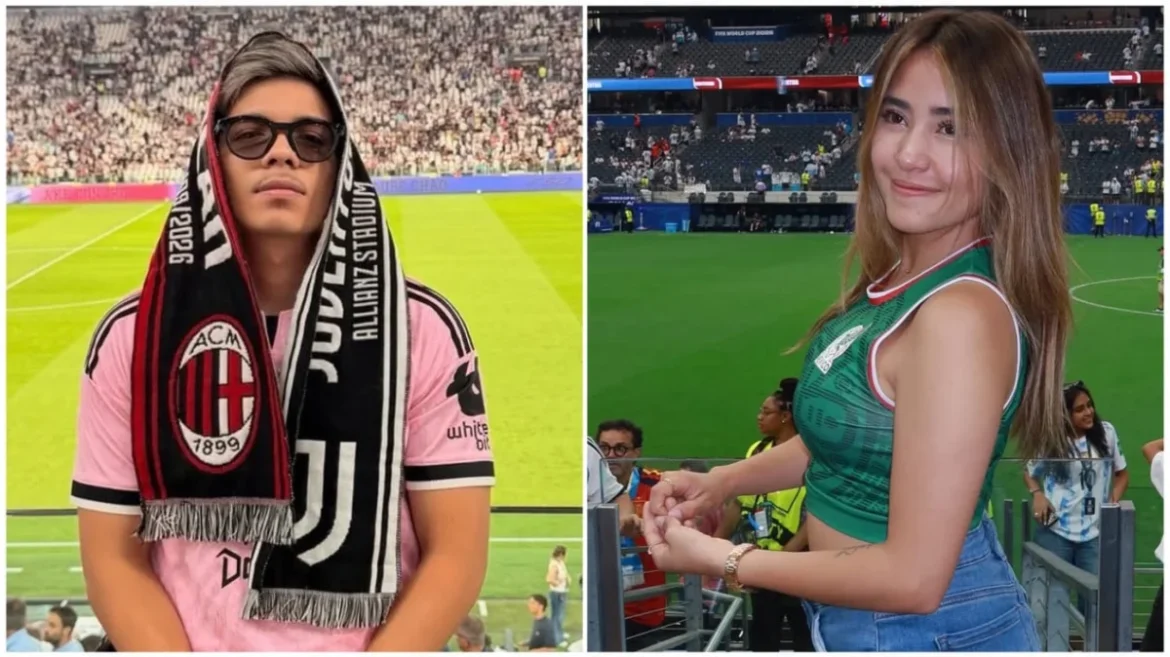
The rapid advancement of artificial intelligence technologies has increasingly empowered digital creators and innovators worldwide, yet it has simultaneously introduced complex challenges concerning digital ethics, misinformation, and privacy. A recent controversy involving prominent Indonesian content creator Atta Halilintar and Mexican football influencer Mercedes Roa serves as a stark illustration of how sophisticated image-manipulation tools can be weaponized to fabricate sensational narratives. The incident, which unfolded across multiple social media platforms in September 2026, captured widespread public attention after an AI-generated image depicted the two public figures in a fabricated, romantic scenario, immediately triggering online speculation and necessitating swift official clarifications.
Main Facts of the Incident
The controversy centers around a digitally altered photograph that surfaced online, showing Atta Halilintar and Mercedes Roa in what appeared to be an intimate, romantic embrace. The visual content quickly circulated across mainstream social media networks, including Instagram, X (formerly Twitter), and TikTok, where it was consumed by millions of users. Given Atta Halilintar’s high-profile marriage to fellow Indonesian celebrity Aurel Hermansyah, the fabricated image instantly became a trending topic, drawing intense scrutiny from fans, gossip columns, and casual observers alike.
Upon becoming aware of the circulating image, Atta Halilintar took immediate action to denounce the visual content as a malicious fabrication. He clarified that while he had indeed met and photographed with Mercedes Roa during an international networking event, the actual interaction was entirely professional and commonplace for creators operating on a global scale. The controversy underscores the growing vulnerability of public figures to deepfakes and AI-driven image manipulation, a phenomenon that has increasingly plagued the digital entertainment industry in recent years.
Chronology of Events and Social Media Fallout
The sequence of events leading to the public clarification began when international content creators gathered at a high-profile multi-national convention designed to foster cross-cultural collaboration within the digital media landscape. Atta Halilintar, recognized as one of Southeast Asia’s leading digital entrepreneurs and content creators, was in attendance alongside numerous international peers, including Mercedes Roa, a well-known Mexican football content creator with a massive global following.
During the course of the event, standard networking protocols took place, which naturally included professional pleasantries, casual conversations, and routine photograph sessions between attendees. Such interactions are standard practice at global creator summits, where networking is vital for expanding international reach and fostering future collaborations. However, within days of the event’s conclusion, a modified version of one such photograph began appearing across fringe social media accounts.
The manipulated image utilized advanced generative AI techniques to alter the physical proximity and facial orientation of Atta and Mercedes, projecting a false narrative of intimacy. As the image gained traction, algorithm-driven recommendation systems amplified its reach, exposing the content to millions of users who lacked the context to recognize the digital alteration. The resulting public confusion began to impact Atta’s personal life, prompting a cascade of speculative comments, inquiries, and unverified rumors across his official social media pages and those of his spouse, Aurel Hermansyah.
Official Responses and Statements from Affected Parties
Recognizing the potential reputational damage and the distress such misinformation could cause to his family, Atta Halilintar utilized his official digital channels to set the record straight. Addressing his followers via Threads, Atta explained the context of the original photograph, emphasizing that international gatherings routinely involve polite photo requests with fellow creators from diverse backgrounds.
"This event invited many creators from various countries. If a creator asks for a photo, that is completely normal," Atta stated on Threads. He further elaborated on the malicious nature of the altered content, explicitly pointing out the involvement of artificial intelligence tools in manufacturing the controversy. "But when the photo is edited using AI to make it look like we are kissing and to drive public opinion, that has crossed into defamation."
Demonstrating a zero-tolerance approach toward digital harassment and malicious impersonation, Atta escalated his response through his official Instagram Story. He expressed deep concern regarding the ease with which bad actors can manufacture defamatory content and urged his followers to assist in identifying the origin of the manipulated image.
"The person who created this AI defamation needs to be found," Atta wrote, directly appealing to his community for digital forensics assistance. "Help find the person who made this AI defamation."
Following Atta’s public statements, Mercedes Roa also addressed the circulating rumors. The Mexican football influencer reported experiencing a sudden influx of notifications and comments from Indonesian netizens on her personal accounts, alerting her to the fabricated controversy. Both creators stood united in confirming that the digital interaction was entirely professional, thereby neutralizing the speculative narratives generated by the manipulated image.
Broader Impact, Implications, and the Rise of AI Misinformation
The incident involving Atta Halilintar and Mercedes Roa transcends a mere celebrity gossip item, offering valuable insights into the broader socioeconomic and psychological implications of generative artificial intelligence in the modern media ecosystem. As text-to-image and image-to-image generation tools become increasingly accessible, sophisticated, and cost-free, the barrier to entry for creating convincing digital fabrications has dropped significantly.
Media analysts, digital rights advocates, and cybersecurity experts have frequently warned about the dual-use nature of generative AI. While these technologies offer revolutionary capabilities for artistic expression, education, and commercial media production, their misuse poses severe threats to privacy, reputation, and public discourse. Deepfakes and AI-altered imagery are no longer limited to high-profile political figures or Hollywood celebrities; they increasingly target regional influencers and digital creators, disrupting personal lives and professional relationships.
The psychological toll on victims of AI-driven defamation is profound. Public figures, whose livelihoods depend heavily on public trust, brand partnerships, and community goodwill, are particularly vulnerable to sudden reputational crises engineered by malicious actors. In this case, because the fabricated image touched upon personal relationships and marital fidelity, it carried heightened sensitivity, demonstrating how easily bad actors can exploit emotional triggers to maximize online engagement and viral spread.
Furthermore, the incident highlights critical challenges faced by social media moderation teams and platform algorithms. Many mainstream platforms struggle to keep pace with the velocity of AI-generated misinformation, often prioritizing engagement metrics over content authenticity. When sensationalized, fabricated images generate high volumes of comments, shares, and outrage, algorithmic feeds frequently reward the content with broader distribution before fact-checkers or the affected parties can issue corrective statements.
Preventative Measures and Future Outlook
In response to the growing prevalence of AI-driven manipulation, industry stakeholders are continuously evaluating countermeasures, including digital watermarking, cryptographic content provenance standards, and enhanced automated detection algorithms. However, experts emphasize that technological solutions alone are insufficient; legal frameworks must also evolve to provide clearer definitions, stricter penalties, and accessible judicial remedies for victims of AI-enabled defamation and digital harassment.
For digital creators and public figures, proactive communication remains the primary defense against malicious fabrications. As demonstrated by the swift, coordinated clarifications issued by Atta Halilintar and Mercedes Roa, rapid transparency and direct engagement with audiences are essential in neutralizing misinformation before it solidifies into public misconception.
Ultimately, the controversy surrounding the viral photograph serves as a cautionary tale for internet users and digital consumers. It underscores the critical need for digital literacy, urging audiences to exercise skepticism toward sensationalized visual content, verify sources before sharing, and recognize the profound ethical responsibilities associated with the consumption and distribution of media in the age of artificial intelligence.
