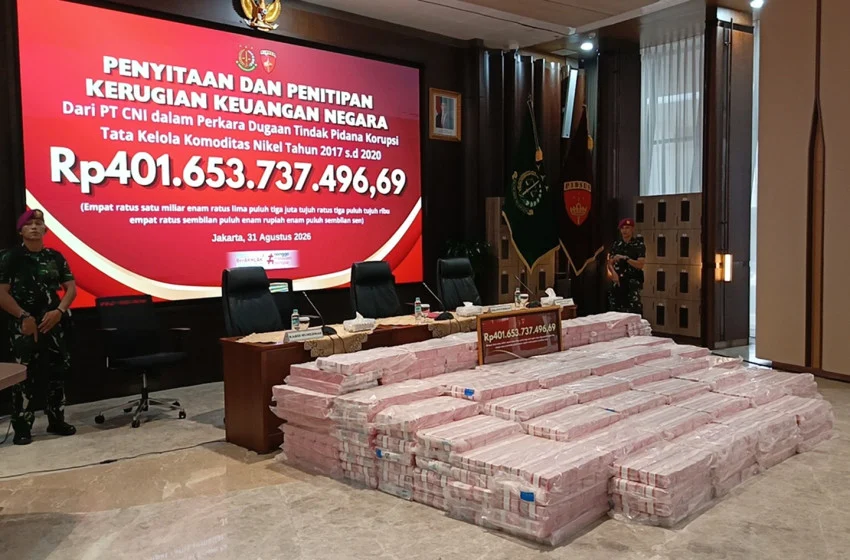
The Attorney General’s Office (AGO) of Indonesia has marked a pivotal moment in its ongoing efforts to curb corruption within the mining sector by naming PT Ceria Nugraha Indotama (CNI) as a corporate suspect in a high-profile case involving the mismanagement of nickel commodity governance. This move, which comes alongside the recovery of Rp401.65 billion in state losses, signals an aggressive shift in prosecutorial strategy, moving beyond the prosecution of individual actors to hold the entities themselves accountable for systemic malfeasance.
The case, which centers on the period between 2017 and 2020, has exposed a complex web of regulatory violations, including the unauthorized export of nickel ore, the circumvention of Domestic Market Obligation (DMO) requirements, and the systematic manipulation of ore purity results. As the AGO continues its investigation, the legal community is closely monitoring how this precedent-setting case might reshape the regulatory landscape for Indonesia’s burgeoning nickel industry.
The Anatomy of the Investigation and Chronology of Events
The investigation into the corruption of nickel commodity governance spans a three-year period that saw Indonesia transition into a global powerhouse for nickel production. According to investigators at the Junior Attorney General for Special Crimes (Jampidsus), the irregularities began in 2017 and persisted through 2020.
Throughout this period, the regulatory environment was characterized by intense pressure to maximize export volumes. Prosecutors allege that PT CNI, among other entities, exploited loopholes in the bureaucratic framework to facilitate shipments without adhering to the mandatory Rencana Kerja dan Anggaran Biaya (RKAB) or state-approved work plans.
On August 28, 2026, a critical breakthrough occurred when PT CNI surrendered funds totaling Rp401,653,737,496.69 to the AGO. This sum represents the total estimated financial loss to the state as calculated by the Supreme Audit Agency (BPK). On August 31, 2026, the AGO publicly displayed the seized currency during a press conference in Jakarta, a symbolic gesture intended to underscore the agency’s commitment to transparency and the recovery of state assets.
Legal Implications: The Doctrine of Corporate Liability
The decision to name PT CNI as a corporate suspect is a significant legal maneuver. Azmi Syahputra, a lecturer in criminal law at Trisakti University, described the move as a major breakthrough in Indonesian jurisprudence. In many past corruption cases, corporate entities have functioned as shields, insulating the broader organization from the actions of individual employees or executives.
"The expansion of criminal responsibility to the corporate entity is essential to determine whether these crimes were the acts of individuals or a systematic effort directed by the corporation for its own gain," Syahputra noted. By treating the corporation as a legal subject, the AGO is testing the strength of current regulations that allow for the prosecution of legal entities when crimes are committed within the scope of their business operations.
Legal experts argue that if the proceeds of corruption are found to have been integrated into the company’s revenue streams, the legal entity must face the consequences. This approach prevents companies from using the "corporate veil" to distance themselves from illegal activities, effectively forcing boards of directors and management to implement more robust internal controls and compliance frameworks.
The Wider Context: Nickel Governance and Regulatory Challenges
Indonesia holds the world’s largest nickel reserves, a position that has made it a central player in the global electric vehicle (EV) battery supply chain. However, this economic importance has also rendered the sector highly vulnerable to rent-seeking behavior.
The DMO policy was specifically designed to ensure that domestic smelters receive sufficient raw materials before exports are permitted. The investigation into the 2017-2020 period highlights how this policy was frequently circumvented. The "manipulation of purity results," a charge leveled by investigators, refers to the practice of mislabeling the mineral content of ore to bypass export taxes or to qualify for export licenses that would otherwise be denied.
Furthermore, the absence of valid RKAB documents—which are essentially the "master permits" for mining operations—suggests a breakdown in oversight within the Ministry of Energy and Mineral Resources (ESDM) and related regional offices. The AGO has hinted that it is looking beyond the mining companies to investigate the bureaucrats who "requested, arranged, facilitated, issued, verified, and ignored" these illicit activities.
Official Responses and the Quest for Accountability
During the press conference on August 31, 2026, Director of Investigations for Jampidsus, Saiful Bahri Siregar, emphasized that the recovery of the Rp401.65 billion was a testament to the integrity of the investigative process. "This is a manifestation of our transparency and accountability to the public," Siregar stated. The surrender of the funds is seen as a cooperative gesture, though it does not necessarily negate the criminal charges facing the corporate and individual defendants.
The AGO’s stance is clear: mere restitution of funds is insufficient to address the damage caused to the rule of law. The prosecution aims to identify the "entire chain of deviations" within the mineral and coal (minerba) bureaucracy. This includes investigating the role of officials who allowed substandard or unlicensed ore to clear customs.
Industry analysts suggest that this case is a "wake-up call" for the mining sector. For years, the rapid expansion of nickel mining in Sulawesi and Maluku was often criticized for its environmental and regulatory shortcuts. By targeting the financial backbone of these operations, the government is signaling that the era of "easy" non-compliance is coming to an end.
Broader Impact on the Mineral Sector
The ripple effects of this case are likely to be felt throughout the Indonesian mining industry. Companies are now expected to face more rigorous audits of their RKAB compliance and export documents. Financial institutions providing credit to mining companies may also tighten their due diligence processes, fearing that assets linked to corruption could be subject to future seizure.
Moreover, the case serves as a test for the Ministry of Energy and Mineral Resources to digitize and automate its licensing procedures. The "gaps in the bureaucracy" identified by legal observers are often attributed to manual verification processes that are susceptible to human interference. By moving toward a fully integrated, blockchain-verified, or transparent digital tracking system for mineral commodities, the government hopes to eliminate the "middlemen" who profit from administrative friction.
Conclusion and Future Outlook
As the investigation enters its next phase, the focus will shift to the trial proceedings. The prosecution of PT CNI will be a defining case for corporate criminal liability in Indonesia. If successful, the AGO will have set a powerful precedent that discourages corporations from prioritizing short-term profits over legal and ethical standards.
The recovery of over Rp401 billion is, in itself, a significant achievement for state revenue, but the true measure of success will be the long-term reform of the nickel sector. The AGO’s message is unambiguous: the state will no longer be a silent partner to corruption. Whether this leads to a systemic cleansing of the mineral sector or remains a targeted action against specific entities remains to be seen. However, the current momentum suggests that the government is prepared to challenge the deep-seated interests that have long influenced the nation’s natural resource management.
For now, the legal community, industry players, and the public await further developments, particularly regarding which officials—if any—will be held accountable for facilitating the systematic breaches in the regulatory framework that allowed such large-scale corruption to persist for years. The case of PT CNI is not merely a story of one company; it is a lens through which the future of Indonesia’s commodity governance is being written.