

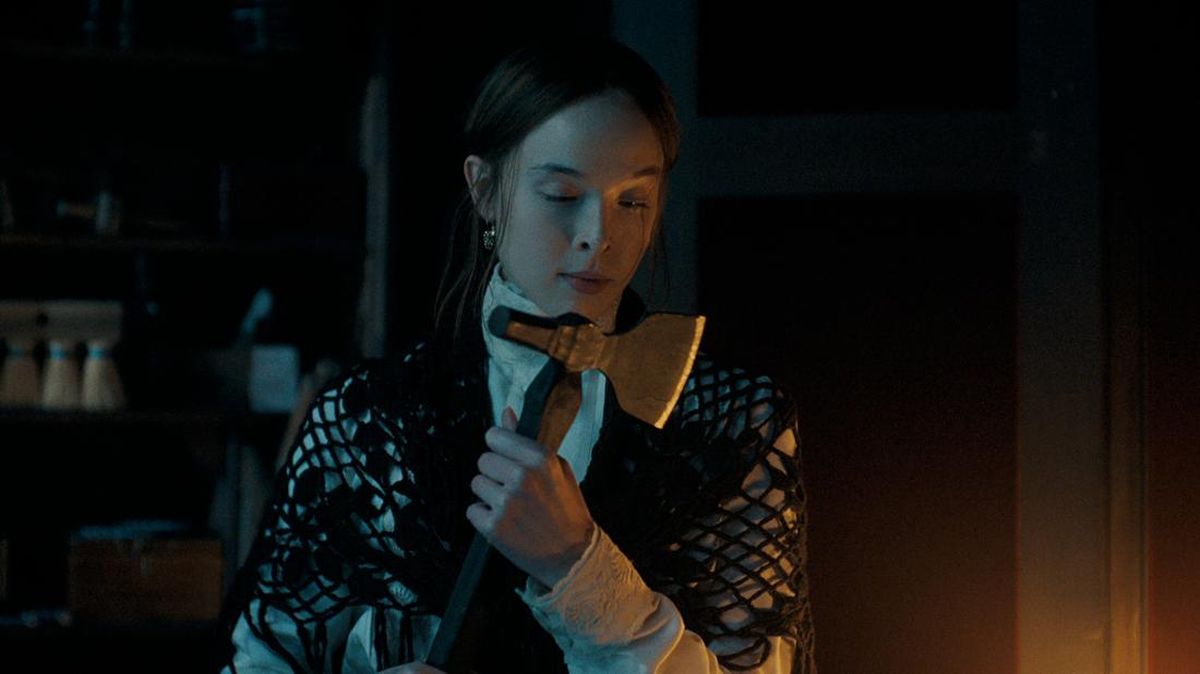
The acclaimed true-crime biographical anthology series Monster is officially returning for its fourth installment, shifting its dark lens toward one of the most infamous and heavily debated murder trials in American legal history. Following previous seasons that examined serial killers and notorious figures such as Jeffrey Dahmer, Erik and Lyle Menendez, and Ed Gein, Netflix has confirmed that Monster: The Lizzie Borden Story will premiere globally on September 17, 2026. This upcoming eight-episode season marks a significant milestone for the franchise as the first narrative in the anthology to center entirely on a female subject, delving deep into the psyche and circumstances surrounding Lizzie Borden, who was famously accused but ultimately acquitted of the brutal hatchet murders of her father and stepmother in the late 19th century.
The announcement has already sparked considerable anticipation among true-crime enthusiasts and drama critics alike, given the high production standards set by co-creators Ryan Murphy and Ian Brennan. With an official adults-only (TV-MA) rating, the series promises an uncompromising, psychologically complex exploration of late-Victorian society, familial dysfunction, and the rigid social constraints placed on women during an era of rapid industrialization in New England.
Background and Family Dynamics in Fall River
To understand the gravity of the events that transpired in the summer of 1892, historians and legal analysts often point to the suffocating domestic atmosphere within the Borden household located in Fall River, Massachusetts. Born in July 1860, Lizzie Borden was the youngest surviving daughter of Andrew Jackson Borden and Sarah Anthony Morse. Her early life was marked by profound loss; her mother passed away from congestion of the kidneys and chronic illness when Lizzie was just three years old. Furthermore, her parents had previously suffered the tragic loss of an infant sister, Alice, who died of hydrocephalus at twenty-two months.
Andrew Borden, a self-made man of English and Welsh descent, had risen from humble, economically restricted beginnings to become a prominent, highly successful businessman, property developer, and bank president in Fall River. Despite accumulating substantial wealth, Andrew maintained notoriously frugal habits, choosing to live in a modest residential district rather than the affluent "Hill" neighborhood where most of his wealthy peers resided. This financial conservatism became a persistent point of contention within the household.
When Lizzie was six years old, Andrew married Abby Durfee Gray. Over time, familial relations deteriorated significantly. Lizzie and her older sister, Emma, grew to resent their stepmother, whom Lizzie refused to address as "mother," preferring the formal and distant title of "Mrs. Borden." Tensions were further exacerbated by Andrew’s financial generosity toward Abby’s side of the family—such as purchasing real estate for her relatives—while he allegedly kept his own daughters on a comparatively tighter financial leash. By the summer of 1892, the Borden household was a pressure cooker of unspoken resentments, economic anxieties, and generational friction.
Chronology of a Crime: The Events of August 1892
The atmospheric tension culminated in a sequence of events that would forever etch the Borden name into American folklore. On the evening of August 3, 1892, John Morse, the brother of Lizzie and Emma’s late mother, arrived unexpectedly at the Borden residence to discuss business matters with Andrew and chose to stay overnight.
The Chronological Timeline of August 4, 1892:
- Morning (Approx. 9:00 AM): Andrew Borden, Abby Borden, John Morse, and the family’s Irish domestic servant, Bridget Sullivan, partook in breakfast. Following the meal, Andrew and Morse retired to the sitting room for a conversation lasting roughly an hour.
- Mid-Morning: John Morse departed the house to visit other relatives in the area. Shortly thereafter, Andrew Borden left the residence on foot to check on his downtown business properties.
- Upstairs Labor: At approximately this time, Lizzie and Emma were purportedly occupied with cleaning the upstairs guest room. Abby Borden went upstairs to the guest bedroom to clean up after John Morse’s overnight stay. It was here that she was ambushed and struck multiple times in the head with a hatchet-like instrument.
- Return of the Master of the House: Roughly an hour and a half after leaving, Andrew Borden returned to the home. However, he found the front door locked from the inside. Bridget Sullivan attempted to unlock the door but struggled with the bolt, during which time a faint laughing sound was allegedly heard from the second-floor landing. Sullivan let Andrew in, removed his boots, and fitted him with indoor slippers before he reclined on the downstairs sitting room sofa to rest.
- The Discovery: Near midday, Lizzie raised an alarm, shouting to Bridget that her father was dead. Andrew Borden was discovered slumped on the sofa, his face severely mutilated and split open by multiple devastating blows from a heavy sharp-edged weapon. Subsequent searches of the home revealed the lifeless body of Abby Borden upstairs, who had sustained a similarly brutal assault.
Production Details and Creative Leadership
The upcoming season of Monster brings notable shifts behind the camera. Ian Brennan, who served as the sole writer for the previous chapter, Monster: The Ed Gein Story, returns to pen all eight episodes of Monster: The Lizzie Borden Story. However, directorial duties have been reassigned, with Max Winkler and Sarah Adina Smith stepping in to helm the episodes, ensuring a fresh visual and atmospheric interpretation of the historical tragedy.
The production boasts an acclaimed ensemble cast. Acclaimed Luxembourgish actress Vicky Krieps leads the ensemble alongside Charlie Hunnam, Rebecca Hall, Jessica Barden, Joey Pollari, Billie Lourd, and Sarah Paulson. Casting choices have drawn praise for assembling performers capable of navigating the complex emotional nuances, psychological darkness, and historical gravitas required of true-crime biographical dramas.
Societal Implications and Historical Analysis
From a sociological and criminological perspective, the Lizzie Borden case remains a fascinating study in late-19th-century gender politics, media sensationalism, and the limits of forensic science during the Victorian era. At the time of her trial in 1893, the prevailing cultural assumption that a respectable, church-going woman of upper-middle-class standing was biologically incapable of committing such a heinous, bloody act played a decisive role in public sympathy and the ultimate jury acquittal.
Modern legal historians and criminologists frequently re-examine the case not merely as a whodunit, but as a mirror reflecting the hypocrisies and rigid gender expectations of the Gilded Age. The inability of investigators to locate a definitive murder weapon, combined with contradictory testimonies and the primitive state of forensic pathology at the time, ensured that the mystery persisted long after the courtroom doors closed.
By translating this historical narrative into the high-production-value format of the Monster anthology, Netflix aims to contextualize the human elements behind the tabloid sensationalism. As true-crime programming continues to dominate global streaming metrics, Monster: The Lizzie Borden Story positions itself as both an entertaining psychological drama and a thoughtful examination of the dark undercurrents of American domestic history.
