
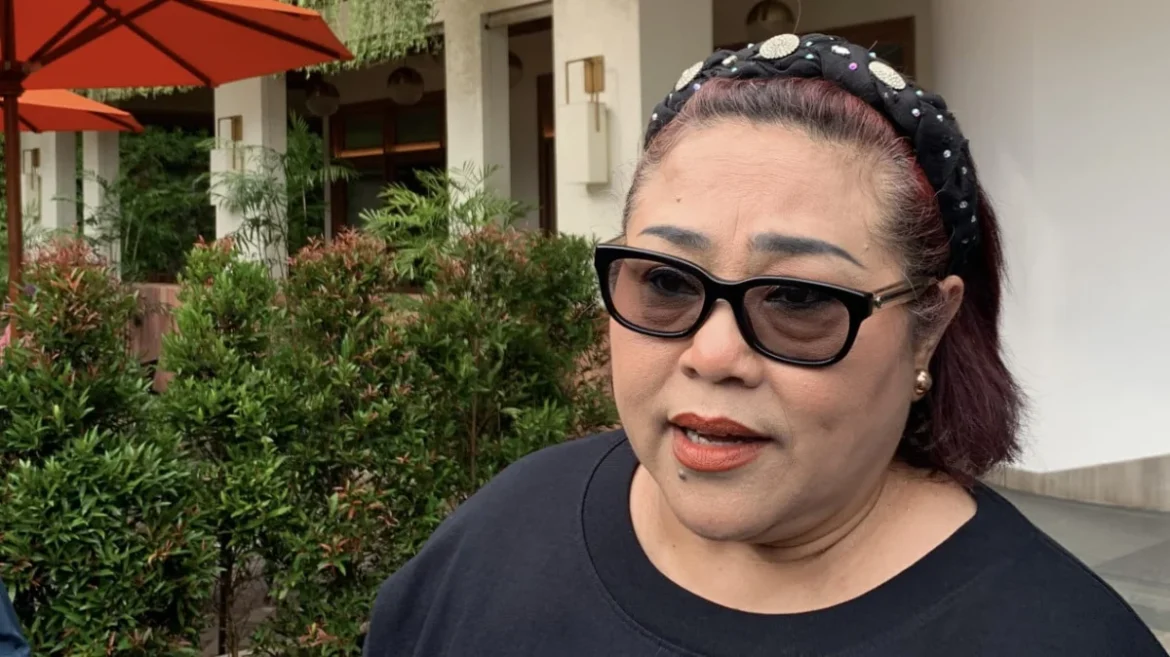
The culinary landscape in Solo, Central Java, is known for its intense competitiveness and rich gastronomic heritage. Recently, the business venture "Songoseng by Mami Nunung," owned by the prominent Indonesian comedian Nunung, has found itself at the center of public discourse following reports of a significant decline in patronage. While the hospitality industry often faces cyclical fluctuations, the circumstances surrounding the sudden downturn of this particular establishment have sparked a debate that blends conventional market challenges with unverified claims of metaphysical interference.
A Promising Beginning: The Launch of Songoseng
Launched in November 2024, Songoseng by Mami Nunung was positioned as a hallmark of traditional Javanese cuisine. The restaurant was built upon a foundation of family recipes, aiming to capture the authentic flavors of the region. The project gained immediate traction due to the high profile of its owner, Nunung, whose decades-long career in the entertainment industry provided significant brand recognition.
The venture received substantial support from fellow entertainer Raffi Ahmad, who contributed to the initial capital and provided the physical location for the restaurant. This backing, combined with the novelty of a celebrity-owned eatery, saw the establishment enjoy a successful opening period. During its first few months, the restaurant attracted a steady stream of patrons, fueled by both the curiosity of fans and positive word-of-mouth regarding its menu.
The Shift in Market Performance
However, the initial momentum did not translate into long-term commercial sustainability. Reports indicate that within less than a year of operation, the restaurant experienced a sharp decline in customer volume. This downturn has had direct implications for the restaurant’s operational stability and the livelihoods of the staff members employed there.
In a recent appearance on the television program "Pagi Pagi Ambyar," Nunung addressed the declining revenue, describing the drop in sales as "drastic." When asked about the potential causes, the comedian initially approached the situation from a pragmatic, business-oriented perspective. She noted that Solo’s culinary market is notoriously saturated, with a dense concentration of street food vendors, traditional warungs, and modern bistros. In such a competitive environment, market shifts are common, and establishments must frequently pivot their strategies to retain customer interest.
Allegations of Anomalous Activity
While management attributes the decline to market competition, the internal staff at Songoseng has proposed a different narrative. Several employees have reported incidents that they characterize as supernatural or "mystical." These reports suggest that the lack of customers may not be entirely due to economic factors or changing consumer preferences.
According to testimonies provided by the restaurant’s staff, there have been recurring sightings of unexplained objects found on the premises. These items, described by the employees as suspicious, are believed by some to be "talismans" or objects associated with negative energy or traditional beliefs regarding business interference. The situation reached a point where staff members actively sought to clear these items, believing their removal would restore the restaurant’s fortune.
However, the employees claim that even after the systematic removal and disposal of these objects, they have repeatedly reappeared on the property. This cycle—finding the objects, disposing of them, and witnessing their return—has fueled anxiety among the staff, leading to suggestions that the restaurant undergo a "ruqyah," a traditional Islamic ritual involving prayers to cleanse a space of perceived spiritual disturbances.
The Intersection of Business and Belief
The situation at Songoseng highlights a persistent cultural phenomenon in Indonesia, where, despite the modernization of the business sector, traditional beliefs regarding "non-technical" factors—often referred to as non-medis—continue to influence the operations of small and medium-sized enterprises (SMEs).
In the context of the food and beverage industry, sudden drops in patronage are frequently met with two distinct responses: the analytical, which looks at menu pricing, marketing, and service quality; and the spiritual, which attributes failure to external, unseen forces. While business analysts would argue that the decline is likely a result of market saturation, rising food costs, or a potential drop in the "celebrity effect" that initially drove traffic, the narrative of supernatural interference often gains more traction in local media, reflecting deeply rooted cultural attitudes toward competition.
Economic Context: The Competitive Landscape of Solo
To understand the challenges faced by Songoseng, one must look at the economic landscape of Solo. As a city that prides itself on being the epicenter of Javanese culinary tradition, the barrier to entry for new restaurants is high. Consumer loyalty is often tied to long-standing, multi-generational establishments that have served the community for decades.
For a new entrant like Songoseng, maintaining relevance requires constant innovation. The "celebrity owner" model is a double-edged sword; while it guarantees initial visibility, it also places the business under intense public scrutiny. If the quality of food or service does not consistently exceed expectations, the initial wave of celebrity-driven traffic tends to dissipate rapidly, leaving the business to compete solely on its merits as an eatery.
Official Stance and Future Outlook
Despite the rumors and the distress expressed by her staff, Nunung has maintained a measured stance. She has explicitly stated that she prefers not to succumb to prejudice or irrational suspicion. "I do not want to be prejudiced," she stated, emphasizing that she remains committed to keeping the restaurant open to protect the jobs of her employees. Her primary concern remains the welfare of those who depend on the restaurant for their income, regardless of the cause of the financial hardship.
The restaurant continues to operate under its regular hours, despite the reported challenges. There has been no official announcement regarding a change in management, a shift in the business model, or a closure. Instead, the focus for the owners appears to be a stabilization effort, attempting to navigate the current fiscal dip while managing the morale of the workforce.
Broader Implications for Celebrity Businesses
The case of Songoseng serves as a case study for the risks associated with celebrity-backed entrepreneurial ventures. Often, these businesses are launched with significant hype, but they are subject to the same economic pressures as any other private enterprise. When growth stalls, the narrative can quickly become distorted, moving from objective business analysis to speculative discourse.
For the culinary industry in Indonesia, this serves as a reminder that brand recognition is only a starting point. Long-term success in the food service sector is contingent upon consistent quality control, effective supply chain management, and a deep understanding of the local consumer demographic. As Songoseng moves forward, its ability to reverse the current trend will depend on whether it can move past the distractions of public speculation and refocus on the fundamental pillars of the restaurant business: service excellence, product consistency, and strategic adaptation to a highly competitive, ever-evolving marketplace.
As of mid-September 2026, the restaurant remains an active participant in the Solo culinary scene. Whether the current downturn is a temporary phase of market adjustment or a sign of deeper structural issues remains to be seen. For now, the story of Songoseng continues to evolve, reflecting a complex intersection of professional business operations and the enduring influence of cultural and spiritual narratives in Indonesian society.
