
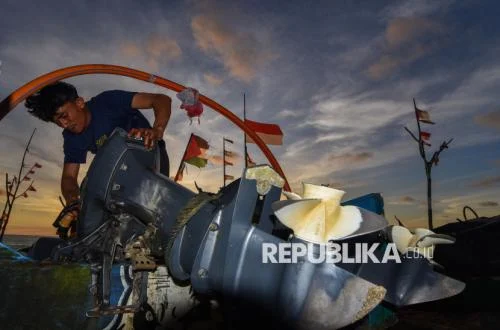
Pati, Central Java – The effective implementation of the Kampung Nelayan Merah Putih (KNMP) program, a national initiative aimed at revitalizing Indonesia’s coastal communities, hinges significantly on the continuous strengthening of fishermen’s capacity. Beyond critical infrastructure development, the enhancement of skills, institutional robustness, and comprehensive social protection are deemed indispensable for ensuring the program’s benefits genuinely uplift coastal populations. This pivotal consensus emerged from a recent high-level discussion forum, "Ngobrol Bareng Nelayan: Penguatan Nelayan Pati dalam rangka Mendukung Program Prioritas KNMP di Jawa Tengah," held at KNMP Banyutowo, Dukuhseti District, Pati Regency, on Sunday, July 19, 2026. The event, which drew hundreds of local fishermen and coastal community members, underscored a multi-faceted approach necessary for sustainable development.
Background and Context of the Kampung Nelayan Merah Putih (KNMP) Program
Indonesia, an archipelagic nation with the second-longest coastline in the world and vast marine resources, places immense strategic importance on its maritime sector. The nation’s fisheries contribute substantially to food security, national income, and the livelihoods of millions. However, many of the country’s approximately 2.7 million small-scale fishermen, who represent the backbone of the industry, often face significant socio-economic challenges, including limited access to capital, rudimentary technology, fluctuating fish prices, and vulnerability to environmental changes. The Kampung Nelayan Merah Putih (KNMP) program was launched as a strategic national priority to address these systemic issues, aiming to transform traditional fishing villages into modern, self-sufficient, and resilient communities.
The KNMP program is built upon several foundational pillars:
- Infrastructure Development: Improving fishing ports, landing sites, cold storage facilities, processing units, and access roads.
- Economic Empowerment: Facilitating access to credit, modern fishing gear, value-added processing, and market linkages.
- Institutional Strengthening: Fostering the growth of fishermen cooperatives and community-based organizations to enhance collective bargaining power and resource management.
- Human Resource Capacity Building: Providing training in sustainable fishing practices, business management, financial literacy, and technology utilization.
- Social Protection: Ensuring fishermen have access to social security programs, health services, and education.
- Environmental Sustainability: Promoting eco-friendly fishing practices and coastal resource management to preserve marine ecosystems.
Pati Regency, located on the northern coast of Central Java, is one of the province’s key fishing centers. Its coastal areas are home to numerous fishing communities, contributing significantly to the regional economy through various marine and aquaculture products. The successful implementation of KNMP in Pati is seen as a crucial model for other coastal regions, demonstrating how integrated development can uplift communities and enhance the overall productivity and sustainability of the national fisheries sector.
Chronology of the Discussion Forum
The "Ngobrol Bareng Nelayan" forum on July 19, 2026, served as a critical platform for dialogue between government officials, private sector representatives, and the fishing community. The event unfolded at the Kampung Nelayan Merah Putih (KNMP) Banyutowo, a designated model community for the program in Dukuhseti District, Pati Regency. The forum brought together hundreds of fishermen and coastal residents, signaling a strong community interest in the program’s progression and their own role in its success. Following the discussions, a press release detailing the key outcomes and commitments was issued on Monday, July 20, 2026, disseminating the forum’s insights to a broader public. The timing of the event underscores a continuous effort by stakeholders to monitor, evaluate, and adapt the KNMP program to meet the evolving needs of fishing communities.
Key Themes and Discussions: A Multi-Pronged Approach to Empowerment
The forum’s central message resonated with the idea that while physical infrastructure is vital, the human element – the fishermen themselves – must be at the core of any sustainable development strategy. Barri Pratama, Director of PT Sarana Patra Hulu Cepu (SPHC), a company actively involved in supporting the initiative, articulated this vision clearly. "Strengthening fishermen is not just about improving skills; it’s about building a healthy, competitive, and sustainable ecosystem," Barri stated in the press release. He emphasized that SPHC is committed to providing tangible support for activities that directly benefit the community, viewing the KNMP program as holistic, focusing not only on physical infrastructure but also on bolstering the coastal economy, strengthening fishermen’s institutions, and fostering continuous empowerment.
Capacity Building and Skills Enhancement: The Foundation for Progress
A significant portion of the discussion revolved around the imperative of enhancing the skills and knowledge base of fishermen. Hadi Santosa, Head of the Pati Regency Marine and Fisheries Agency, strongly advocated for this. "We encourage fishermen to continuously improve the quality of their catch and actively participate in available training programs," Hadi urged. This emphasis extends beyond mere fishing techniques to encompass a broader range of competencies crucial for modern, sustainable fisheries. These include:
- Improved Post-Harvest Handling: Training in proper fish handling, storage, and preservation techniques to reduce spoilage and maintain quality, thereby increasing market value.
- Value-Added Processing: Equipping fishermen or their families with skills to process raw catches into higher-value products (e.g., smoked fish, dried fish, fish crackers, surimi), diversifying income streams.
- Sustainable Fishing Practices: Educating communities on eco-friendly fishing methods, marine conservation, and compliance with regulations to prevent overfishing and habitat destruction. This includes understanding catch quotas, using selective gear, and avoiding destructive practices.
- Business Management and Financial Literacy: Providing knowledge on managing finances, accessing micro-credit, marketing strategies, and basic bookkeeping to transform fishing into a more profitable and stable enterprise.
- Technology Adoption: Introducing modern navigation systems, fish finders, and communication tools to enhance efficiency and safety at sea.
- Climate Change Adaptation: Training on how to adapt to changing weather patterns, sea temperatures, and fish migration routes, which are increasingly affected by climate change.
Institutional Strengthening: The Power of Collective Action
The forum also highlighted the crucial role of robust community institutions, particularly fishermen’s cooperatives or groups. Subaskoro, a prominent youth figure and fisheries entrepreneur from Banyutowo, underscored this aspect, stating, "The success of KNMP Banyutowo is not just about budget, but also about our solidarity and active participation in managing the potential of this coastal area." Strong institutions enable fishermen to:
- Collective Bargaining: Negotiate better prices for their catches and procure supplies at lower costs.
- Resource Management: Collectively manage shared fishing grounds and enforce sustainable practices.
- Access to Resources: Facilitate access to government programs, training, and financial assistance.
- Knowledge Sharing: Serve as platforms for sharing best practices and addressing common challenges.
- Advocacy: Represent the interests of fishermen to local and national authorities.
The development of these self-governing and self-sustaining institutions is seen as a cornerstone of long-term empowerment, moving communities beyond dependency on external aid.
Social Protection: A Safety Net for High-Risk Professions
The inherent risks associated with fishing—from unpredictable weather and rough seas to accidents and machinery malfunctions—make social protection an absolute necessity. Hadi Santosa further stressed this point, stating, "Social protection through BPJS Ketenagakerjaan is also important, considering the high risks of working at sea." BPJS Ketenagakerjaan, Indonesia’s national employment social security agency, offers vital coverage, including:
- Work Accident Insurance (Jaminan Kecelakaan Kerja – JKK): Provides compensation and medical care for injuries or illnesses sustained during work.
- Death Benefits (Jaminan Kematian – JK): Offers financial support to the families of fishermen who die due to work-related incidents.
- Old Age Security (Jaminan Hari Tua – JHT): A savings scheme to provide financial security in old age.
- Pension Security (Jaminan Pensiun – JP): A regular income stream during retirement.
Ensuring widespread participation in such schemes protects fishermen and their families from financial ruin due to unforeseen circumstances, thereby providing a fundamental layer of security that allows them to focus on improving their livelihoods without constant fear of catastrophe. Despite progress, many informal sector workers, including small-scale fishermen, still lack adequate social protection, making sustained advocacy and facilitation for BPJS Ketenagakerjaan enrollment critical.
Infrastructure Support and Access to Resources
While the forum highlighted capacity building, the importance of supportive infrastructure and access to essential tools was not overlooked. Driyanto, Head of Juwana Fisheries Port, encouraged fishermen groups needing assistance with fishing gear to submit proposals to the Central Java Provincial Marine and Fisheries Agency, following established procedures. This proactive approach ensures that crucial equipment, which can significantly boost productivity and safety, is channeled effectively to those who need it most. Such infrastructure support can include:
- Modern Fishing Vessels and Gear: Providing access to more efficient and safer boats, nets, and other fishing equipment.
- Cold Chain Facilities: Developing cold storage and refrigerated transport to preserve the quality of catches, especially for export-oriented products.
- Processing Units: Establishing local facilities for processing fish, adding value, and reducing post-harvest losses.
- Improved Port Facilities: Enhancing docking, fueling, and maintenance services at fishing ports.
These physical improvements directly complement capacity building by providing the necessary tools and environment for fishermen to apply their enhanced skills.
The Role of Corporate Social Responsibility (CSR) and Multi-Stakeholder Collaboration
The active participation of PT Sarana Patra Hulu Cepu (SPHC) through its Corporate Social and Environmental Responsibility (TJSL) program underscores the critical role of private sector involvement. Barri Pratama’s reiteration of SPHC’s commitment highlights a growing trend of companies aligning their CSR initiatives with national development goals. This collaboration extends beyond mere financial sponsorship; it often involves:
- Expertise Sharing: Companies can bring in technical expertise, management best practices, and innovative solutions.
- Market Linkages: Private sector entities can help connect fishermen to broader markets, including export opportunities.
- Sustainable Practices: Promoting environmentally sound business practices within the fishing industry.
- Resource Mobilization: Leveraging corporate resources to scale up development initiatives.
The "Ngobrol Bareng Nelayan" forum itself is a testament to the power of multi-stakeholder collaboration, bringing together government agencies (Pati Regency Marine and Fisheries Agency, Juwana Fisheries Port), state-owned enterprises (SPHC), and local community leaders. This integrated approach, involving government, private sector, academia, and local communities, is considered essential for addressing the complex challenges faced by coastal communities and ensuring the long-term success of programs like KNMP.
Broader Implications and Future Outlook for Pati’s Fishermen
The discussions in Pati carry significant implications for the future of its fishing communities and, by extension, for the national KNMP program. The emphasis on an integrated approach—combining infrastructure, skills, social protection, and institutional strength—is vital for creating resilient and prosperous coastal communities.
- Enhanced Livelihoods: By improving skills and access to resources, fishermen can expect higher, more stable incomes and better quality of life.
- Food Security: A more productive and sustainable fisheries sector in regions like Pati directly contributes to national food security.
- Sustainable Resource Management: Empowered and educated fishermen are more likely to adopt sustainable practices, safeguarding marine resources for future generations.
- Regional Economic Growth: The revitalization of fishing villages can stimulate local economies, creating jobs in related sectors like processing, logistics, and tourism.
- Replication Model: The successes and lessons learned from KNMP Banyutowo and similar initiatives in Pati can serve as a valuable blueprint for other coastal regions across Indonesia.
However, challenges remain. These include the ongoing impacts of climate change (such as sea-level rise and extreme weather events), fluctuating global fish prices, illegal, unreported, and unregulated (IUU) fishing, and the need for continuous funding and political will. The long-term success of KNMP will depend on sustained commitment from all stakeholders, adaptability to changing conditions, and continuous engagement with the fishing communities themselves. The forum in Pati underscored that the journey towards truly empowered and prosperous fishing communities is an ongoing process, requiring persistent effort, innovation, and unwavering collaboration.
In conclusion, the "Ngobrol Bareng Nelayan" forum in Pati highlighted a critical pathway for the Kampung Nelayan Merah Putih program: a holistic empowerment strategy where capacity building, social protection, and institutional strengthening are as crucial as physical infrastructure. By fostering collaboration and ensuring that fishermen are equipped with the necessary skills and support, Pati is poised to become a leading example of how an integrated approach can transform coastal communities, contributing significantly to Indonesia’s vision as a global maritime axis.
