
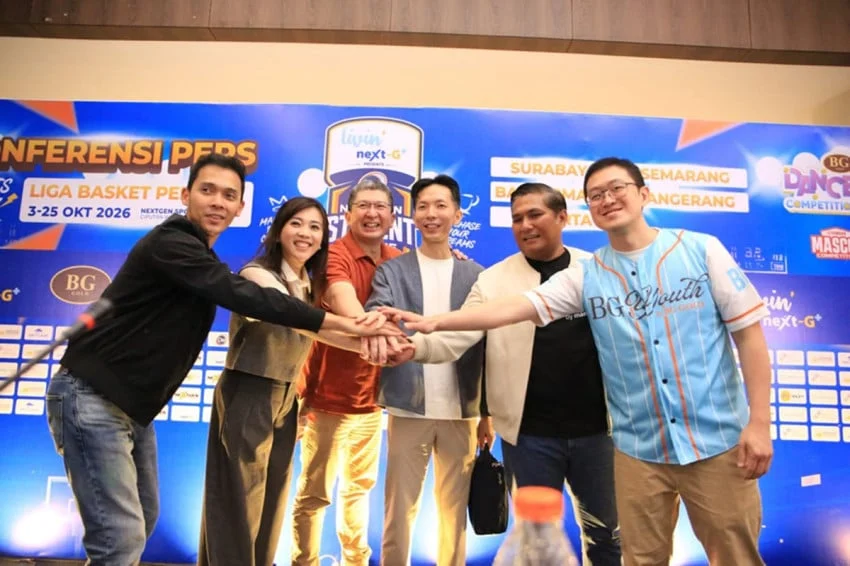
The landscape of Indonesian youth basketball is poised for a significant transformation as the Nextgen Student League (NSL) officially launches its fourth season, branded as the Livin Next-G Presents Cleo Nextgen Student League With BG Gold Season 2026–2027. What began as a localized grassroots initiative in Surabaya has matured into a nationwide sporting ecosystem, reflecting the growing demand for structured athletic development programs within the country’s educational framework. This season marks a historic expansion, with the league now encompassing five major metropolitan hubs: Surabaya, Semarang, Banjarmasin, Tangerang, and Jakarta.
A Strategic Evolution of Grassroots Sports
The evolution of the NSL from a singular city tournament to a multi-city league is a testament to the organizational vision of its founder, Sudiantowi Limanauw, widely known as Awen. Since its inception, the league has prioritized long-term player development over the short-term goal of merely crowning champions. The 2026–2027 season serves as the culmination of four years of iterative growth, during which the league has refined its competition standards, coaching requirements, and scouting protocols.
The East Java Zone, acting as the traditional anchor for the league, will host the opening phase of the competition from October 3 to October 25, 2026. Matches are scheduled to be held at the Nextgen Arena, located on the fourth floor of the Ciputra World Mall in Surabaya. This venue has become synonymous with the league’s professional approach to youth basketball, providing student-athletes with a high-quality environment that mirrors the standards of professional leagues.
Scope and Scale of the 2026–2027 Season
The logistical scale of the current season highlights the massive popularity of basketball among Indonesian youth. According to official data released by the league organizers on September 19, 2026, the league has achieved a record-breaking participation rate. The 2026 season will feature more than 500 schools and 750 distinct teams, involving over 8,000 student-athletes across the five host cities.
This sheer volume of participants necessitates a sophisticated management system. The NSL has implemented a priority-based structure, which rewards teams that demonstrate consistent participation and organizational discipline. By creating a tiered pathway, the league ensures that schools and players who commit to the long-term program are given preferential access to development resources, elite training clinics, and scouting opportunities.
The Educational Philosophy Beyond the Court
While the statistics regarding the number of participants and schools are impressive, the core philosophy of the NSL remains centered on holistic character development. Awen emphasizes that the league was never intended to be a simple "win-at-all-costs" tournament. Instead, the league serves as a laboratory for life skills.
"The values of sportsmanship, discipline, teamwork, mental fortitude, and self-confidence are the foundational pillars of the NSL journey," Awen stated. By competing in a structured league format, student-athletes from elementary, middle, and high school levels are tasked with navigating the complexities of competitive play. This involves mastering physical skills—such as ball handling, passing accuracy, and shooting mechanics—while simultaneously managing the psychological pressures of high-stakes environments.
Coaches and educators involved in the league have noted that the competitive nature of the NSL fosters resilience. Players learn to navigate the binary nature of victory and defeat, developing the ability to analyze their performance, accept constructive criticism, and demonstrate respect toward opponents and officials. These lessons are intended to transcend the basketball court, preparing students for the rigors of professional and academic life.
Impact on the National Basketball Ecosystem
The expansion of the NSL arrives at a critical juncture for Indonesian sports, where the government and private sector are increasingly collaborating to identify and nurture young talent. The league acts as a bridge between extracurricular school activities and professional club scouting. By involving stakeholders ranging from parents and teachers to local government agencies and corporate sponsors, the NSL has successfully created a sustainable model for youth sports.
Economists and sports analysts observing the Indonesian market note that the integration of private brands—such as Livin by Mandiri, Cleo, and BG Gold—is essential for the longevity of such programs. These partnerships do not merely provide financial backing; they provide the infrastructure for media coverage, professional officiating, and medical support. This ecosystem helps professionalize the experience for the students, making the sport more attractive to potential sponsors and talent scouts from professional clubs like the Indonesian Basketball League (IBL).
Chronology of Development
- 2023: The inception of the Nextgen Student League, initially concentrated in Surabaya, East Java, focused on creating a standardized competitive environment for school-based basketball.
- 2024: The league began experimenting with multi-city exhibition matches, testing the feasibility of a broader geographic footprint.
- 2025: The implementation of a standardized curriculum for coaches and a centralized database for player statistics, increasing the league’s professional standing.
- 2026: Official launch of the five-city national league format (Surabaya, Semarang, Banjarmasin, Tangerang, and Jakarta), marking the most significant expansion in the league’s history.
Challenges and Future Prospects
Expanding to five cities presents inherent challenges, particularly regarding the standardization of officiating and the quality of court facilities. The NSL has addressed this by maintaining a centralized oversight committee that ensures every host city adheres to the same safety and performance regulations. By keeping the competition schedule consistent across different regions, the league is effectively creating a national ranking system, which is a significant step toward unifying the fragmented youth basketball scene in Indonesia.
Furthermore, the involvement of local government authorities in cities like Semarang and Banjarmasin suggests that the league is being viewed as a vital component of public health and youth engagement policy. By keeping thousands of students physically active and socially connected, the league contributes to the overall well-being of the adolescent population in these urban centers.
Broader Implications for Indonesian Basketball
The success of the NSL is indicative of a broader trend: the professionalization of youth sports in Southeast Asia. As the level of play rises, the transition from school-based competition to professional leagues becomes more seamless. If the current trajectory continues, the NSL could potentially serve as the primary "feeder system" for the national basketball program, ensuring that future members of the Indonesian national team are seasoned in high-pressure, organized, and professional environments from a young age.
The league’s focus on inclusivity—offering divisions for various age groups—ensures that the pipeline of talent is consistently replenished. This strategy mitigates the "talent gap" often seen in countries where youth sports are sporadic or lack consistent coaching. By fostering a culture of continuous competition, the NSL is helping to build a deeper talent pool that will ultimately benefit the competitive standing of Indonesian basketball on the international stage.
As the 2026–2027 season progresses, the eyes of the basketball community will be fixed on the emerging stars in Surabaya, Semarang, Banjarmasin, Tangerang, and Jakarta. For the 8,000-plus participants, the league represents a platform to showcase their skills, but for the organizers and the community, it represents a commitment to the future of the nation’s youth. The combination of corporate support, community engagement, and a clear developmental roadmap positions the Nextgen Student League as a leading force in the ongoing advancement of the Indonesian sporting landscape.
With the first tip-off approaching in early October, the anticipation among the school communities is palpable. The league organizers have expressed confidence that this season will set a new benchmark for youth sporting events, not just in terms of participation numbers, but in the quality of the competition and the positive impact on the lives of the student-athletes involved. As the league continues to scale, its ability to maintain its foundational values of integrity and hard work will be the ultimate measure of its success in the years to come.
