

Makassar, CNN Indonesia – A deeply distressed family, grappling with the loss and uncertainty following the tragic sinking of the motor vessel (KM) Nurul Salsa in the waters of Selayar Islands Regency, South Sulawesi, has officially filed a report with the local police. The formal complaint was lodged by Andi Eka Gunarti, the mother of eight-year-old Naurah, who remains missing along with her grandfather, Umar, since the vessel’s catastrophic capsize. This decisive action underscores the family’s profound grievances and their resolute demand for a comprehensive investigation into the circumstances surrounding the maritime disaster.
Hasrul, Naurah’s uncle, conveyed the family’s motivations to reporters on Wednesday (July 22), stating, "After consulting with legal experts, we collectively decided to report this tragedy to the Selayar Islands Resort Police as a formal expression of our objection and our pursuit of justice." This move comes after extensive deliberation among the extended family, reflecting their unwavering belief that the incident warrants more than just a standard accident inquiry. Their suspicions center on an alarming allegation: that the ship’s engine may have been intentionally shut down mid-voyage due to overheating, a critical decision they believe directly contributed to the vessel’s demise.
The Ill-Fated Voyage and Initial Disaster
The KM Nurul Salsa embarked on its fated journey from Jampea Island at approximately 05:00 WITA (Central Indonesia Time) on Wednesday, July 15, destined for Benteng Port on Selayar Island. The vessel, a traditional cargo ship often also carrying passengers, was laden with an estimated 17 tons of staple goods (sembako) and four motorcycles, a common practice in inter-island transport across the Indonesian archipelago. However, the voyage was cut short roughly 43 nautical miles from its destination when the ship reportedly experienced engine trouble.
According to initial reports, the engine suffered an overheat, leading to its eventual failure. Adrift in the vast expanse of the sea, the KM Nurul Salsa became vulnerable to the prevailing harsh weather conditions. Strong winds and towering waves battered the incapacitated vessel, causing it to drift helplessly for hours. As night fell on July 15, the situation escalated dramatically. The ship, unable to withstand the relentless assault of the elements, ultimately capsized and sank, plunging its crew and passengers into the turbulent waters. This tragedy sparked an immediate and extensive search and rescue (SAR) operation coordinated by Basarnas Makassar and other joint forces.
Family’s Allegations and Call for Deeper Scrutiny
The family’s decision to involve law enforcement stems from a disturbing piece of information they acquired regarding the engine failure. Hasrul explicitly detailed their concern: "Information received by the family indicates that the ship’s engine was deliberately turned off because it was overheating. This is why we are requesting the police to conduct a thorough and comprehensive investigation into all aspects." This assertion transforms the incident from a mere accident into a potential case of negligence or even reckless endangerment, prompting the family to seek accountability beyond the immediate cause of sinking. They believe that if the engine was indeed intentionally shut off under such perilous conditions, it represents a critical lapse in judgment or operational protocol that must be fully examined by legal authorities.
The implication of such an act, if proven, could be far-reaching, pointing to potential violations of maritime safety regulations, inadequate maintenance, or a desperate attempt by the crew to prevent a more catastrophic engine failure, inadvertently leading to the current disaster. The family’s report is not merely a complaint but a plea for a deeper, forensic examination of the events leading up to the sinking, aiming to uncover whether human error, negligence, or deliberate actions played a role in the loss of lives and the continued disappearance of their loved ones.
Police Response and Ongoing Investigation
Confirming the receipt of the family’s report, Aipda Suardi Andre, the Head of Public Relations Sub-Section (Kasubsi Penmas) of the Selayar Islands Resort Police, acknowledged the gravity of the situation. "The report has been received. Essentially, a family’s report is reasonable and commendable, representing their response to the loss of family members in this tragedy," Suardi told CNNIndonesia.com. This statement reflects the police’s understanding of the emotional distress and the legal rights of the victims’ families to seek answers.
Crucially, Suardi also clarified that the police investigation was already well underway even before the family filed their formal complaint. He stated, "Before the family reported, we had already initiated the legal process and conducted an investigation. More than 20 witnesses have been examined, including the captain, crew members, victims, and other related parties." This indicates that the authorities were already treating the incident with the seriousness it deserved, probing various angles to establish the sequence of events and identify any potential culpability. The breadth of witness testimonies, ranging from those directly involved in the ship’s operation to survivors who experienced the harrowing ordeal, is critical for constructing a comprehensive picture of the disaster.
In the immediate future, the investigation will proceed to a critical phase: a case expose. Suardi explained, "God willing, in the near future, we will hold a case expose to determine whether the case can be elevated to a full investigation and to identify potential suspects." This procedural step is vital in the Indonesian legal system, where investigators present their preliminary findings to a panel of senior officers and legal experts to decide if there is sufficient evidence to move from a preliminary inquiry (penyelidikan) to a formal investigation (penyidikan), which includes the naming of suspects. This impending development signifies a potential turning point in the case, where the focus could shift from merely understanding what happened to establishing who is legally responsible.
The Broader Context of the KM Nurul Salsa Tragedy
The sinking of KM Nurul Salsa highlights persistent challenges within Indonesia’s vast maritime transportation network, particularly concerning traditional vessels operating in remote island areas. These vessels often serve as lifelines for communities, transporting essential goods and people, but sometimes operate with less stringent oversight compared to larger, commercial ships.
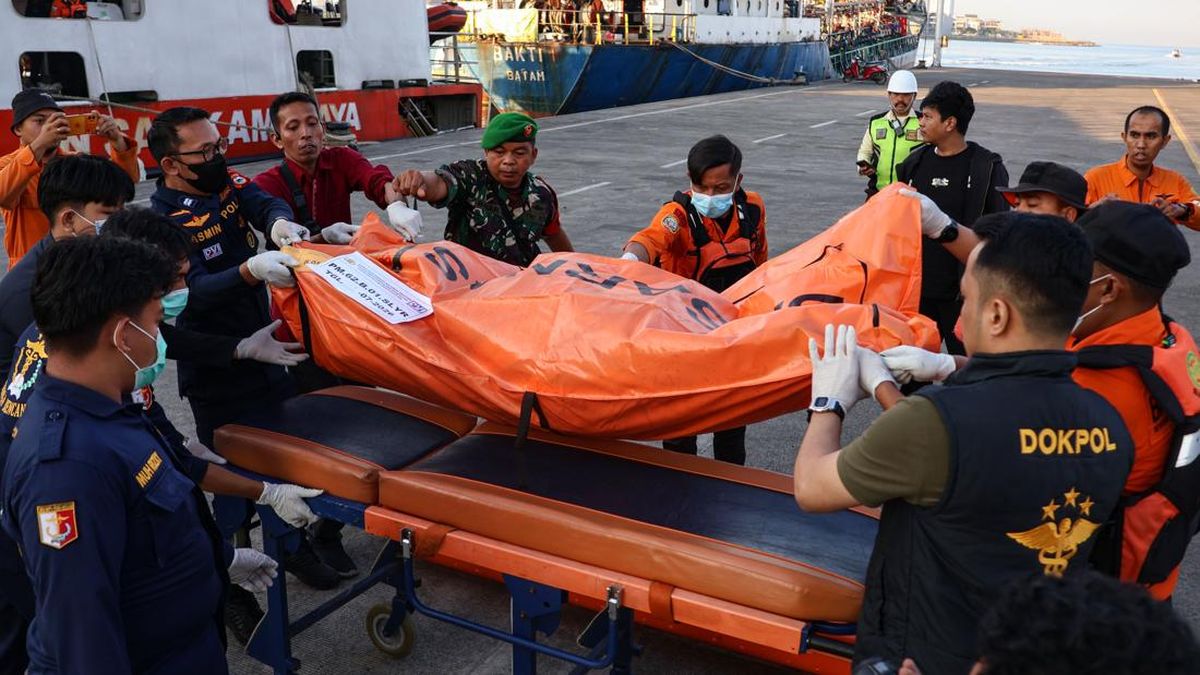
One of the most concerning aspects revealed by the Basarnas investigation was the significant discrepancy between the ship’s manifest and the actual number of people on board. Initially, the manifest recorded approximately 46 individuals. However, following verification by the joint SAR team from Basarnas Makassar, the actual count of people on board was confirmed to be around 78, including 8 crew members. This stark difference points to potential overloading and the practice of carrying unregistered passengers, both serious violations of maritime safety regulations. Overloading can severely compromise a vessel’s stability, making it far more susceptible to capsizing, especially in rough seas. The presence of unregistered passengers also complicates rescue efforts, as authorities initially operate with incomplete information regarding the number of people to search for.
Furthermore, the KM Nurul Salsa was carrying 17 tons of staple goods and 4 motorcycles. While traditional vessels frequently double as cargo and passenger transporters, the combination of heavy cargo and an overloaded passenger count significantly increases the risk profile of the voyage, especially when navigating challenging waters like those around the Selayar Islands.
Extended Search and Rescue Operations
The immediate aftermath of the sinking saw Basarnas Makassar launch an intensive search and rescue operation, mobilizing various assets and personnel. Despite the challenging conditions, SAR teams worked tirelessly to locate survivors and recover victims. After an initial seven-day operation, Basarnas made the decision to extend the search for an additional three days. This extension, announced on Tuesday, July 21, by the Director of Operations Basarnas, Rear Admiral TNI Yudhi Bramantyo, was a direct response to the fact that 16 passengers remained unaccounted for. The decision was made after careful coordination with local government authorities and other members of the Regional Leadership Communication Forum (Forkopimda).
On Wednesday, July 22, the eighth day of the operation, the joint SAR team strategically shifted its focus. Based on detailed analysis of ocean currents, the search area was expanded and concentrated on the vast waters extending from the Sabalana Archipelago towards the maritime boundaries of West Nusa Tenggara (NTB). Andi Sultan, Head of Operations and Alert Basarnas Makassar, explained the rationale: "Based on the analysis of sea current data that we use as an operational reference, there is a potential for objects to drift towards the waters of West Nusa Tenggara." This scientific approach helps optimize the deployment of resources in a geographically extensive and complex search area.
The search efforts on day eight were meticulously divided into two sectors to maximize coverage. The first Search and Rescue Unit (SRU), utilizing KN SAR Pacitan along with a Rigid Inflatable Boat (RIB), conducted sweep searches in the eastern part of the Sabalana Archipelago, specifically targeting uninhabited islands where survivors or debris might have washed ashore. Concurrently, the second SRU, composed of the KLM Mattoangin, focused its efforts on the western side of the Sabalana Archipelago, systematically covering another vast segment of the sea.
Andi Sultan underscored the persistent challenges faced by the SAR teams, particularly the prevailing weather conditions. "Weather conditions continue to be a major challenge in the implementation of operations. High waves around the Sabalana Archipelago mean that the movement of personnel and equipment must be carried out with greater caution without reducing the intensity of the search," he elaborated. These harsh environmental factors not only endanger rescue personnel but also make the task of spotting survivors or floating debris significantly more difficult.
As of the eighth day of the operation, the grim statistics reflected the severity of the disaster: out of the total 78 individuals on board KM Nurul Salsa, 59 had been successfully rescued and found alive. Tragically, three bodies were recovered, confirming fatalities. However, a lingering uncertainty surrounded one of the recovered bodies. Andi Sultan noted, "One body still cannot be confirmed whether it is one of the passengers of KM Nurul Salsa; we are still waiting for information from the DVI team." This highlights the painstaking process of victim identification, often relying on forensic dental and DNA analysis, especially when bodies have been exposed to harsh marine environments. The remaining 16 individuals were still classified as missing, underscoring the ongoing agony for their families.
Implications and Broader Impact
The KM Nurul Salsa tragedy carries significant implications, not only for the immediate victims and their families but also for maritime safety regulations and enforcement in Indonesia.
Firstly, the alleged intentional engine shutdown due to overheating, coupled with the discrepancy in passenger manifests and potential overloading, strongly suggests systemic failures in adherence to safety protocols. If these allegations are substantiated, it could lead to severe legal consequences for the vessel owner, captain, and crew members under maritime law, potentially including charges related to negligence causing death or violations of shipping regulations. The investigation’s findings will be crucial in determining accountability and ensuring justice for the victims.
Secondly, this incident will likely trigger a renewed focus on the regulation and oversight of traditional cargo-passenger vessels, particularly those serving remote island communities. These vessels, while essential for connectivity, often operate under less rigorous inspection regimes than larger commercial ferries. The tragedy could prompt government agencies, such as the Directorate General of Sea Transportation and local port authorities, to review and potentially tighten safety standards, increase inspection frequencies, and enforce stricter penalties for violations like overloading and carrying unregistered passengers. This could include mandatory passenger manifests, stricter load limits, and regular mechanical checks.
Thirdly, the incident has a profound impact on community trust in maritime transport. For many island residents, sea travel is not a luxury but a necessity. Such tragedies erode confidence in the safety of these essential services, potentially affecting economic activities and social connectivity in the region. Restoring this trust will require not only transparent investigations and accountability but also tangible improvements in maritime safety infrastructure and enforcement.
Finally, the protracted search and rescue operation underscores the immense challenges involved in maritime disasters in vast and often treacherous waters. The dedication of Basarnas and other joint teams is commendable, but the resources required for such extensive operations are substantial. The incident serves as a stark reminder of the unpredictable nature of the sea and the critical importance of robust emergency response mechanisms, as well as preventive measures to avert such disasters in the first place. The outcome of the police investigation and the subsequent legal proceedings will be closely watched by the affected families and the broader public, hoping for answers, accountability, and ultimately, changes that prevent future tragedies from occurring.
