
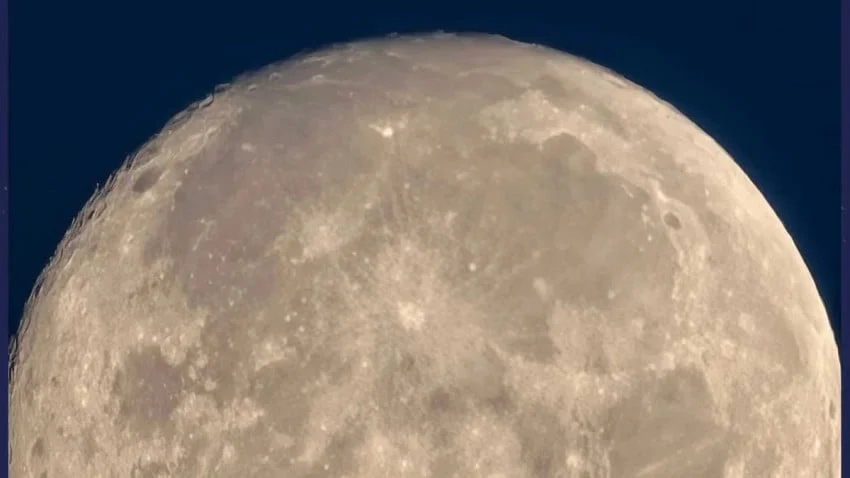
The global smartphone industry is once again on the cusp of a paradigm shift as major manufacturers race to conquer the final frontiers of mobile imaging. Beijing-based technology giant Honor has officially provided a compelling glimpse into the future of pocket-sized photography by revealing the advanced camera capabilities of its upcoming flagship device, the Honor Magic 9 Pro Max. Recent promotional teasers and sample imagery released by the company demonstrate lunar photography so crisp and detailed that industry analysts are drawing direct comparisons to dedicated astronomical equipment. Scheduled for a high-profile global launch on September 28, the Magic 9 Pro Max aims to aggressively challenge established market leaders—most notably Apple’s anticipated iPhone 18 Pro—by proving that the future of mobile photography lies not merely in software algorithms or massive sensors, but in the intelligent integration of modular physical optics.
This latest development underscores an ongoing, decades-long arms race within the consumer electronics sector. Since the inception of the camera phone, manufacturers have continuously strived to replicate, and eventually surpass, the capabilities of standalone digital single-lens reflex (DSLR) and mirrorless cameras. While recent years have seen heavy reliance on artificial intelligence, computational photography, and multi-frame stacking to artificially enhance details, Honor’s upcoming flagship pivots back toward physical optical engineering. The core innovation of the Honor Magic 9 Pro Max is not isolated to its internal hardware, but is instead anchored by a revolutionary ecosystem of modular attachments known as the Photography Master Kit.
The Evolution of Mobile Imaging and the Modular Approach
To fully understand the significance of the Honor Magic 9 Pro Max, one must examine the trajectory of smartphone camera development over the past ten years. Early smartphone cameras were hindered by tiny sensors and fixed, wide-angle lenses, making them largely supplementary tools. As sensor technology improved alongside mobile processing power, manufacturers began stacking multiple lenses onto the rear chassis—typically offering ultra-wide, wide, and telephoto perspectives. However, physical constraints such as device thickness have historically limited the focal length and light-gathering capabilities of periscope zoom lenses.
Honor’s strategy with the Photography Master Kit sidesteps these persistent physical limitations by embracing a modular hardware philosophy. Rather than forcing consumers to choose between a slim, pocket-friendly daily driver and a bulky professional camera setup, Honor has designed an ecosystem where the smartphone serves as the digital brain and sensor hub, while specialized optical attachments provide the heavy lifting for specialized scenarios.
At the heart of the Photography Master Kit are interchangeable telephoto lenses that mount directly onto the primary camera module of the Honor Magic 9 Pro Max. The standout component revealed in the initial teasers is a specialized lens system dubbed Honor Thumb. Boasting a substantial 200mm focal length, the Honor Thumb is engineered with a remarkably compact footprint, defying the traditional bulk associated with long-range telephoto glass. This lens is designed to dramatically extend the optical zoom capabilities of the smartphone without degrading image quality through digital interpolation, offering users a level of reach previously restricted to standalone mirrorless bodies equipped with telephoto zoom lenses.
A Close Examination of the Lunar Photography Teasers
The catalyst for the current industry buzz is a series of promotional images released by Honor, showcasing extraordinarily detailed photographs of the autumn moon. Astrophotography has long been a battleground for smartphone manufacturers, with companies frequently utilizing heavy AI enhancements to artificially generate lunar textures when a user points a camera at the night sky. However, Honor’s presentation of the Magic 9 Pro Max capabilities suggests a different technological foundation—one where genuine optical magnification plays a pivotal role in capturing surface craters, mare, and subtle atmospheric distortions.
When releasing these promotional materials, Honor issued a bold, industry-wide challenge accompanied by the rhetorical question: "Who else can be able to do that?" Independent mobile photography experts examining the technical metadata and sharpness of the leaked shots note that the level of optical resolution achieved points to a genuine synergy between the device’s primary sensor, advanced stabilization, and the 200mm Honor Thumb attachment. By bypassing the limitations of internal periscope lenses, the external kit allows the sensor to capture uncompressed optical data from distant subjects with minimal degradation.
Market Implications and the Competitive Landscape
The timing of Honor’s announcement—just weeks ahead of its September 28 global launch event—is calculated to disrupt the competitive landscape during the critical autumn product release cycle. By directly challenging upcoming high-end competitors like the Apple iPhone 18 Pro, Honor is signaling its ambition to capture the lucrative enthusiast and professional mobile creator market.
Historically, Apple and Samsung have dominated the high-end smartphone segment through optimized software ecosystems and consistent, reliable imaging pipelines. Yet, innovation in traditional smartphone camera design has experienced incremental plateaus recently, with annual upgrades focusing primarily on minor sensor size increases and faster processing chips. By introducing a modular optical kit that transforms a flagship smartphone into a device capable of near-telescopic performance, Honor is attempting to redefine the value proposition of a modern flagship.
Industry analysts suggest that if the Photography Master Kit is priced competitively and supported by a robust software interface, it could compel rival manufacturers to reconsider their own hardware strategies. The integration of interchangeable physical optics opens up new revenue streams for manufacturers through accessory sales while offering consumers a viable alternative to carrying separate, dedicated cameras for travel, wildlife, and astrophotography.
Chronology of the Honor Magic 9 Pro Max Campaign
The rollout of the Honor Magic 9 Pro Max has been methodically orchestrated to maximize media attention and consumer anticipation. The timeline leading up to the official unveiling highlights Honor’s deliberate marketing strategy:
- Early September: Initial industry rumors begin circulating regarding a secretive flagship device from Honor featuring advanced modular camera hardware.
- Mid-September: Honor releases the first official teaser campaign, showcasing high-resolution images of the autumn moon captured using unreleased hardware. The campaign sparks intense debate across technology forums regarding the authenticity of the zoom capabilities and the extent of AI involvement.
- Late September (Current Phase): Honor officially reveals the Photography Master Kit, detailing the inclusion of interchangeable lenses such as the 200mm Honor Thumb. The company issues its public challenge to competitors regarding long-range imaging prowess.
- September 28: The scheduled global launch event, where Honor is expected to announce official pricing, regional availability dates, and a comprehensive breakdown of the internal specifications of the Magic 9 Pro Max alongside its modular ecosystem.
Technical Analysis and Future Outlook
From a technical standpoint, the success of the Honor Magic 9 Pro Max will depend heavily on the mechanical precision of the mounting mechanism and the optical glass quality within the Photography Master Kit. Attaching external lenses to a smartphone sensor introduces potential challenges, including optical vignetting, alignment tolerances, and light loss. Honor’s engineering team appears to have addressed these hurdles by designing a proprietary locking system that ensures pixel-perfect alignment between the interchangeable glass and the primary sensor array.
Furthermore, the integration of a 200mm focal length in such a portable form factor requires sophisticated optical stabilization. Handheld photography at 200mm magnification is notoriously difficult due to micro-jitters, which are magnified exponentially over long distances. It is anticipated that the Magic 9 Pro Max employs a combination of advanced sensor-shift optical image stabilization (OIS) and electronic stabilization algorithms to keep subjects framed correctly during high-magnification shots.
As the September 28 global launch approaches, consumer electronics enthusiasts and professional photographers alike will be watching closely to see how the Honor Magic 9 Pro Max performs in real-world testing environments. If the device lives up to the lofty expectations set by the initial lunar photography teasers, it may well establish a new benchmark for what is possible when mobile computing power meets traditional, high-end optical engineering.
