
While billions of people across the globe must navigate the increasingly complex web of international travel regulations, visa applications, and the anxiety of passport expiration dates, three specific individuals are entirely exempt from these requirements. For the vast majority of humanity, the passport is an indispensable document—a key that unlocks borders and verifies identity. However, under the strict protocols of international diplomacy and the unique legal frameworks of their respective nations, the King of the United Kingdom and the Emperor and Empress of Japan move across the world without ever needing to present a passport to an immigration officer. This rare privilege is not merely a perk of high office; it is a profound expression of national sovereignty and the legal definition of the state itself.
The Sovereign Prerogative: Why King Charles III Travels Without Documentation
The first individual on this exclusive list is King Charles III, the reigning monarch of the United Kingdom and 14 other Commonwealth realms. The reason for this exemption is rooted in the very nature of the British passport. If one were to open a standard blue British passport, the first page contains a printed request from the Secretary of State, acting on behalf of the monarch. The text traditionally reads: "His Britannic Majesty’s Secretary of State requests and requires in the Name of His Majesty all those whom it may concern to allow the bearer to pass freely without let or hindrance, and to afford the bearer such assistance and protection as may be necessary."
Because the passport is issued in the name of the King, it would be legally redundant and logically inconsistent for the King to issue a document to himself. In the eyes of British law, the King is the source of the authority that validates the passport; therefore, he does not require the physical document to prove his identity or his right to travel.
A Tradition Passed Down from Queen Elizabeth II
This unique status was most famously held by the late Queen Elizabeth II during her 70-year reign. Throughout her tenure, the Queen visited over 100 countries, covering a distance equivalent to traveling around the world 42 times, all without a passport. When King Charles III ascended the throne in September 2022, this sovereign prerogative transitioned to him.
However, this privilege is strictly limited to the reigning monarch. Other members of the British Royal Family, including Queen Camilla and the Prince of Wales, do not share this exemption. They are required to carry passports, although they typically utilize diplomatic passports which offer streamlined processing and certain legal immunities. Furthermore, the King is also exempt from the requirement to hold a driver’s license for the same legal reason: licenses are issued in his name.
The Imperial Exception: Emperor Naruhito and Empress Masako of Japan
The other two individuals who enjoy this global freedom are Emperor Naruhito and Empress Masako of Japan. Unlike the British system, which relies on the wording of the document itself, the Japanese exemption is based on a specific diplomatic directive established by the Ministry of Foreign Affairs.
On May 10, 1971, the Japanese Ministry of Foreign Affairs issued a formal ruling regarding the travel of the Imperial family. The ministry concluded that it would be "highly inappropriate" for the Emperor or Empress to be subjected to the standard administrative procedures of immigration or to carry a civilian identification document like a passport. As the "symbol of the State and of the unity of the People" under the Japanese Constitution, the Emperor is considered to be above the standard bureaucratic requirements that apply to Japanese citizens.
The Logistics of Imperial Travel
When the Emperor and Empress travel abroad, they do not simply show up at a border. Their travel is managed through a rigorous process of "Notes Verbales" (official diplomatic communications). Before an Imperial visit occurs, the Japanese government sends a formal notification to the host country’s government, announcing the arrival of the Sovereign. This document serves as the ultimate guarantee of identity and status, superseding any need for a physical passport.
Similar to the British Royal Family, this exemption does not extend to the wider Imperial household. Other members of the family, such as Princess Aiko or Crown Prince Akishino, are issued diplomatic passports for their international engagements. The distinction remains clear: only the sitting head of state (and in Japan’s case, his consort) embodies the state to the degree that a passport becomes unnecessary.
The Evolution of Travel Documents: A Historical Context
To understand why these three people are so unique, one must look at the history of the passport itself. The concept of a "safe conduct" document dates back centuries. One of the earliest recorded references to a travel document is found in the Hebrew Bible, where Nehemiah, an official serving King Artaxerxes I of Persia in approximately 450 BC, was given letters from the king to the governors of the lands beyond the Euphrates to ensure safe passage.
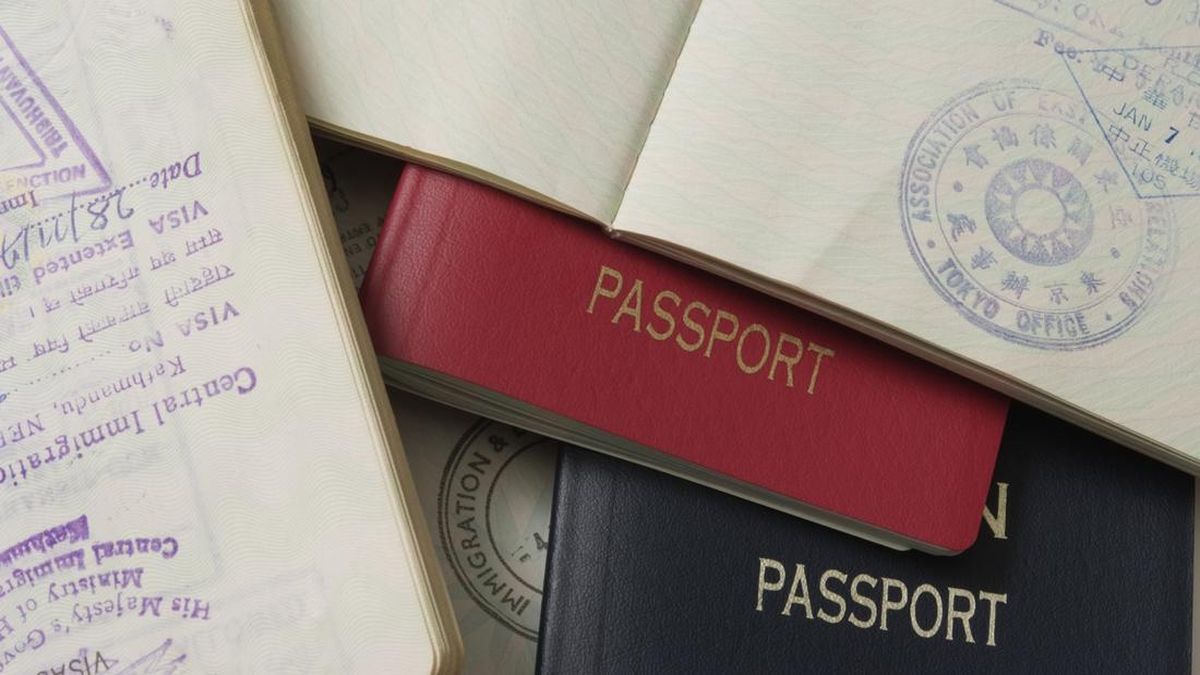
In England, the "Safe Conducts" Act of 1414, during the reign of King Henry V, is often cited as a precursor to the modern passport. For centuries, these documents were essentially letters signed by a monarch. As the world moved toward the Westphalian system of nation-states, the passport evolved from a personal letter of recommendation from a king into a standardized bureaucratic tool.
By the early 20th century, particularly after World War I, the international community sought to standardize these documents to manage the massive movement of refugees and travelers. The League of Nations held a conference in 1920 that established the basic format of the modern passport. Throughout this evolution, the legal fiction that the document is a "request" from one head of state to another has been maintained, which is why the actual heads of state in certain monarchies remain exempt.
How Borders are Crossed: Protocol Over Paperwork
For the three individuals who travel without passports, the process of crossing a border is a choreographed feat of international protocol. While they do not stand in line at a Customs and Border Protection (CBP) booth or wait for a stamp at Heathrow, their entry into a foreign country is more documented than that of any average citizen.
The Role of the Advance Team
Months before a state visit, an "advance team" consisting of diplomats, security officials (such as the Secret Intelligence Service or Japan’s Imperial Guard), and protocol officers visits the host country. They coordinate every detail of the arrival, including the specific point of entry.
Diplomatic Notification
The official notification sent by the Ministry of Foreign Affairs (Japan) or the Foreign, Commonwealth & Development Office (UK) serves as the legal basis for entry. When King Charles III’s plane lands, he is met by high-ranking officials from the host nation. His identity is a matter of international public record, and his status as a guest of the state provides him with "sovereign immunity," meaning he is not subject to the jurisdiction of the host country’s courts while traveling.
Comparison with Other Global Leaders
It is a common misconception that all world leaders travel without passports. This is not the case. For example, the President of the United States, the President of France, and the Pope all carry passports.
- The US President: The President of the United States carries a dark-blue "Diplomatic Passport." While the President does not wait in standard lines and enjoys immense security, the document is still required for official record-keeping and to satisfy the legal requirements of host nations that do not recognize the same "sovereign-as-state" logic as monarchies.
- The Pope: As the sovereign of Vatican City, the Pope is a head of state. However, the Pope traditionally carries a passport. Pope Francis, for instance, maintains his Argentine passport in addition to a Vatican-issued one.
- Republics vs. Monarchies: In a republic, the President is an elected official and a citizen of the state, not the embodiment of the state itself. Therefore, they are issued a passport by the government they lead. In the unique cases of the UK and Japan, the monarch is the "fount of honor" and the legal source of the state’s authority, creating the legal loophole that allows for passport-free travel.
Security and Symbolic Implications
The exemption from passport requirements is one of the last remaining vestiges of absolute sovereign authority in a world dominated by digital tracking and biometric data. In an era where most travelers must provide fingerprints and facial recognition data to cross borders, the ability of King Charles III, Emperor Naruhito, and Empress Masako to travel on their word and title alone is a powerful symbol.
Symbolic Sovereignty
This privilege reinforces the idea that the monarch is the personification of the nation. When King Charles III travels, the United Kingdom itself is, in a symbolic sense, moving across borders. This is why the protocol is so strictly guarded. If the King were to carry a passport, it would imply that there is an authority higher than himself within his own realm that has the power to grant him permission to travel.
Practical Security
From a security standpoint, the lack of a passport actually simplifies matters for the host nation. Because the arrival of these individuals is a high-stakes diplomatic event, there is zero ambiguity regarding their identity. The rigorous vetting of the entire entourage—who do carry passports—ensures that the security perimeter remains intact.
Conclusion: A Rare Status in a Bordered World
The existence of three individuals who do not need a passport serves as a fascinating anomaly in modern international relations. It highlights the intersection of ancient tradition and contemporary law. For King Charles III, Emperor Naruhito, and Empress Masako, the lack of a passport is not about convenience; it is a testament to their roles as the ultimate representatives of their nations’ history, law, and sovereignty.
As global travel continues to evolve with the introduction of digital IDs and "frictionless" borders for the masses, it is likely that these three special individuals will remain the only ones on Earth whose identity is so intrinsically linked to their national identity that they require no paperwork to prove who they are. They remain the ultimate travelers, moving through a world of borders as the living embodiments of the states they represent.
