Every September 9, Indonesia observes Hari Olahraga Nasional (Haornas), a day that serves as both a historical marker of the nation’s athletic sovereignty and a strategic reminder of the importance of physical culture in a modern society. While the date is synonymous with celebration, its roots are deeply embedded in the turbulent yet optimistic landscape of 1948, when a nascent Indonesia sought to prove its existence on the global stage. As the nation marks the 43rd anniversary of the official declaration of Haornas in 2026, the occasion prompts a deeper look into the evolution of Indonesia’s sports landscape, from the inaugural Pekan Olahraga Nasional (PON) to the current government-led initiatives to integrate athletics into the fabric of daily life.
The Genesis of a Sporting Identity: 1948
The foundation of Haornas lies in the historic first Pekan Olahraga Nasional (PON), held in Solo, Central Java, from September 9 to September 12, 1948. At that time, the Republic of Indonesia was in its infancy, grappling with the immediate pressures of maintaining independence while seeking international recognition.
The decision to organize a national multi-sport event was not merely a recreational endeavor; it was a political statement. In 1948, Indonesia aspired to participate in the XIV Olympic Games in London. However, the international community remained hesitant to recognize the newly sovereign nation, creating significant administrative and diplomatic barriers for the Indonesian contingent. Faced with these obstacles, the leadership realized that if the world would not provide them a platform, they would create one of their own.
The successful execution of PON I in Solo proved that the Indonesian spirit could thrive despite logistical limitations. It established a precedent for national unity through sport, turning the date of the event’s opening—September 9—into the symbolic heartbeat of Indonesia’s athletic history.
Chronology of Institutionalization
The transition from a historical event to an official national observance took several decades of development. The following timeline outlines the evolution of Haornas as a state-sanctioned initiative:
- September 9–12, 1948: The first PON is held in Solo, establishing the fundamental link between the date and national identity.
- September 9, 1983: President Soeharto formally initiates the observance of Hari Olahraga Nasional during the inauguration of the renovated Sriwedari Stadium in Surakarta. This event marked the beginning of a coordinated effort to promote physical fitness at the national level.
- 1985: The legal framework for the celebration is cemented through Presidential Decree (Keppres) Number 67 of 1985. This decree solidified September 9 as the official Hari Olahraga Nasional, mandating that the government prioritize sports development as a means of national character building.
- 2000s–Present: The focus of Haornas shifted from purely elite competition to the "sport for all" movement, aligning with global trends that prioritize public health, economic growth through sports tourism, and infrastructure development.
The Role of the Ministry of Youth and Sports
The Ministry of Youth and Sports (Kemenpora) has consistently utilized Haornas as a vehicle for policy advocacy. In recent years, the ministry has broadened its mandate, moving beyond the traditional role of managing national teams to becoming an architect of the nation’s wellness and economic strategy.
According to official Kemenpora guidelines for the 2025–2026 cycle, the ministry emphasizes that the modern definition of "sport" encompasses more than the pursuit of medals. It includes the cultivation of discipline, the promotion of a healthy lifestyle to combat non-communicable diseases, and the stimulation of local economies through sports tourism.
For instance, the planning for PON 2028 is already being positioned as a key driver for the regional economy, with the government designating Sumba Timur as a "sport tourism" hub. This approach aims to leverage sports events to develop infrastructure, hospitality, and local services, turning athletic competitions into engines for sustainable regional development.
Economic and Health Implications
The push to formalize sports as a daily habit carries significant economic weight. Kemenpora has highlighted that investing in sports infrastructure is not a luxury but a necessity. Recent proposals, including the request for a IDR 1.5 trillion investment to build comprehensive academies and specialized training centers, underscore a shift toward high-performance training models that can generate long-term value.
From a public health perspective, the advocacy for "sport as a lifestyle" is a response to the rising health costs associated with sedentary living. By encouraging regular physical activity—ranging from school sports programs to community-based walking and cycling initiatives—the government aims to lower the long-term burden on the national health system. The alignment of health outcomes with athletic achievement is a central tenet of the current administration’s vision for the nation’s human capital development.
The 2026 Milestone: Haornas at 43
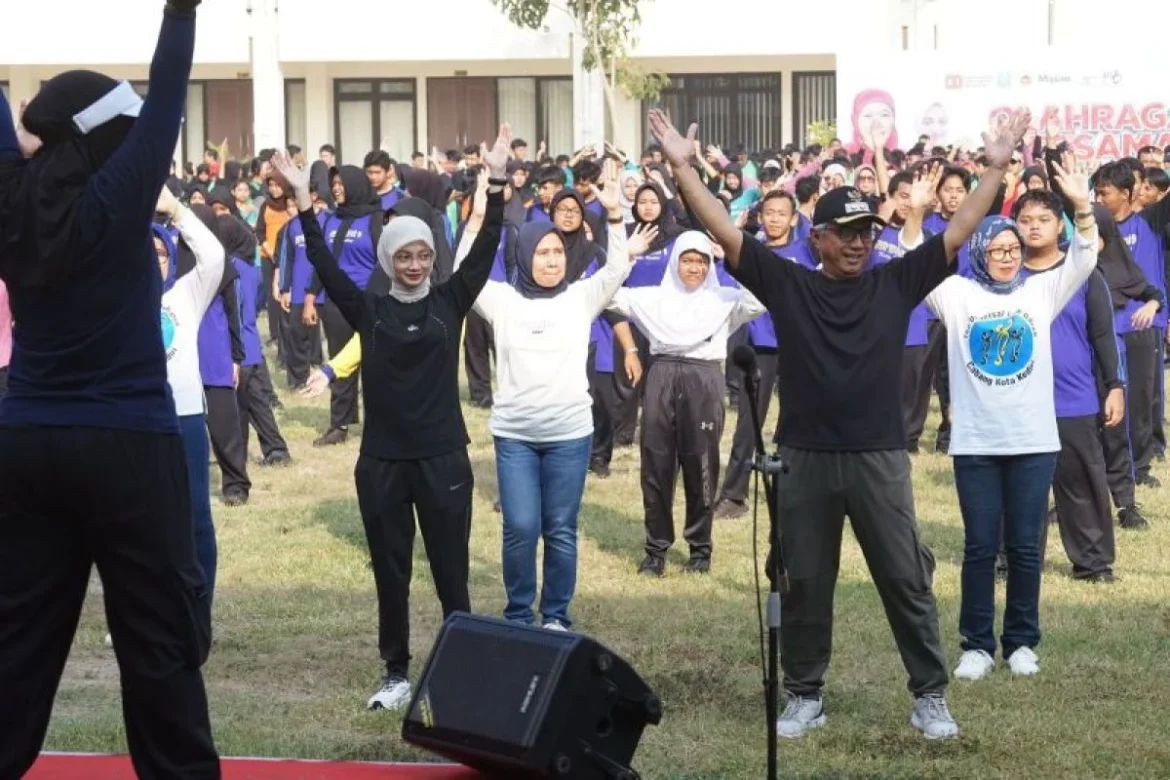
As Indonesia commemorates the 43rd anniversary of the official Haornas in 2026, the focus remains on inclusivity. The celebration is no longer confined to stadium events but extends to the digital sphere and community-led gatherings. The 2026 observance serves as a mirror for the nation’s progress: where once the goal was to simply prove that a national competition could exist, the goal now is to reach international standards of excellence while ensuring that every citizen has access to the benefits of physical activity.
Experts in sports management note that the sustainability of these efforts depends on the integration of sports into the educational curriculum and the revitalization of local venues. The legacy of the Sriwedari Stadium—the birthplace of Haornas—remains a potent symbol of how historical infrastructure can be modernized to serve contemporary needs.
Challenges and Future Outlook
Despite the enthusiasm surrounding Haornas, the path forward is not without challenges. Critics and industry analysts point to the need for better distribution of sports facilities across the archipelago. While major cities in Java have benefitted from historical investment, the "sport for all" goal requires equitable access in remote and outer islands.
Furthermore, the transition from amateur participation to professional excellence requires a robust scouting system. The call for a IDR 1.5 trillion investment into training academies is a reflection of this need. By creating a pipeline for talent, the government hopes to ensure that Indonesia remains competitive in regional games like the SEA Games, Asian Games, and eventually, the Olympic stage.
Moreover, the rise of "sport tourism" provides a unique opportunity to bridge the gap between economic development and athletic success. By hosting events like the upcoming "PON Pantai" (Beach PON) in Ancol, the country is diversifying its sporting portfolio, tapping into natural landscapes to attract both domestic and international interest.
Conclusion
Hari Olahraga Nasional is much more than a date on the calendar; it is a manifestation of Indonesia’s enduring commitment to its own potential. From the modest, defiant beginnings in 1948 to the sophisticated, multi-faceted strategy of 2026, the evolution of this day reflects the growth of the nation itself.
By prioritizing the institutionalization of sports, the government is fostering a culture that values not just the victory of the elite, but the health and character of the general population. As the country moves forward, the success of these initiatives will be measured by the participation rates of its youth, the viability of its sporting economy, and the sustained excellence of its athletes on the global stage. Every September 9 serves as a reminder that the journey which began in the halls of a stadium in Solo nearly eight decades ago is far from over—it is a continuous, collective effort to strengthen the nation, one stride at a time.