
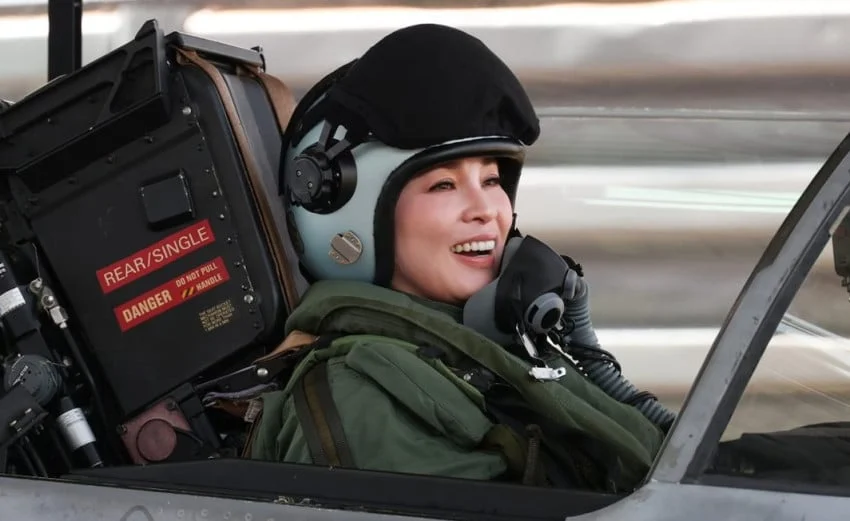
The art of aviation has long been associated with precision, discipline, and high-level technical expertise. While the vast majority of heads of state and royal family members rely on professional commercial or military aviators for their official international travels, a select group of global monarchs possess the rare capability to pilot aircraft themselves. This intersection of sovereign leadership and advanced aviation skills provides a fascinating glimpse into the rigorous personal achievements of modern royalty. Among this elite group of flying monarchs, Queen Suthida of Thailand recently captured international headlines by personally piloting a royal aircraft on a high-profile diplomatic and sporting mission abroad, joining an exclusive roster of reigning royals who routinely take the controls of state aircraft.
Main Facts of the Royal Aviation Milestone
The focal point of recent international aviation and diplomatic attention centers on Her Majesty Queen Suthida Bajrasudhabimalalakshana of Thailand. Demonstrating her extensive professional training as an aviator, the Queen personally commanded a Boeing 737-800 royal jet during a state-related journey to Japan. This remarkable feat placed her among a very limited number of supreme leaders and royal consorts worldwide who maintain active, high-grade commercial pilot certifications and exercise them during official overseas delegations.
While conventional protocol dictates that heads of state occupy the passenger cabin while trained military or civil aircrews manage flight operations, Queen Suthida’s background bridges the gap between commercial aviation expertise and royal duty. Her execution of a long-haul international flight carrying official delegations underscores a trend where certain modern monarchs prefer practical mastery over symbolic representation alone, a trait shared by select peers in Europe and Asia.
Chronology of the Historic Flight to Japan
The sequence of events surrounding Queen Suthida’s flight to Japan highlights a meticulously planned itinerary that blended diplomatic representation, international sports governance, and advanced piloting execution.
The chronology commenced on October 14, 2026, at Don Mueang Military Airport in Bangkok, Thailand. Prior to departure, standard pre-flight preparations and technical clearances were conducted, with Queen Suthida actively participating in the flight deck briefing as the pilot-in-command of the Boeing 737-800. The aircraft departed Bangkok smoothly, undertaking a multi-hour international trajectory northward toward the Hokkaido prefecture in Japan.
Upon traversing international airspace, the aircraft made a precise touchdown at New Chitose Airport in Hokkaido. The primary objective of the visit spanned from October 14 to October 22, 2026. Queen Suthida traveled to Japan primarily to attend the IIHF Women’s Asia and Oceania Ice Hockey Championship 2027, hosted in Sapporo. Serving in her official capacity as the first Global Women’s Ambassador for the International Ice Hockey Federation (IIHF), the Queen’s responsibilities included observing tournament matches, meeting international sports delegates, and personally presenting medals and trophies to the competing athletes.
The return phase of the chronological deployment occurred on October 22, 2026. Following the conclusion of her engagements in Sapporo, Queen Suthida returned to New Chitose Airport, re-assumed her position on the flight deck, and piloted the Boeing 737-800 back to Don Mueang Military Airport in Bangkok, successfully concluding a demanding round-trip mission executed entirely under her operational command.
Supporting Data: The Elite Roster of Royal Aviators
Queen Suthida is far from alone in her mastery of the skies. Aviation history and contemporary monarchies feature several prominent figures who hold formal pilot licenses and actively command aircraft. Contextualizing her achievement requires examining the backgrounds of other notable royal aviators, including King Maha Vajiralongkorn of Thailand, Sultan Hassanal Bolkiah of Brunei, and King Willem-Alexander of the Netherlands.
King Maha Vajiralongkorn of Thailand has a deeply established military aviation background, having trained extensively as a fighter pilot and helicopter pilot with the Royal Thai Armed Forces, as well as foreign military institutions. His operational experience encompasses a wide variety of military and civil aircraft, reflecting a lifelong dedication to aeronautical disciplines.
Sultan Hassanal Bolkiah of Brunei is similarly renowned for his proficiency in piloting both commercial airliners and rotary-wing aircraft. As the absolute monarch of Brunei, he has frequently been documented taking the controls of his personal Boeing 747 or Airbus aircraft during state visits, showcasing a level of hands-on involvement in international travel that remains extraordinarily rare for global leaders.
In Europe, King Willem-Alexander of the Netherlands stands out as a commercial airline pilot of long standing. Before ascending the Dutch throne, and continuing even after his coronation in 2013, King Willem-Alexander maintained a regular schedule flying part-time for KLM subsidiary cityhopper regional flights to keep his Airline Transport Pilot Licence (ATPL) valid. His commitment to aviation involves rigorous recurrent training, simulator assessments, and adherence to commercial flight standards, mirroring the professional credentials held by Queen Suthida.
Background Context: From Cabin Crew to Royal Cockpit
To fully understand Queen Suthida’s contemporary role as a royal pilot, one must examine her professional trajectory prior to her integration into the Thai royal family. Unlike many royals who learn to fly purely as a recreational hobby or through honorary military commissions, Suthida’s relationship with aviation began in the commercial sector.
Before her marriage and subsequent ascension as Queen, Suthida worked professionally as a flight attendant for Thai Airways, gaining foundational experience in commercial aviation safety, cabin management, and airline operations. Following this, she pursued intensive professional flight training, successfully acquiring an Airline Transport Pilot Licence (ATPL)—the highest level of aircraft pilot certificate, which permits the holder to act as pilot-in-command of scheduled commercial air transport operations. Her subsequent service in the military and her integration into royal aviation units provided the advanced tactical and logistical training necessary to operate state aircraft at the highest levels of safety and efficiency.
Official Responses and Institutional Perspectives
While direct public statements from foreign governments regarding royal pilot operations are typically minimal—given that such flights adhere to strict diplomatic clearance and international aviation safety regulations—aviation authorities and government public relations departments have offered insights into these specialized missions.
The Government Public Relations Department of Thailand released detailed logistical accounts of the October 2026 mission, emphasizing the technical precision and safety protocols observed during the transcontinental flight. Observers within international sports organizations, notably the International Ice Hockey Federation (IIHF), expressed profound appreciation for the Queen’s active participation in promoting women’s sports in Asia, noting that her arrival via a self-piloted royal aircraft added a layer of historic distinction to the sporting event.
Aviation safety experts and institutional analysts have noted that any head of state or royal family member operating an aircraft must clear the exact same regulatory hurdles as professional airline captains. This includes medical certifications, type-rating qualifications on specific airframes like the Boeing 737-800, simulator proficiency checks, and adherence to international flight management standards. Consequently, the execution of such flights serves as a testament to institutional safety compliance rather than mere novelty.
Broader Impact and Implications of Royal Aviation
The phenomenon of monarchs operating state aircraft carries several notable implications for modern diplomacy, public relations, and the perception of leadership.
From a public relations perspective, a royal figure possessing tangible, highly technical professional skills—such as holding an ATPL and commanding a commercial-class jet—humanizes the monarchy while simultaneously projecting an image of competence, modernity, and industriousness. In an era where traditional institutions face intense public scrutiny regarding relevance and utility, visible mastery of complex modern disciplines like aviation reinforces the narrative of active, capable leadership.
Operationally, the ability of a monarch or key royal delegate to understand the intricacies of flight operations directly can foster a deeper appreciation for national aviation infrastructure, aerospace industries, and defense capabilities. For Thailand and other nations with robust aviation sectors, having leaders who are conversant in the technical language of flight bridges the gap between state governance and technical sectors.
Furthermore, the diplomatic symbolism of such journeys should not be underestimated. When a sovereign or royal consort arrives in a foreign nation—such as Japan—having personally navigated international air corridors and executed landing procedures at major international hubs like New Chitose Airport, it signals a high degree of personal dedication and physical vigor. It transforms routine state travel into an active demonstration of skill, setting a unique benchmark for international statecraft and reinforcing the enduring fascination with the intersection of royalty and the skies.
