
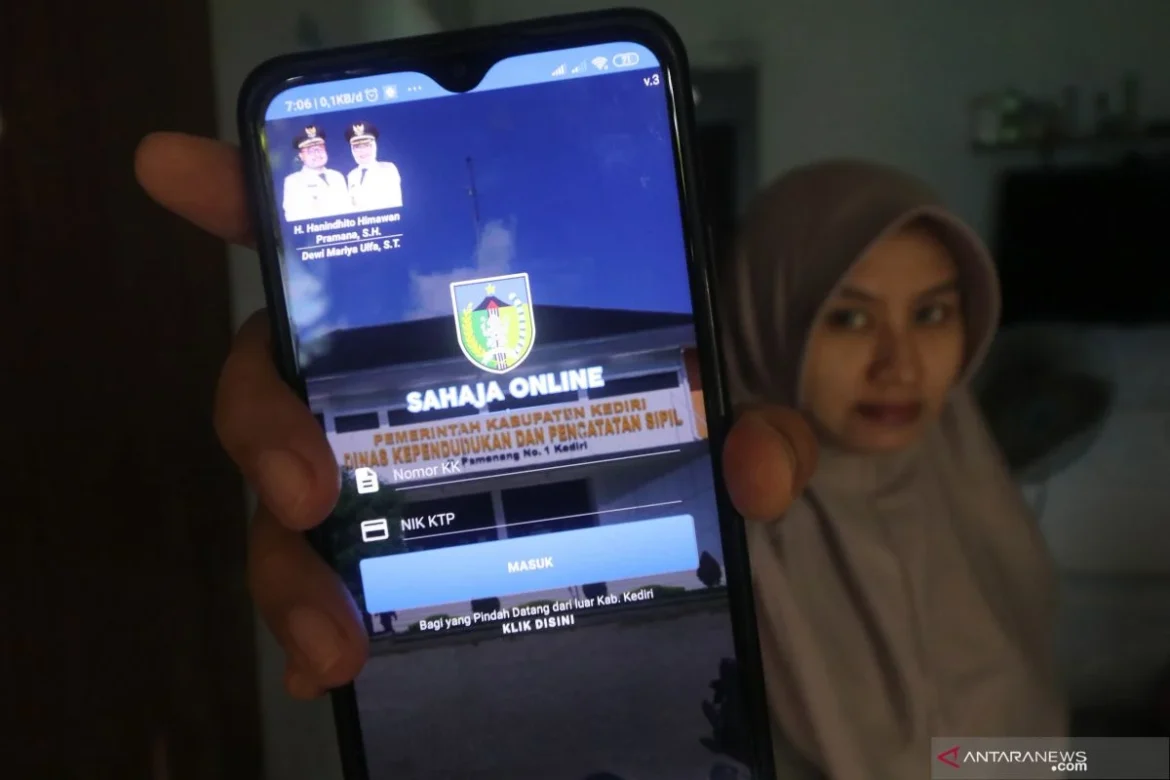
The administrative landscape of Indonesia has undergone a significant digital transformation, particularly within the Directorate General of Population and Civil Registration (Dukcapil) under the Ministry of Home Affairs. As the government continues to push for the "Digital Population Identity" (IKD) initiative, the process of updating the Kartu Keluarga (KK)—the foundational document for every Indonesian household—has become increasingly accessible through regional online portals. This shift represents a broader national strategy to reduce bureaucratic friction, eliminate the necessity for physical presence at local offices, and ensure that demographic data remains accurate and up-to-date in real-time.
The Evolution of Demographic Administration in Indonesia
For decades, the Indonesian population registration system was defined by paper-heavy, in-person interactions at local Disdukcapil offices. However, the introduction of Law Number 24 of 2013, which amended Law Number 23 of 2006 on Population Administration, laid the groundwork for a more centralized and digital approach. Under these regulations, the government solidified the principle that all population administration services, including the issuance of family cards and birth certificates, must be provided free of charge.
The recent acceleration toward digital services is not merely a matter of convenience; it is a structural necessity to maintain the integrity of the National Population Database. By allowing citizens to submit updates—such as the addition of a newborn, the inclusion of a family member from another household, or structural changes due to marriage or adoption—online, the government ensures a higher rate of data compliance. This synchronization is critical for the distribution of social assistance, the implementation of universal healthcare (BPJS Kesehatan), and the issuance of education-related documents.
Chronology and Procedures for Household Updates
The procedure for adding a family member is contingent upon the specific "demographic event" triggering the change. These events are generally categorized into two distinct tracks: the addition of a newborn and the inclusion of an existing individual with an established National Identity Number (NIK).
1. The Newborn Registration Pathway
When a child is born, the household must update the KK to include the new citizen. Historically, this was a secondary process performed long after the birth. Today, many regional administrations have integrated this with the issuance of the child’s Birth Certificate and the Child Identity Card (KIA).
The requirements typically include:
- The original Family Card (KK).
- A formal certificate of birth issued by a medical professional (hospital, puskesmas, or registered midwife).
- Proof of parental marriage (marriage certificate or religious marriage book).
- Parental identity documents.
2. The Transfer or Inclusion Pathway
If the individual to be added already possesses a NIK—for instance, a relative moving into a new household or a child being moved from one KK to another—the complexity increases. This often involves a "Move-In" (Pindah Datang) procedure. This is a crucial administrative step that ensures no individual is registered in two different family cards simultaneously, which would create a data conflict within the national database. Applicants must provide the original KK of the origin household and the destination household, along with the necessary transfer permits if the movement crosses administrative boundaries (e.g., from one regency to another).
Navigating Digital Portals: A Technical Guide
While the Ministry of Home Affairs provides the central framework, the execution of online services is decentralized to the regency or city level. This means that a resident in Jakarta, using the "ALPUKAT Betawi" system, will face a different user interface than a resident in Palembang utilizing the "SIDEMANG" application.
Despite these regional variations, the underlying workflow remains consistent:
- Account Authentication: Users must register using their NIK and mobile number. Security is paramount, and most systems utilize One-Time Password (OTP) verification linked to the applicant’s registered phone number to prevent identity theft.
- Service Selection: Users select the "Kartu Keluarga" menu and choose the specific trigger event. Choosing the wrong category—such as selecting "New Arrival" for a newborn—can result in the immediate rejection of the application by the automated system or a human verifier.
- Documentation Upload: The system requires high-resolution scans of physical documents. The shift to digital has made clarity a primary requirement; blurry or cropped images of birth certificates or marriage books are the most common cause for application delays.
- Verification and Issuance: Once submitted, the application enters the queue. A civil servant at the local Disdukcapil office reviews the digital file. Upon approval, the updated KK is usually issued in PDF format, often with a QR code that serves as a digital signature, replacing the traditional wet stamp and physical signature of the agency head.
The Economic and Social Impact of Zero-Cost Administration
A vital component of this digital transition is the strict enforcement of the "No Fee" policy. The Indonesian government has consistently emphasized that administrative services are public rights, not commodities to be monetized. According to the provisions in Law 24/2013, any demand for payment by government officials or intermediaries constitutes a serious violation of the code of conduct.
The economic implications for households are significant. In remote areas, the cost of travel to a district capital to update a KK could previously equal a full day’s wage. By removing this barrier, the government has observed an increase in the timely reporting of vital statistics. This data, in turn, allows for better national planning, as the government has a clearer picture of population growth, migration patterns, and the socio-economic status of its citizens.
Challenges and Systemic Limitations
Despite the success of digital portals, several challenges persist. The "digital divide" remains a concern; citizens in regions with poor internet connectivity or those with limited digital literacy continue to struggle with online platforms. Consequently, most Disdukcapil offices maintain a "hybrid" model, where physical counters remain open for those who cannot navigate the online systems.
Furthermore, data synchronization errors—where the NIK status in the system does not match the physical document—often require a "reconciliation" process. This necessitates a visit to the local office to manually correct the underlying database, proving that while digital tools are efficient, they are not infallible.
Best Practices to Avoid Application Rejection
To ensure a seamless experience, applicants should adhere to the following best practices:
- Verification of Data Alignment: Ensure that the data on all documents (Birth Certificate, Marriage Certificate, and existing KK) matches perfectly. Any discrepancy, even a minor spelling difference in a name, must be rectified before attempting to add an individual to the KK.
- Use Official Channels Only: Many third-party websites offer "assistance" in document processing. These are often unofficial and pose a severe risk to data privacy. Citizens are urged to use only the official domains (.go.id) of their respective regional Disdukcapil.
- Maintain Digital Backups: Once the electronic KK is received, it should be saved in multiple secure locations (cloud storage, encrypted email, or physical storage devices). The electronic version is legally valid and accepted for all public services, including banking, visa applications, and social security enrollment.
Future Outlook
The trajectory of Indonesia’s population administration is clearly moving toward a fully integrated, paperless system. The integration of the KK with the IKD (Identitas Kependudukan Digital) means that in the near future, families may not need to carry physical cards at all, as their household status will be verifiable via a smartphone application.
As the government continues to refine these digital services, the role of the citizen shifts from a passive recipient of services to an active participant in maintaining the national database. By keeping family records updated through these digital channels, citizens contribute to a more accurate, transparent, and responsive administrative system that serves the needs of the nation more effectively.
For those currently navigating these processes, patience is advised, as regional system updates can occasionally cause temporary service outages. When in doubt, the official websites of the local Disdukcapil serve as the primary source of truth, offering the most accurate guidance on local requirements and available,,,,, technical support.
