
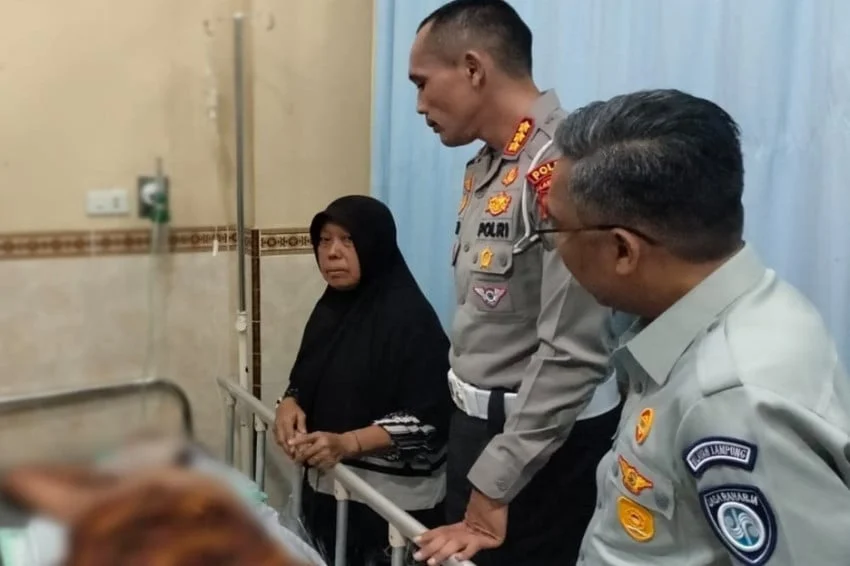
In the wake of a devastating traffic collision that claimed multiple lives and left several others injured, PT Jasa Raharja (Persero) has moved swiftly to deliver comprehensive emergency services, medical coordination, and financial protection to all victims involved. The tragic incident occurred on Sunday, October 25, 2026, at Kilometer 198+100 Lane A of the Terbanggi Besar-Pematang Panggang–Kayu Agung (Terpeka) Toll Road, situated within the jurisdiction of Tulang Bawang Barat Regency in the province of Lampung. The collision, which involved a commercial minibus and a heavy-duty Fuso truck, resulted in the immediate loss of six lives, while four other individuals sustained varying degrees of injuries, requiring urgent medical intervention and hospitalization.
As the state-owned enterprise entrusted with providing basic social protection for traffic accident victims in Indonesia, Jasa Raharja demonstrated immediate operational readiness. Through its regional office in Lampung, the company initiated emergency protocols within minutes of receiving distress notifications from highway authorities. This rapid response underscores the institution’s ongoing commitment to mitigating the immediate socioeconomic fallout of highway disasters, coordinating closely with multi-agency stakeholders to ensure that survivors receive optimal medical care and that the bereaved families are granted swift access to statutory compensation without bureaucratic friction.
Chronology of the Tragedy on the Terpeka Toll Road
The events leading up to the fatal collision on the Terpeka Toll Road unfolded under conditions that are currently under rigorous investigation by traffic accident analysis teams from the regional police. According to preliminary incident reports gathered from the scene, the minibus—carrying passengers traveling along the vital Trans-Sumatra toll corridor—was navigating the southbound stretch of the highway near Kilometer 198+100 Lane A in Tulang Bawang Barat Regency.
At approximately mid-morning, the vehicle approached the vicinity of the crash site, where a Fuso freight truck was also moving along the arterial route. For reasons still being ascertained by forensic traffic investigators from the Directorate of Traffic (Ditlantas) of the Lampung Regional Police and the Tulang Bawang Barat Resort Police (Satlantas Polres), a catastrophic impact occurred between the two vehicles. The sheer kinetic force of the collision caused catastrophic structural damage to the passenger compartment of the minibus, resulting in high-impact trauma that proved fatal to six occupants on the spot.
Emergency services, including toll road operators, highway patrol units, and local medical personnel, were dispatched to the scene immediately following automated alerts and emergency calls from passing motorists. First responders faced the arduous task of securing the accident zone, managing highway traffic flow to prevent secondary collisions, and extricating trapped victims from the mangled wreckage of the minibus. The injured survivors were swiftly triaged at the site before being rushed via fleet ambulances to nearby medical facilities, specifically RS Mutiara Bunda and RS Griya Medika Dompet Dhuafa, where multidisciplinary medical teams stood by to administer emergency trauma care. Meanwhile, the deceased victims were transferred to hospital mortuaries for formal identification processes and post-mortem examinations conducted in cooperation with law enforcement agencies and family representatives.
Statutory Protection and Compensation Framework
In strict compliance with Indonesian legal mandates, all victims involved in the Terpeka Toll Road collision fall fully within the coverage scope of Law Number 34 of 1964 concerning the Road Traffic Passenger Accident Compulsory Fund, alongside Government Regulation Number 18 of 1965. These foundational legislative frameworks empower PT Jasa Raharja to disburse mandatory welfare protection and financial relief to victims of public transportation and highway accidents.
Addressing the media regarding the institutional response, PT Jasa Raharja President Director Muhammad Awaluddin confirmed that the organization’s financial safety net has been fully activated for the victims of the Lampung crash. Under the established statutory provisions, the heirs of each individual who lost their life in the tragedy are entitled to a guaranteed death benefit of Rp50 million. This financial assistance is structured to alleviate the immediate economic burdens faced by grieving families, ensuring that funeral arrangements and immediate household stabilization needs are supported by the state.
Simultaneously, for the four survivors who sustained injuries, Jasa Raharja has promptly issued official medical guarantee letters (kepastian jaminan biaya perawatan) to the treating hospitals—RS Mutiara Bunda and RS Griya Medika Dompet Dhuafa. This guarantee covers medical treatment and hospitalization costs up to a maximum limit of Rp20 million per person, in accordance with regulatory standards. By securing these hospital guarantees upfront, Jasa Raharja ensures that medical institutions can deliver uninterrupted, high-quality care without demanding immediate out-of-pocket payments from the distressed families of the injured survivors.
Official Responses and Multi-Agency Coordination
The management of the aftermath of the Tulang Bawang Barat collision has required seamless synergy among multiple state and regional entities. PT Jasa Raharja’s Lampung Regional Office immediately deployed mobile service units to the accident scene and the designated hospitals to establish direct contact with victims’ families, conduct rapid data verification, and streamline the administrative workflows required for compensation payouts.
Expressing his profound grief over the incident, President Director Muhammad Awaluddin conveyed formal condolences on behalf of the entire corporate body. "We convey our deepest condolences to the families of the victims who passed away in this tragic accident," Awaluddin stated. He further emphasized the proactive stance taken by the company’s field personnel since the news broke. "Since information regarding the incident was received, Jasa Raharja officers have actively coordinated with the police and medical institutions to register the victims, monitor ongoing medical treatments, and ensure that all rightful claims are processed swiftly and accurately. We also sincerely hope that the survivors currently undergoing medical treatment will experience a full and speedy recovery."
Concurrently, operational teams from Jasa Raharja have maintained continuous communication with the Ditlantas Polda Lampung and Satlantas Polres Tulang Bawang Barat. This inter-agency collaboration is vital not only for expediting the issuance of police accident reports (Laporan Polisi), which serve as a primary legal prerequisite for insurance claims, but also for conducting joint traffic safety evaluations along the accident-prone corridors of the Trans-Sumatra toll network. Field investigators continue to examine physical evidence at the scene, analyze vehicle telemetry where available, and interview witnesses to construct an accurate narrative of the mechanical and human factors that contributed to the crash.
Broader Implications for Highway Safety on the Trans-Sumatra Toll Road
The tragic collision at Kilometer 198+100 of the Terpeka Toll Road serves as a sobering reminder of the complex safety challenges confronting high-speed, long-distance toll infrastructure in Indonesia. The Terbanggi Besar-Pematang Panggang-Kayu Agung Toll Road, spanning hundreds of kilometers, forms a critical economic artery connecting the southern and northern regions of Sumatra. While these modern toll roads have significantly reduced transit times and logistical costs for commercial and passenger transport, they have simultaneously introduced high-speed driving environments where driver fatigue, vehicle maintenance lapses, and speed differentials between heavy freight carriers and light passenger vehicles can culminate in catastrophic collisions.
Transportation safety analysts point out that accidents involving heavy trucks, such as the Fuso involved in this incident, and lighter passenger vehicles often result in disproportionately high fatality rates due to the mass disparity and structural rigidity differences between the vehicles. Consequently, the incident has reignited calls from safety advocates, academic researchers, and regulatory bodies for a comprehensive overhaul of highway safety protocols. Key recommendations include stricter enforcement of maximum weight and dimension regulations for freight transport (Zero Dimension Over Loading or ODOL), enhanced speed monitoring using intelligent transportation systems (ITS), mandatory rest periods for long-haul public transport drivers, and the expansion of fatigue-detection infrastructure along major toll networks.
From the perspective of institutional risk management, PT Jasa Raharja continues to position itself not merely as a retrospective compensation provider, but as an active stakeholder in the broader national traffic safety ecosystem. Through its ongoing educational campaigns, safety seminars, and digital innovations—such as the recent introduction of the "Jaminanku" feature within the My Jasfren digital platform, which allows citizens to easily check insurance coverage and benefit limits—the corporation strives to bridge informational gaps regarding road safety rights.
Ultimately, while financial compensation disbursed under Law No. 34/1964 provides vital immediate relief to families navigating the aftermath of sudden loss and injury, the true mitigation of such disasters relies on preventative vigilance. As investigations into the Terpeka Toll Road crash proceed, transportation authorities, vehicle operators, and infrastructure managers face mounting pressure to translate post-incident analyses into concrete policy reforms, ensuring that the asphalt corridors of Sumatra become safer passages for all travelers across the archipelago.
