The Corruption Eradication Commission (KPK) has executed a major blow against graft within the Indonesian bureaucracy, announcing the seizure of IDR 106.3 billion in cash and foreign currency following a series of sting operations targeting the Ministry of Agrarian Affairs and Spatial Planning/National Land Agency (ATR/BPN). The investigation centers on systemic allegations of bribery and illegal gratification related to the issuance and processing of Building Rights Titles (Hak Guna Bangunan/HGB) in the Bogor Regency of West Java. The sheer volume of liquid assets recovered from the residences of key suspects underscores the scale of financial impropriety that has plagued land administrative processes in the region.
The Anatomy of the Raid and Seizures
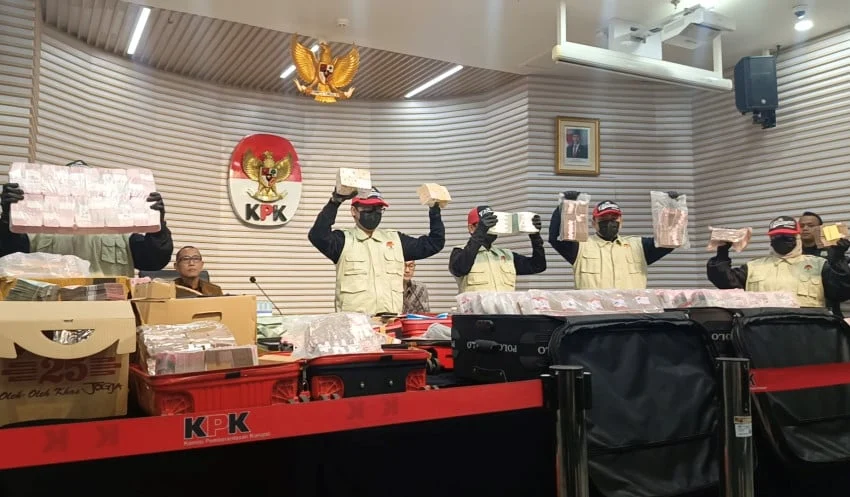
During a press conference held at the KPK’s Merah Putih Building on Tuesday, September 15, 2026, Acting Director of Investigation Achmad Taufik Husein disclosed that the recovery of the IDR 106.3 billion was the culmination of intensive surveillance and tactical operations. The funds were not found in a single location but were stashed across multiple properties belonging to individuals linked to the case.
The most significant portion of the illicit funds was discovered at the residence of Arif Sugiyanto, an individual identified as a trusted aide to the Minister of ATR/BPN, Nusron Wahid. The hoard at this location alone accounted for a complex mixture of currencies, including:
- IDR 31.86 billion
- USD 2,611,500
- SGD 1,974,500
- SAR 910
- RM 981
The discovery of foreign currency in such substantial quantities suggests a high level of sophistication in how the alleged bribe money was laundered or stored to avoid detection by the Financial Transaction Reports and Analysis Center (PPATK).
Additional funds were recovered from several other figures involved in the administrative chain. Rizal Pahlevi, a private sector actor, was found in possession of IDR 896 million. Further searches at the homes of land office officials, including Zimamun Ni’am Aulawi, a Section Head for Rights Determination and Land Registration at the Bogor I Land Office, and Sontang Coin Manurung, the Head of the Bogor I Land Office, yielded smaller amounts of IDR 8 million and IDR 49.5 million, respectively. These figures, while smaller in absolute terms, are critical for establishing the chain of custody and the hierarchical nature of the bribery scheme.
Chronology of the Investigation
The sting operation, or Operasi Tangkap Tangan (OTT), was the result of a long-term intelligence-led investigation into land registration irregularities in West Java. Complaints from property developers and individuals regarding "bottlenecks" in the HGB application process in Bogor had become increasingly frequent, signaling to authorities that a parallel, illicit system was operating within the regional land office.
- Initial Surveillance: The KPK began monitoring communication patterns and suspicious financial movements related to the Bogor land office in early 2026.
- The Trigger: Intelligence confirmed a large-scale transaction involving the approval of HGB documents, prompting the KPK to initiate the sting.
- The Raids: On the days preceding the announcement, KPK enforcement teams simultaneously raided the residences of the identified suspects, discovering the cash hidden in suitcases and cardboard boxes.
- Detention: Following the seizures, the KPK officially detained eight individuals. The primary suspects, including Arif Sugiyanto, Fahd El Fouz (also known as Fahd A Rafiq), Erwin, and Muhammad Fakhry, were processed under Article 12 of the Law on the Eradication of Corruption Crimes.
Profiles of the Eight Suspects
The KPK has officially named eight suspects in this case, representing a mix of ministry insiders, political connectors, and private stakeholders. The inclusion of individuals identified as the Minister’s "trusted aides" is particularly damaging to the institutional reputation of the Ministry of ATR/BPN.
- Arif Sugiyanto (ARF): Identified as a key liaison to the Minister, his role in hoarding such vast sums suggests he functioned as a collector for the bribe network.
- Fahd El Fouz (FEZ): A well-known figure in political and business circles, his involvement indicates that the bribery scheme may have had broader political dimensions.
- Erwin (ERW) and Muhammad Fakhry (MF): Also categorized as aides to Minister Nusron Wahid, their involvement points to a deep-seated penetration of the Ministry’s inner sanctum.
- Regional Officials: The inclusion of the Head of the Bogor I Land Office and his Section Head confirms that the corruption was not limited to "middlemen" but involved the very officials tasked with the legal verification of land titles.
Context: The Crisis of Land Administration in Indonesia
Land corruption remains one of the most pervasive challenges in Indonesia’s development trajectory. The HGB, or Right to Build, is a vital legal instrument for both industrial and residential development. When the process for obtaining or extending these titles is compromised by bribery, it creates a "hidden tax" on investment and undermines property rights.
In the Bogor Regency, the proximity to the capital city, Jakarta, has made land a highly valuable commodity. The rapid conversion of agricultural land into commercial and residential zones creates high-pressure environments where land officials hold immense discretionary power. This power, when unchecked by transparent digital systems, often leads to the solicitation of "facilitation fees."
The KPK’s intervention highlights the failure of existing internal control mechanisms within the Ministry of ATR/BPN. Despite the government’s push for "Digital Land Offices" and electronic certificates, this case demonstrates that human-centric bottlenecks remain, where officials can still demand cash payments to bypass or accelerate legal procedures.
Broader Implications and Institutional Impact
The seizure of over IDR 100 billion in a single case is a stark reminder of the massive scale of illicit capital flowing through the Indonesian bureaucracy. The potential implications of this case are three-fold:
1. Institutional Reform at ATR/BPN:
The Ministry of ATR/BPN is currently undergoing intense scrutiny. Minister Nusron Wahid faces significant pressure to implement a "clean-up" of his internal personnel. Analysts suggest that the Ministry may need to conduct a wholesale audit of HGB issuances in the Bogor region over the past three years to determine if other illegal transactions have occurred.
2. Impact on Foreign Investment:
Corruption in land administration is frequently cited by international investors as a major barrier to doing business in Indonesia. High-profile cases like this, while demonstrating the KPK’s effectiveness, also highlight the structural risks that foreign firms must navigate when dealing with Indonesian land titles. It reinforces the necessity for stricter anti-bribery compliance programs for companies operating in the country.
3. Strengthening the KPK’s Credibility:
Following a period of criticism regarding its perceived waning effectiveness, this successful OTT serves to bolster the KPK’s public standing. By demonstrating that it can penetrate even the inner circles of government ministries, the agency has sent a strong warning to other bureaucrats. However, the legal proceedings will be closely watched; the public will expect a transparent trial that reaches not just the "middlemen" but also the ultimate beneficiaries of the bribe money.
Legal Outlook and Next Steps
Under Indonesian law, the suspects face severe penalties if convicted, including long-term imprisonment and substantial fines. The KPK has indicated that the investigation is ongoing, with a strong focus on "Follow the Money." Investigators are currently tracing the origins of the seized funds to see if they were linked to specific development projects in Bogor.
Furthermore, the KPK is exploring potential charges of money laundering (TPPU), which would allow the agency to seize assets beyond the cash recovered, including land, vehicles, and other properties owned by the suspects.
As the legal process unfolds, the public remains focused on the Ministry’s response. Will this lead to systemic changes, or will the corruption simply migrate to other regions or different administrative processes? For now, the IDR 106.3 billion sitting in the KPK’s evidence vault remains a powerful, tangible symbol of the battle against the rot within Indonesia’s land governance system. The judiciary’s handling of this case will be the ultimate test of the state’s resolve to curb the entrenched interests that have long treated the nation’s land as a private source of profit.