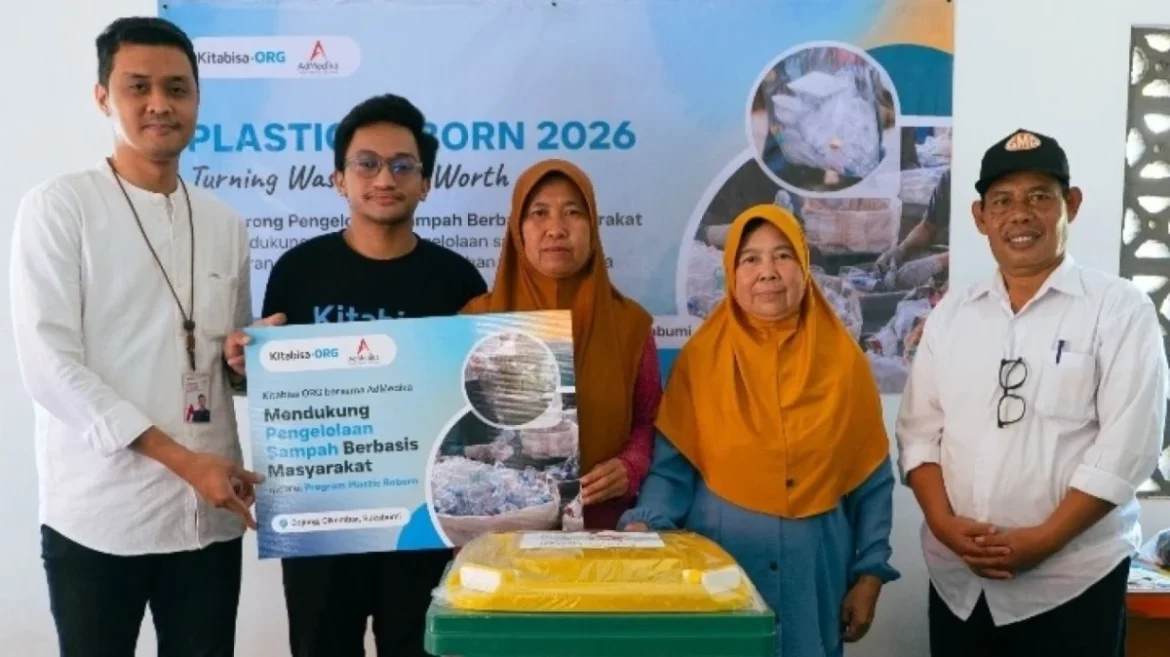
PT Administrasi Medika (AdMedika), a prominent player in the integrated healthcare solution sector, has officially expanded its corporate social responsibility mandate beyond human health to encompass environmental stewardship. In a strategic initiative launched on September 25, 2026, the company partnered with the philanthropic platform Kitabisa.ORG to inaugurate the "Plastic Reborn: Turning Waste Into Worth" program. This pilot project, situated in Desa Bojong, Kecamatan Cikembar, Kabupaten Sukabumi, West Java, represents a pivotal shift in how corporate entities are beginning to align healthcare delivery with the broader principles of Environmental, Social, and Governance (ESG) frameworks.
The Genesis of Plastic Reborn
The inception of the Plastic Reborn program stems from a growing realization that public health is inextricably linked to the quality of the environment. While AdMedika has historically focused on health administration, digital health services, and patient management, the leadership team identified that the accumulation of mismanaged plastic waste in rural and peri-urban areas poses significant long-term health risks, including water contamination and the proliferation of disease vectors.
By collaborating with Kitabisa.ORG, AdMedika sought to implement a localized, circular economy model. The choice of Desa Bojong was strategic; the area serves as a microcosm for the waste management challenges faced by many Indonesian villages, where infrastructure for professional waste collection is often limited. The project was officially rolled out in late September 2026, following months of logistical planning and community engagement.
Operational Mechanics and Community Engagement
At the heart of the Plastic Reborn initiative is the concept of a community-based waste management system. Unlike top-down environmental mandates, the program emphasizes granular, household-level participation. The operational model functions through three distinct stages:
- Source Segregation: Residents are trained and encouraged to categorize their household waste, specifically separating recyclable plastics from organic materials.
- Incentivized Collection: To foster long-term participation, the program introduces a barter system. Residents bring their sorted recyclables to a central collection point where they are weighed and exchanged for essential household goods.
- Sustainable Integration: The collected waste is then diverted to professional waste management partners who ensure that materials are repurposed or recycled, effectively removing them from the local ecosystem.
In this inaugural phase, the program has engaged approximately 50 households. To catalyze this habit, AdMedika provided the necessary infrastructure for waste sorting and facilitated the distribution of 550 units of essential household supplies as immediate rewards for the residents’ contributions.
Official Perspectives on Corporate Responsibility
Fortuna Febi Fajri, the Corporate Communication Manager at AdMedika, emphasized that the initiative is not merely a philanthropic gesture but a systemic attempt to instill sustainable habits. "Managing waste sustainably is a fundamental pillar in protecting our ecosystem and public health," Febi noted during the launch. "When we minimize soil and water pollution through systematic sorting and recycling, we are not just cleaning up our current environment; we are ensuring the viability of our resources for future generations."
The focus on "Turning Waste Into Worth" highlights the program’s intent to shift the public perception of plastic from a discarded nuisance to a valuable commodity. By placing a tangible value on waste, AdMedika hopes to normalize the practice of segregation until it becomes an automated habit for the residents of Desa Bojong.
The Environmental Context: Indonesia’s Waste Challenge
To understand the significance of this initiative, one must look at the broader environmental data concerning Indonesia. According to recent data from the Ministry of Environment and Forestry, Indonesia continues to grapple with millions of tons of plastic waste annually. A significant portion of this waste remains uncollected or ends up in landfills and waterways. In rural areas, open burning or dumping remains a prevalent, albeit harmful, practice.
The implementation of community-based waste management, as seen in the Plastic Reborn program, serves as a decentralized solution to a national crisis. By handling waste at the source, the project reduces the volume of material that requires transportation to centralized landfills—a process that is often costly and carbon-intensive. Furthermore, the initiative contributes to the mitigation of microplastic pollution in groundwater, which is critical for agricultural and consumption needs in regions like Sukabumi.
ESG Integration and Future Implications
The Plastic Reborn program is a tangible manifestation of AdMedika’s broader commitment to ESG integration. In the modern corporate landscape, companies are increasingly expected to demonstrate how their business models contribute to the Sustainable Development Goals (SDGs). By addressing Goal 12 (Responsible Consumption and Production) and Goal 3 (Good Health and Well-being), AdMedika is positioning itself as a leader in the healthcare industry’s evolution toward sustainability.
Analysts suggest that such initiatives offer a dual benefit. For the company, it strengthens community ties and reinforces brand reputation as a socially conscious entity. For the community, it provides a functional framework for environmental protection that generates tangible economic relief through the provision of household necessities.
Challenges and Prospects for Scalability
While the program has seen a positive initial reception, the long-term success of Plastic Reborn will depend on behavioral sustainability. The transition from a reward-based model to a community-driven, self-sustaining habit is the primary challenge for any waste management intervention.
AdMedika’s strategy to mitigate this includes ongoing education and the creation of a stable supply chain for the collected materials. If the pilot in Desa Bojong demonstrates a measurable reduction in local pollution levels and a sustained increase in recycling rates, the model could theoretically be scaled to other regions where the company operates.
The collaboration with Kitabisa.ORG also provides a scalable digital infrastructure. By utilizing a platform experienced in community mobilization, AdMedika has the potential to track impact data more effectively, providing transparent reporting on how much plastic has been diverted from the environment. This data-driven approach is essential for demonstrating the "worth" of the waste and justifying the continued investment in such ESG-aligned programs.
Broader Socio-Economic Impact
The intersection of health and environmental management is often overlooked in public health policy. By acknowledging that environmental health is a determinant of individual health, AdMedika is taking a proactive stance. The reduction of plastic waste in residential areas directly lowers the risk of pest infestations and water-borne pathogens, which are often exacerbated by trash accumulation.
Moreover, the "Turning Waste Into Worth" narrative provides an economic incentive that resonates in communities where cost-of-living pressures are significant. By providing 550 units of essential household goods, the program creates a direct economic benefit that complements its environmental goals. This synergy—linking environmental health to economic household stability—is likely to ensure higher adoption rates compared to campaigns based solely on abstract environmental awareness.
Conclusion: A Blueprint for the Future
The Plastic Reborn program represents a maturation of corporate social responsibility in Indonesia. By moving beyond traditional charitable donations and toward operational, solution-oriented initiatives, companies like AdMedika are creating blueprints for sustainable development that are both practical and impactful.
As the program progresses in Desa Bojong, the focus will likely shift to monitoring the volume of plastic diverted and the long-term behavioral changes among the participating households. If successful, this collaboration between a healthcare solution provider and a social impact platform could serve as a case study for how private sector entities can play a vital role in addressing one of the most pressing challenges of the 21st century: the plastic crisis. The commitment shown by AdMedika serves as a reminder that the health of the individual is inseparable from the health of the community and the environment at large.