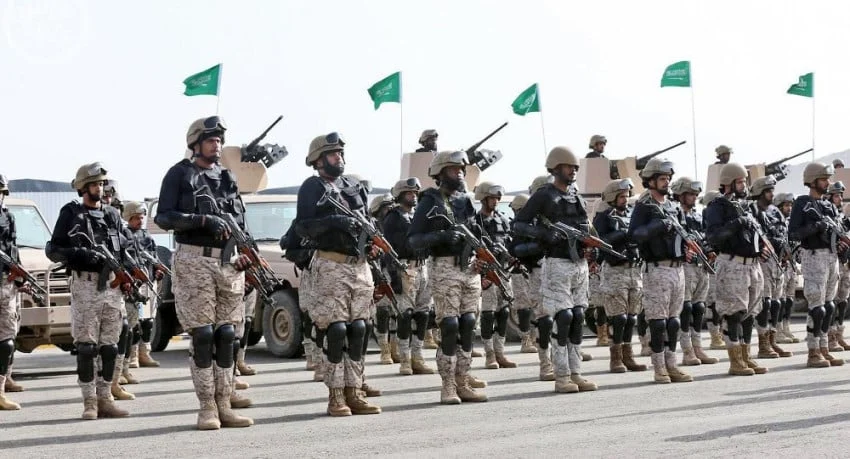
The geopolitical landscape of the Middle East has entered a tense and unpredictable phase as regional powers, particularly the Gulf Cooperation Council (GCC) member states, grow increasingly alarmed by what they perceive as a calculated and duplicitous strategy by the Islamic Republic of Iran. While official diplomatic channels between Tehran and Riyadh have seen cautious overtures aimed at de-escalation, ongoing security disruptions across vital maritime and territorial corridors have cast a shadow of deep skepticism over Iran’s true intentions. Analysts and regional experts suggest that Tehran is masterminding a sophisticated double game—simultaneously projecting an image of a responsible regional actor willing to engage in multilateral dialogue, while covertly maintaining operational control, influence, and material support over a network of militant proxy groups stretching from Iraq to Yemen.
This growing diplomatic friction came to a head following the sudden and unexplained cancellation of high-stakes security talks scheduled to take place in Oman. The diplomatic summit, intended to foster collective security frameworks between the Gulf states and Iran, was shelved indefinitely after a dramatic escalation of hostilities involving the Houthi movement in Yemen. The timing of the military escalations, coinciding precisely with scheduled diplomatic engagements, has reinforced the conviction among Saudi and Emirati policymakers that Iran’s diplomatic overtures may be little more than a smokescreen designed to buy time and deflect international pressure while its regional proxies apply unrelenting military leverage on the ground.
The Anatomy of Regional Anxiety and the Alleged Iranian Two-Track Strategy
At the core of the escalating diplomatic crisis is the profound distrust regarding Tehran’s command and control over the "Axis of Resistance"—a constellation of non-state armed actors operating across the Levant, Mesopotamia, and the Arabian Peninsula. According to prominent academic and public policy experts, such as Sultan Barakat of Hamad Bin Khalifa University, regional capitals possess no illusions regarding Iran’s capacity to rein in these allied militias. Saudi Arabia and its regional allies maintain that although Tehran often denies direct operational command over every tactical maneuver executed by groups like the Houthis or various Iraqi Shiite militias, the Iranian state retains the ultimate financial, logistical, and intelligence apparatus necessary to compel these actors to stand down.
The crux of the anxiety lies in the stark contradiction between Iran’s diplomatic language and its geopolitical actions. On one hand, Iranian officials routinely participate in regional summits, advocate for indigenous security solutions managed by local states without foreign interference, and extend formal invitations for bilateral and multilateral confidence-building measures. On the other hand, the tactical deployment of advanced ballistic missiles, loitering munitions, and asymmetric maritime warfare tactics by groups aligned with Iran directly undermines the foundational trust required for meaningful negotiations.
This bifurcated approach has forced Gulf capitals to recalibrate their security doctrines. Policymakers in Riyadh and Abu Dhabi are increasingly asking whether direct diplomacy with Tehran can yield sustainable stability, or if it merely serves as a tactical pause utilized by the Iranian leadership to consolidate strategic gains achieved through proxy warfare. The inability of Gulf security apparatuses to separate the diplomatic persona of Tehran from the militant posture of its regional allies has created a profound paralysis in ongoing regional peace initiatives.
Chronology of Conflict: From the 2004 Saada Insurgency to the Red Sea Crisis
To fully comprehend the depth of contemporary Saudi and Gulf anxieties, one must examine the protracted historical trajectory of the conflict in Yemen and the evolution of the Houthi movement—officially known as Ansar Allah. The roots of the current confrontation stretch back over two decades, tracing a bloody path of insurgency, regional intervention, and humanitarian crisis.
The Houthi movement originated in the rugged northern mountainous province of Saada in 2004, initially emerging as a socio-religious revivalist group led by the Houthi family to defend Zaydi Shia traditions against perceived marginalization by the central government in Sana’a and the growing influence of Salafism. What began as a localized religious and political grievance rapidly militarized following government crackdowns and the death of the movement’s founder, Hussein Badreddin al-Houthi.
Throughout the late 2000s, the Yemeni government engaged in a series of intermittent, brutal military campaigns against the insurgents, during which Saudi Arabia occasionally provided logistical and intelligence support to Sana’a, viewing the northern borderlands as a critical national security buffer. The defining turning point occurred in late 2014, when Houthi forces, leveraging widespread public dissatisfaction with the transitional government and internal political turmoil, launched a sweeping military offensive that culminated in the capture of the Yemeni capital, Sana’a. The ousting of internationally recognized President Abdrabbuh Mansur Hadi triggered an immediate geopolitical earthquake on the Arabian Peninsula.
Alarmed by the establishment of a hostile, Iran-aligned regime directly on its southern border, Saudi Arabia formed a robust coalition of regional and international partners in March 2015, launching Operation Decisive Storm. What was initially envisioned as a swift, weeks-long air campaign designed to restore the legitimate government metastasized into a grueling, multi-year military stalemate. Over the subsequent decade, the Saudi-led coalition conducted an intensive aerial bombardment campaign, executing hundreds of thousands of sorties aimed at degrading Houthi military capabilities, halting their territorial expansion, and interdicting suspected supply lines emanating from the Arabian Sea and the Gulf of Aden.
Despite the sheer scale of the air campaign—with coalition forces averaging tens of thousands of airstrikes annually—the Houthi movement demonstrated remarkable resilience, adaptability, and technological sophistication. Rather than being suppressed, the group successfully weaponized its geographic isolation, constructing subterranean military complexes, utilizing mobile missile launchers, and developing an indigenous capability to manufacture and deploy sophisticated long-range drones and cruise missiles.
The Strategic Escalation: Drones, Ballistic Missiles, and Maritime Chokepoints
In recent years, the theater of conflict has expanded dramatically beyond the borders of Yemen, directly threatening the sovereign territory of the Kingdom of Saudi Arabia and transforming the geopolitical dynamics of global trade. The Houthis have systematically operationalized an asymmetric warfare doctrine, utilizing delta-wing drones, loitering munitions, and precision-guided ballistic missiles to target critical energy infrastructure, civilian airports, and military installations inside Saudi territory.
Key strategic nodes, such as the King Abdullah Bin Abdulaziz Airport in Jazan, facilities operated by state oil giant Saudi Aramco, and military airbases in Khamis Mushait, have been subjected to repeated aerial assaults. These strikes have not only tested the limits and multi-billion-dollar costs of Saudi Arabia’s sophisticated air defense architecture—principally reliant on US-supplied Patriot and terminal high altitude area defense systems—but have also underscored the acute vulnerability of centralized economic infrastructure to asymmetric saturation attacks.
Furthermore, the expansion of Houthi military operations into the maritime domain has transformed a localized civil war into a global security crisis. By leveraging their control over Yemen’s western coastline along the Red Sea and the Bab el-Mandeb strait—a vital maritime chokepoint through which a significant portion of global commerce and energy supplies transit—the Houthis have demonstrated the capability to directly interdict international shipping. The deployment of anti-ship cruise missiles, explosive-laden remote-controlled watercraft, and naval mines has severely disrupted maritime traffic, forcing major international shipping lines to reroute vessels around the African continent, thereby driving up global supply chain costs, insurance premiums, and inflationary pressures.
The timing of these maritime and territorial escalations has invariably fueled suspicions in Riyadh. Intelligence assessments shared among Gulf capitals suggest that the transfer of advanced technical components, targeting data, and tactical doctrines required to execute complex, coordinated strikes against maritime shipping and inland strategic targets far exceeds the indigenous industrial and technological base of the Houthi movement, pointing directly to external state-level sponsorship.
Diplomatic Fallout and the Collapse of the Oman Talks
The convergence of ongoing military strikes and diplomatic overtures created an untenable paradox for regional policymakers, culminating in the cancellation of the high-profile diplomatic summit scheduled to be hosted in Muscat by the Sultanate of Oman. The Omani mediation track had long served as a crucial backchannel between Riyadh, Tehran, and various Yemeni factions, designed to lay the groundwork for a comprehensive, sustainable political settlement to end the protracted war.
However, days prior to the commencement of the talks, a renewed surge of cross-border drone attacks and aggressive naval maneuvers along the Yemeni coast fundamentally altered the political calculus in Riyadh. Saudi officials concluded that proceeding with formal diplomatic engagements while experiencing active military aggression from entities tied to the negotiating partner would signal weakness and undermine the credibility of the Kingdom’s national security posture.
The collapse of the Oman meetings highlights the profound fragility of regional détente. While countries like Saudi Arabia and the United Arab Emirates have actively pursued diplomatic normalization with Iran—partially mediated by regional partners such as China and Iraq—to focus on domestic economic transformation agendas like Saudi Vision 2030, this strategic pivot remains conditional upon tangible behavioral changes on the ground. The persistent refusal or inability of Tehran to restrain its regional proxies has reinforced the view among hardliners in Gulf capitals that Iran views diplomacy merely as an instrument of asymmetric warfare rather than a pathway to genuine regional coexistence.
Broader Geopolitical Implications and Future Outlook
The implications of Iran’s alleged double game extend far beyond the immediate confines of the Arabian Peninsula, carrying profound consequences for global energy security, international maritime trade, and the broader architecture of Middle Eastern geopolitics. As major global economies navigate a post-pandemic recovery compounded by geopolitical fragmentation, the militarization of critical maritime chokepoints like the Bab el-Mandeb strait represents an intolerable systemic risk.
For the United States and its Western allies, the situation presents a complex diplomatic and strategic dilemma. Washington has maintained a steadfast commitment to the defense of its traditional Gulf partners, providing defensive military assistance, intelligence-sharing, and conducting targeted operations to deter illicit arms trafficking from Iran to Yemen, in compliance with United Nations Security Council resolutions. Concurrently, Western policymakers remain wary of becoming entrapped in protracted regional conflicts, preferring diplomatic resolutions and regional security architectures that distribute the burden of conflict management among local actors.
Looking forward, the trajectory of regional stability hinges precariously on whether Iran chooses to genuinely integrate into a cooperative regional security framework or continues to exploit the asymmetric leverage provided by its proxy network. For Saudi Arabia and its neighbors, the pursuit of peace must be balanced against the imperative of credible deterrence. As long as the specter of proxy warfare looms over regional diplomacy, any architectural framework for collective security in the Gulf will remain built on shifting sands, perpetually vulnerable to the next coordinated drone strike or maritime interception in the Red Sea.