
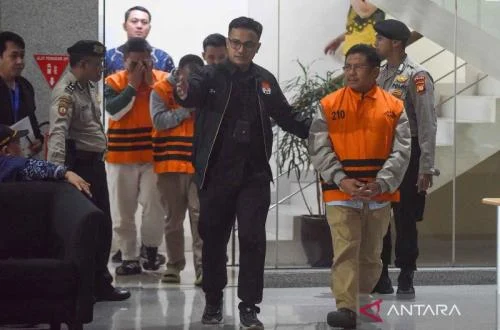
JAKARTA – The Indonesian Corruption Eradication Commission (KPK) has unequivocally stated that its recent string of arrests involving two regional heads, conducted through its signature "Operasi Tangkap Tangan" (OTT) or sting operations, are solely rooted in legal enforcement principles and are entirely devoid of any political motivations. This firm assertion was delivered by the Acting Director of Investigations at the KPK, Achmad Taufik Husein, from the KPK’s Merah Putih Building in Jakarta on Tuesday, July 21, [Year – assuming 2026 based on the article’s context]. The statement comes amidst public speculation and heightened scrutiny following the apprehension of high-ranking regional officials, some of whom hold prominent positions within political parties.
"I assure you that it is far from such political elements," Taufik emphasized, directly addressing circulating rumors and analyses regarding the arrests of Langkat Regent Syah Afandin and West Lombok Regent Lalu Ahmad Zaini. Both individuals have previously served as Chairmen of the Regional Leadership Council (DPW) for the National Mandate Party (PAN), a fact that has inadvertently fueled discussions about the political implications of these operations. Taufik further clarified that these covert operations originated from public complaints, which were subsequently investigated and acted upon by the KPK’s investigative teams. "This is due to public complaints, and we followed up, and it so happened that they were likely affiliated with PAN," he added, reinforcing the notion that the political affiliation was merely a coincidence in the investigative process.
The Modus Operandi of KPK’s Sting Operations
The "Operasi Tangkap Tangan" (OTT), or "Catch-in-Hand Operation," is a highly effective and often dramatic tool employed by the KPK to combat corruption. It involves the direct apprehension of suspects, typically during or immediately after they commit a corrupt act, such as accepting a bribe. This method is crucial for obtaining direct evidence, including cash, documents, and digital records, which are vital for building strong legal cases. The immediate nature of OTTs often sends a powerful message, demonstrating the KPK’s resolve and capacity to act swiftly and decisively against corruption at any level of government. However, due to their high-profile nature and the immediate detention of officials, OTTs also tend to attract significant media attention and, at times, political commentary, making the KPK’s explicit denial of political motives particularly significant in maintaining public trust in its independence.
Recent High-Profile Arrests: Syah Afandin and Lalu Ahmad Zaini
The arrests of Regent Syah Afandin of Langkat Regency in North Sumatra and Regent Lalu Ahmad Zaini of West Lombok Regency in West Nusa Tenggara represent the latest additions to a growing list of regional heads implicated in corruption cases. Syah Afandin’s apprehension marks him as the 15th regional head caught in a KPK sting operation in 2026 alone, while Lalu Ahmad Zaini is the 17th such official to be arrested in the same year. Both operations were executed within July, underscoring the KPK’s intensified focus on regional governance.
Syah Afandin, a prominent figure in Langkat, and Lalu Ahmad Zaini, a key leader in West Lombok, both held considerable political sway within their respective regions and within the National Mandate Party (PAN). Their arrests have sent ripples through their local administrations and within the broader political landscape, prompting PAN to reiterate its commitment to upholding legal processes and internal party ethics. While the specific details of the alleged corruption cases against Afandin and Zaini have not been extensively elaborated upon in the initial KPK statements, such operations typically involve allegations of bribery related to procurement projects, licensing, or other forms of illicit enrichment.
A Broadening Scope: The Timeline of Regional Head Arrests
The figures presented by the KPK highlight a concerning trend of widespread corruption at the regional level, particularly following the 2024 regional elections (Pilkada). Cumulatively, from 2025 until July 22, 2026, the KPK has arrested and named 16 regional heads who emerged victorious from the 2024 Pilkada as suspects in alleged criminal acts of corruption. This statistic underscores the persistent challenge of corruption in Indonesia’s decentralized governance structure and reflects the KPK’s sustained efforts to tackle it.
The year 2025 saw the KPK actively pursuing and designating several regional heads as suspects. Among them were:
- Abdul Azis, Regent of Kolaka Timur: The specific charges often relate to procurement irregularities or bribery in the allocation of regional funds.
- Abdul Wahid, Governor of Riau: Gubernatorial arrests carry significant weight, often involving large-scale bribery or illicit exploitation of natural resources within the province.
- Sugiri Sancoko, Regent of Ponorogo: Charges commonly involve illicit fees for permits or project kickbacks.
- Ardito Wijaya, Regent of Lampung Tengah: Similar to other regents, allegations frequently center on procurement fraud or misuse of authority.
- Ade Kuswara Kunang, Regent of Bekasi: Cases often involve land permits, spatial planning, or infrastructure projects.
The trend continued unabated into 2026, with an even more extensive list of regional heads falling under the KPK’s purview. Beyond Syah Afandin and Lalu Ahmad Zaini, the KPK’s operations in 2026 have led to the arrests of:
- Maidi, Mayor of Madiun: Mayors are frequently implicated in urban development projects, public services procurement, or licensing for businesses.
- Sudewo, Regent of Pati: Regental corruption often involves agricultural land, mining permits, or public works.
- Fadia Arafiq, Regent of Pekalongan: Similar to other regencies, cases can span from infrastructure development to social welfare programs.
- Muhammad Fikri Thobari, Regent of Rejang Lebong: Often related to local government budget manipulation or project tenders.
- Syamsul Auliya Rachman, Regent of Cilacap: Charges frequently concern port development, industrial permits, or regional asset management.
- Gatut Sunu Wibowo, Regent of Tulungagung: Corruption in this context can involve the education sector, health services, or infrastructure.
- Edison, Regent of Muara Enim: Often linked to mining concessions, energy projects, or large-scale infrastructure.
- Suhardiman Amby, Regent of Kuantan Singingi: Charges may relate to palm oil plantations, forestry permits, or regional development funds.
- Etik Suryani, Regent of Sukoharjo: Similar to other regional heads, allegations often involve public procurement or administrative services.
This extensive list underscores the pervasive nature of corruption across various levels of regional administration, from regencies to mayoralties and even governorships. The consistent pattern points to systemic vulnerabilities that allow for the abuse of power and public trust.
The Broader Context of Regional Autonomy and Corruption
Indonesia’s era of regional autonomy, ushered in by reforms in the late 1990s and early 2000s, devolved significant power and financial resources to local governments. While intended to promote democracy, improve public services, and accelerate regional development, this decentralization has also inadvertently created new avenues for corruption. Regional heads (governors, regents, and mayors) now wield substantial authority over local budgets, procurement processes, licensing, and spatial planning, making them attractive targets for rent-seeking behavior and vulnerable to illicit financial inducements.
The surge in arrests of regional heads highlights several critical issues:
- Increased Authority, Increased Vulnerability: The expanded powers of regional heads come with greater opportunities for graft if oversight mechanisms are weak or compromised.
- Resource Control: Regional leaders control vast budgets and natural resources, which can be exploited for personal gain through bribery in project tenders, illegal permits, or illicit levies.
- Political Economy: The high cost of regional elections (Pilkada) often creates incentives for elected officials to recoup campaign expenses through corrupt means once in office, perpetuating a cycle of graft.
- Community Reporting: The KPK’s reliance on public complaints as a starting point for investigations indicates a growing public awareness and willingness to report corrupt practices, which is crucial for a healthy democracy.
KPK’s Independence and Challenges
The KPK was established in 2002 as an independent body with extraordinary powers to investigate and prosecute corruption, aiming to address the deeply entrenched problem in Indonesia. Its unique mandate, including the ability to conduct wiretaps and conduct OTTs, has made it a formidable force against corruption. However, the KPK has also faced considerable challenges, including attempts to weaken its authority through legislative revisions and internal controversies.
The KPK’s emphatic rejection of political motives in its operations is a recurring theme, particularly when high-profile political figures are implicated. Maintaining public and international confidence in its independence is paramount for the KPK’s legitimacy and effectiveness. The commission’s stance is crucial in demonstrating that its actions are guided purely by evidence and the pursuit of justice, rather than being swayed by political agendas or party affiliations. This commitment helps to safeguard the KPK’s role as a vital check and balance in Indonesia’s democratic system.
Implications for Governance and Political Integrity
The continuous arrests of regional heads carry significant implications for governance and political integrity in Indonesia.
- Disruption of Public Services: Frequent changes in regional leadership due to corruption cases can disrupt public service delivery, delay development projects, and create administrative instability.
- Erosion of Public Trust: Each arrest further erodes public trust in government institutions and elected officials, potentially fostering cynicism and disengagement from democratic processes.
- Pressure on Political Parties: Political parties face immense pressure to vet their candidates more rigorously and implement stricter internal oversight mechanisms to prevent their members from engaging in corruption. Parties whose members are repeatedly implicated risk losing public credibility and electoral support. While no specific party statement was provided in the original text, it is common for parties like PAN to issue statements upholding legal processes and emphasizing internal disciplinary actions, should their members be found guilty.
- Demand for Transparency: The ongoing anti-corruption drive amplifies calls from civil society organizations and the public for greater transparency, accountability, and good governance practices at all levels of government. Anti-corruption activists would likely laud the KPK’s continued vigilance and urge for sustained, unwavering efforts regardless of the political stature of the individuals involved.
Moving Forward: The Persistent Fight Against Corruption
The KPK’s steadfast commitment to its mandate, as evidenced by the growing number of regional heads apprehended, underscores the persistent and complex nature of the fight against corruption in Indonesia. While the immediate impact of OTTs is undeniable, long-term success requires a multi-pronged approach that includes strengthening legal frameworks, enhancing oversight bodies, promoting public education on integrity, and fostering a culture of transparency from the grassroots to the highest echelons of power. The KPK’s actions serve as a stark reminder that no official, regardless of their political backing or position, is above the law. The assertion that these operations are purely law enforcement actions, driven by public complaints and evidence, is fundamental to sustaining the integrity of Indonesia’s anti-corruption efforts and rebuilding public confidence in its governance.
This content was processed with the assistance of AI.
Source: Antara
