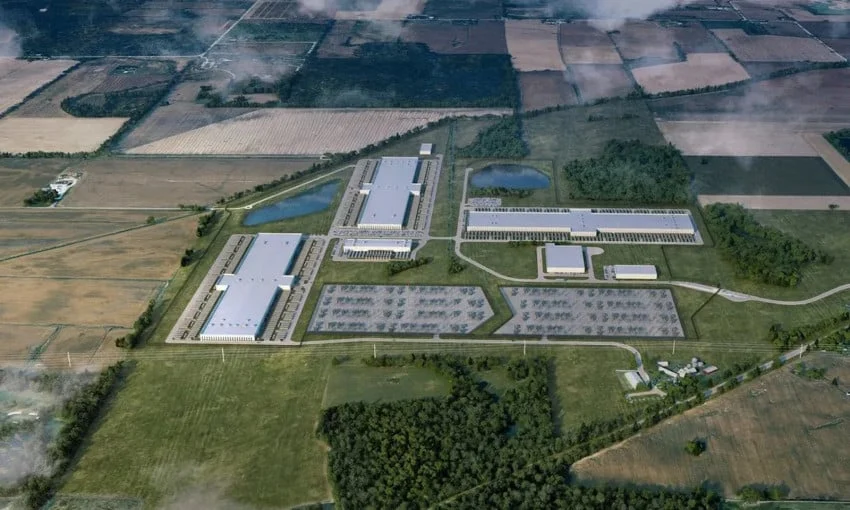
The quiet residential landscape of Dowagiac, Michigan, has become the epicenter of a landmark legal battle that pits the burgeoning infrastructure of the digital age against the fundamental right to peace and tranquility in one’s home. On May 26, residents of this small Midwestern community officially filed a class-action lawsuit in the U.S. District Court for the Western District of Michigan, targeting the operators of a local hyperscale data center. The plaintiffs allege that for the past two years, they have been subjected to an incessant, high-pitched mechanical drone emanating from the facility—a noise that residents describe as a form of psychological torture that has fundamentally degraded their quality of life.
This litigation marks a significant moment in American jurisprudence, as it is believed to be the first class-action lawsuit of its kind specifically addressing noise pollution generated by data center operations. Represented by the Detroit-based law firm Liddle Sheets P.C., the lawsuit encompasses approximately 1,300 residential properties located within a one-mile radius of the facility, alleging that the constant hum has caused significant property devaluation, sleep deprivation, and severe emotional distress.
A Timeline of Escalating Tensions
The origins of the current controversy trace back to 2018, when the site in Dowagiac was initially earmarked for development. At the time, the community viewed the project as a potential economic boon, promising jobs and investment in a city of roughly 5,700 residents located approximately 30 miles from the shores of Lake Michigan.
The facility underwent a shift in operational focus in 2021, when it transitioned into a hub for cryptocurrency mining—an industry notoriously reliant on high-performance computing hardware that generates substantial heat. To prevent hardware failure, these facilities require massive, high-capacity cooling systems, typically consisting of banks of high-powered industrial fans. It was during this phase of operation that the character of the site transformed from a relatively benign commercial entity into an industrial neighbor characterized by a persistent acoustic footprint.
While the facility began operations in 2021, the most vocal and widespread complaints from the community began to crystallize in 2024. As the density of the computing equipment increased, the output of the cooling systems intensified, resulting in the high-pitched "whine" that has now prompted legal intervention.
The Human Toll: Life Inside the Noise
The subjective experience of living near the facility has been documented in various public forums and local media reports. For many, the persistent sound is not merely an annoyance but a source of genuine physiological and psychological strain.
Lindy Valenzuela, a resident whose home is situated directly across from the data center, provided a visceral description of the sound to local news outlet WXYZ-TV. "It sounds like someone has a vacuum cleaner running in your living room," she stated, noting that the specific pitch suggests a mechanical inefficiency, such as a clogged filter or a failing bearing. "The filter is clogged, so it’s whining. Then, they just leave it running and walk away."
The comparison to torture is a recurring theme among the plaintiffs. Billy Finn, another local resident, likened the acoustic environment to cinematic depictions of auditory torture, where subjects are kept in a state of sensory overload to break their will. This psychological impact is a cornerstone of the legal argument, as the plaintiffs seek to prove that the facility has created a "private nuisance"—a legal term used when one party’s use of their land unreasonably interferes with another’s enjoyment of their own property.
Regulatory Challenges and Municipal Friction
The city of Dowagiac has not been entirely passive in the face of these complaints. The municipal government maintains a strict industrial noise ordinance, which sets a decibel limit of 65 decibels during daylight hours and 55 decibels during the night. For context, 65 decibels is roughly equivalent to the volume of a normal conversation or the ambient noise of a busy office, while 55 decibels is comparable to a quiet suburban street or a refrigerator hum.
The city has issued citations and fines to the facility operators in an attempt to compel compliance. However, these efforts have been met with resistance. Hyperscale Data, the operator, has consistently challenged the findings of the city’s environmental inspectors. The company has questioned the methodology used to record the decibel levels, the placement of the sound-monitoring equipment, and the calibration of the instruments themselves. This "he-said, she-said" dynamic regarding scientific measurement has created a regulatory stalemate, ultimately pushing the matter into the federal court system.
Data Center Infrastructure and the "Cooling Crisis"
To understand the scope of the problem, one must look at the mechanical architecture of modern hyperscale data centers. These facilities house thousands of servers, which generate immense amounts of thermal energy. To maintain optimal operating temperatures, data centers employ massive cooling arrays—often referred to as Computer Room Air Handlers (CRAHs) or external "chillers."
As the global demand for cloud computing and AI training grows, data centers are becoming increasingly dense. A "hyperscale" facility is defined by its massive scale and power capacity. The cooling systems required for such operations are not designed for quiet residential integration; they are industrial-grade hardware meant for remote or heavily insulated zones. When placed in close proximity to residential neighborhoods, the noise generated by these fans—often operating at high RPMs to counteract high outdoor temperatures—creates a sound profile that travels significant distances, particularly at night when the ambient background noise drops.
Legal and Economic Implications
The legal filing by Liddle Sheets P.C. highlights a growing friction between the rapid expansion of digital infrastructure and local zoning realities. Across the United States, similar conflicts are emerging in states like Virginia, Texas, and Ohio, where data center growth is surging.
From a legal standpoint, the Dowagiac case will likely hinge on the concept of "reasonable use." The court will have to determine whether the facility’s operation constitutes an unreasonable interference with the residents’ use and enjoyment of their land. The outcome of this case could set a significant precedent for how data center developers are required to incorporate sound mitigation technologies—such as acoustic barriers, sound-dampening enclosures, or specialized fan blades—into their initial site designs.
Furthermore, the economic implications are severe for the homeowners. Property values are intrinsically linked to the "quiet enjoyment" of a home. If a property is located in an area permanently characterized by a high-pitched mechanical drone, the resale value of that home is likely to plummet. The class-action suit seeks not only an injunction to stop the noise but also compensation for the loss of property value and the alleged health impacts sustained by the residents.
Broader Industry Impacts
The Dowagiac case serves as a warning to the tech industry regarding the "Social License to Operate." While data centers are essential for the modern economy, their physical footprint is increasingly coming under scrutiny. The industry is currently facing a dual challenge: the extreme demand for power and the need for proximity to urban areas to reduce latency.
If federal courts side with the residents, it could force the industry to adopt more rigorous acoustic standards, potentially driving up construction costs for future facilities. Developers may be forced to invest in more expensive, quieter cooling technologies or build in more isolated locations, which would fundamentally shift the economics of data center development.
As the court proceedings move forward, all eyes will be on the expert testimonies. The plaintiffs will likely bring in acoustic engineers to demonstrate that the noise is not only detectable but harmful, while the defense will likely continue to argue that the noise levels fall within acceptable legal parameters, provided the correct measurement methodologies are applied.
For the residents of Dowagiac, the lawsuit represents a final attempt to restore the peace of their community. After two years of enduring a sound they cannot escape—even within the sanctuary of their own bedrooms—the community is looking to the federal judiciary to provide the relief that local ordinances and corporate negotiations have failed to deliver. The resolution of this case will undoubtedly serve as a blueprint for other communities facing the encroachment of industrial-scale digital infrastructure, marking a turning point in the relationship between tech giants and their neighbors.