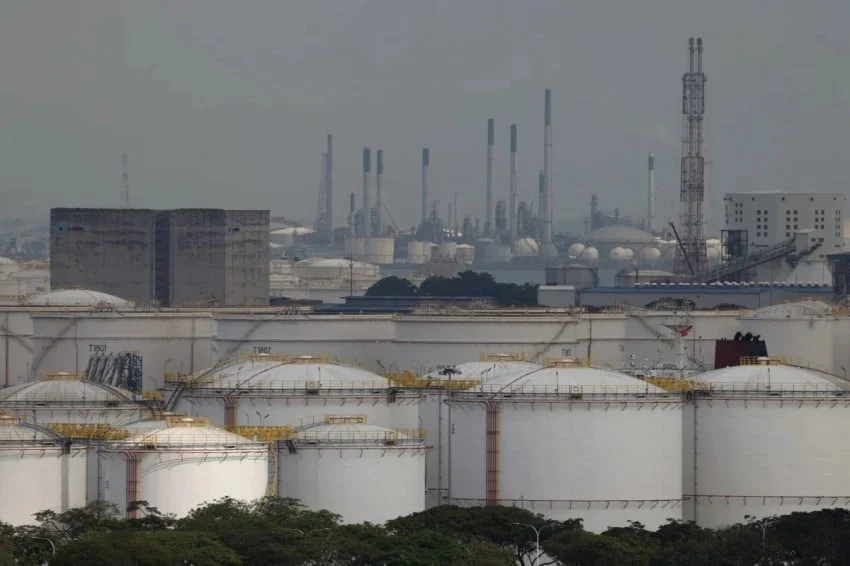
Singapore’s strategic oil stockpiles climbed to 42.64 million barrels for the week ending September 16, 2026, marking the highest inventory level recorded in nearly four months. This significant accumulation reflects shifting regional demand patterns and underscores the city-state’s pivotal role as the primary energy clearinghouse for Southeast Asia. Data released by Enterprise Singapore highlights a robust increase in both light and middle distillates, suggesting that despite ongoing volatility in global energy markets, Singapore’s infrastructure continues to function as a vital buffer for regional supply chains.
The surge from the previous week’s 40.47 million barrels indicates a deliberate shift in logistical strategies, potentially driven by seasonal demand adjustments and refinery maintenance cycles across the Asia-Pacific region. As a major transshipment hub, Singapore’s inventory fluctuations serve as a barometer for the broader health of the regional energy sector. The data reveals that Indonesia remains the most significant consumer of Singaporean gasoline, absorbing a substantial volume of refined products at a time when domestic demand in the archipelago continues to outpace local refining capacity.
Chronology and Market Trends
The upward trend in Singapore’s oil inventories began in late August 2026, following a period of relative stagnation in stock levels during the mid-summer months. By early September, market analysts had observed an uptick in imports of refined products, particularly from North Asian refineries. This was largely attributed to the conclusion of major maintenance turnarounds in South Korea and Japan, which allowed for a normalization of export volumes.
According to the Enterprise Singapore report, the week ending September 16 served as a peak point in this accumulation cycle. The 13.81 million barrels of light distillates reported—the highest level since May 27, 2026—demonstrate a surplus of gasoline and naphtha. This specific segment of the petroleum market is highly sensitive to the travel and petrochemical industries, and the current inventory levels suggest that regional demand, while steady, has not fully absorbed the increased supply entering the hub.
Detailed Breakdown of Product Movements
The breakdown of product movements for the week ending September 16 provides a granular view of Singapore’s trade dynamics. Imports of gasoline reached approximately 303,000 metric tons, or roughly 2.6 million barrels. Conversely, exports were significantly more aggressive, totaling 785,000 metric tons. This export-heavy profile confirms Singapore’s role as an exporter to neighboring markets that are currently facing supply constraints.
Indonesia’s role as a major importer cannot be overstated. With 362,000 metric tons of gasoline flowing to Indonesian ports, the country stands as the leading destination for Singaporean refined output. Australia followed as the second-largest buyer, receiving 132,000 metric tons. On the supply side, Taiwan emerged as the primary source for Singapore’s imports, contributing 125,000 metric tons, while China supplied approximately 74,000 metric tons.
Naphtha, a key feedstock for the petrochemical industry, also saw notable movement. Imports reached 162,000 metric tons, equivalent to 1.5 million barrels. Kuwait emerged as the dominant supplier in this category with 48,000 metric tons, followed by Trinidad and Tobago with 31,000 metric tons. Interestingly, while Singapore serves as a hub for global naphtha trade, it exported 13,900 metric tons, all of which was directed toward Indonesia to support its growing domestic industrial base.
The Role of Middle Distillates
In addition to light distillates, middle distillates—which encompass diesel and gasoil—recorded an increase for the second consecutive week. Stockpiles reached nearly 8.7 million barrels, the highest level in almost a month. This growth is particularly noteworthy given the significant shift in trade flows for these products. Data indicates that the net export of diesel and gasoil plummeted by 61% on a weekly basis, while imports surged by nearly 300%.
This suggests that regional traders are actively building stocks of diesel in anticipation of winter demand in the Northern Hemisphere. The drastic increase in imports combined with a slowdown in outward shipments points to a strategic decision to hold inventory in Singapore’s massive storage tanks rather than pushing product immediately into the regional spot market.
Strategic Implications for the Regional Energy Landscape
The current inventory build in Singapore is not an isolated event but a symptom of broader shifts in global energy trade. As highlighted in recent industry reports, the traditional reliance on Middle Eastern and Asian-produced oil is being challenged. Trade routes are increasingly complex, with some Asian markets being forced to source supplies from the United States to balance their deficits.
For Indonesia, the reliance on Singaporean imports is a strategic necessity. Despite investments in local refinery upgrades and new capacity, the nation’s demand for high-grade gasoline continues to rise alongside economic growth. Singapore’s ability to act as a warehouse for these products allows Indonesia to manage its domestic supply volatility without having to negotiate directly with distant global producers.
Industry experts note that the 42.64 million-barrel figure represents a "comfortable" cushion. However, the cost of carrying this inventory, combined with high interest rates and fluctuating shipping insurance premiums, puts pressure on regional trading houses to maintain high velocity in their trade turnover. The 61% drop in net diesel exports mentioned in the data is a clear indicator that traders are currently favoring storage over immediate resale, likely betting on a future price appreciation or hedging against supply chain disruptions in the Malacca Strait.
Official Responses and Market Analysis
While government officials in Singapore generally refrain from commenting on short-term inventory fluctuations, industry analysts provide a clear interpretation of these figures. The increase in light distillates is viewed as a "managed surplus," allowing refineries to keep operating at high utilization rates while waiting for demand to materialize in the coming fiscal quarter.
"The inventory data for mid-September shows a market that is preparing for a period of potential instability," says a senior energy analyst based in Singapore. "When you see imports of diesel tripling while exports fall, it tells you that the market is prioritizing security of supply. We are seeing a concerted effort to ensure that the Singaporean hub is well-stocked against any potential disruptions in the global oil supply chain."
Furthermore, the involvement of non-traditional suppliers like Trinidad and Tobago in the naphtha trade underscores the global nature of Singapore’s energy procurement. It is no longer just about regional trade; it is about securing molecules from wherever they are available globally to satisfy the hungry manufacturing and transportation sectors of Southeast Asia.
Future Outlook: A Precarious Balance
Looking toward the end of 2026, the primary concern for the energy sector will be whether this high level of inventory can be sustained without triggering a price collapse in the regional spot market. Should demand remain stagnant in Indonesia or Australia, the pressure to export these accumulated barrels will increase, likely leading to a decline in local price premiums.
However, if the geopolitical climate remains volatile, these stocks may prove invaluable. The current inventory buildup serves as a critical buffer, insulating the Southeast Asian economy from the kind of price shocks that have plagued the energy markets in recent years. By maintaining such robust storage levels, Singapore continues to solidify its reputation as the most reliable energy logistics hub in the world, even as the global energy map undergoes a fundamental reconfiguration.
In conclusion, the data for the week ending September 16, 2026, paints a picture of a well-supplied but cautious market. With Indonesia continuing to drive the demand side and Singapore maintaining its role as the central hub for storage and distribution, the regional energy landscape remains tethered to the city-state’s ability to navigate these complex supply chains. As stakeholders watch the next few weeks of data, the focus will remain on whether these record-high inventories begin to bleed into the market or if they are held as a long-term strategic reserve for the remainder of the year.