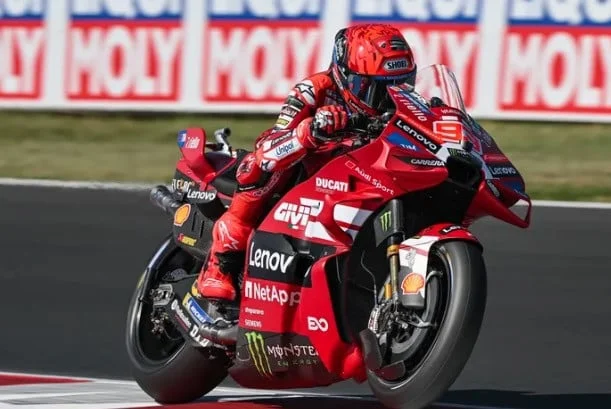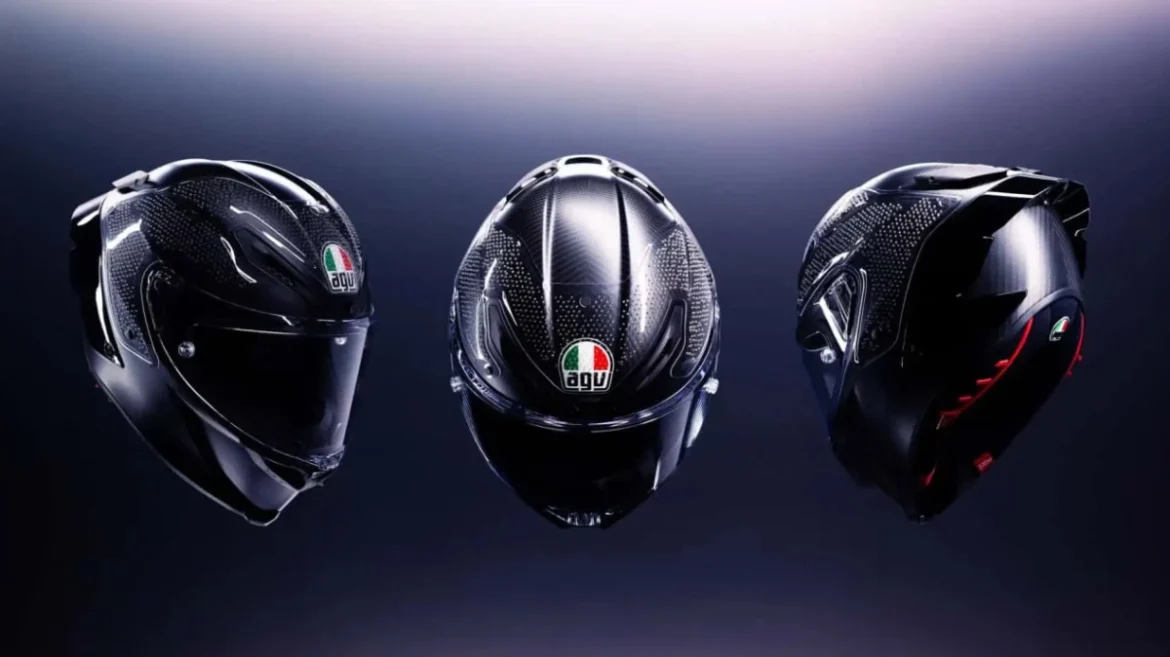
The landscape of motorcycle racing safety underwent a significant transformation on September 11, 2026, as AGV officially unveiled its latest flagship racing helmet, the Pista GP R3, at the Misano World Circuit Marco Simoncelli during the San Marino Grand Prix weekend. Representing the pinnacle of protective headgear engineering, the R3 succeeds the highly acclaimed Pista GP RR, a model that had served as the gold standard for AGV-sponsored riders across MotoGP, Moto2, and Moto3 for several years. The introduction of this new model signifies a shift toward addressing the complex physics of rotational acceleration, a leading cause of traumatic brain injuries in high-speed motorcycle accidents.
A New Frontier in Impact Management: The AGV Sphera Technology
The cornerstone of the Pista GP R3 is the integration of the proprietary AGV Sphera technology, which features the Release Layer System (RLS). While traditional racing helmets have long focused on absorbing linear energy—the force of a direct impact—the Pista GP R3 is specifically engineered to mitigate the devastating effects of rotational energy.
In a typical motorcycle crash, riders rarely strike a surface at a perfect 90-degree angle. Most impacts occur at an oblique angle, which induces a rotational force that can cause the brain to shift rapidly within the skull, leading to concussions or more severe traumatic brain injuries. The RLS addresses this by utilizing a sophisticated outer shell panel system. When the helmet encounters an oblique impact, these panels are designed to move multi-directionally, following the vector of the force. If the impact exceeds a certain threshold, the panels are engineered to detach or shift in a controlled manner, effectively "decoupling" the helmet from the impact surface and dissipating the rotational energy before it is transmitted to the rider’s head.
Empirical Validation and Scientific Rigor
The development of the R3 was not merely an exercise in industrial design; it was a rigorous scientific endeavor. AGV collaborated with the Aragon Institute for Engineering Research at the University of Zaragoza to subject the R3 to exhaustive testing. Using the BrIC (Brain Injury Criterion) metric, researchers simulated the likelihood of AIS2+ (Abbreviated Injury Scale) level concussions.
The data resulting from these trials is compelling. AGV reports that the implementation of the RLS technology reduces the risk of concussions by a factor of six compared to the outgoing Pista GP RR. This six-fold reduction represents a quantum leap in rider protection, particularly in an era where MotoGP speeds continue to climb, often exceeding 350 km/h on the longest straights. By managing the energy of angular acceleration, AGV is setting a new benchmark that will likely influence safety standards across the broader motorcycle industry in the coming decade.

Chronology of the Development and Launch
The road to the Pista GP R3’s debut was paved with years of internal research and development. Following the success of the GP RR, AGV’s engineering team identified that while shell integrity had reached a point of diminishing returns, the management of energy dissipation through shell articulation remained an untapped area.
- Early 2024: Conceptualization of the "Release Layer System" begins, focusing on modular outer shells.
- Mid-2025: Initial prototypes are tested in the wind tunnel and laboratory settings to ensure that the RLS does not compromise the aerodynamic stability of the helmet.
- January 2026: Final safety validation is completed at the University of Zaragoza, confirming the six-fold reduction in brain injury risk.
- September 11, 2026: The Pista GP R3 makes its public track debut during the Free Practice sessions of the San Marino Grand Prix.
- September 17, 2026: Official commercial announcement and widespread integration for all AGV-contracted factory riders.
Professional Integration: Rider Reception at Misano
The adoption of the Pista GP R3 was immediate among the elite ranks of the MotoGP paddock. Factory riders, including Marco Bezzecchi and Franco Morbidelli, were among the first to utilize the new gear during the San Marino race weekend. For these athletes, the switch is more than just a change in equipment; it is an exercise in trust.
"The feedback from the riders has been focused on the balance between safety and performance," noted an industry insider close to the AGV racing department. "A helmet that is safer but heavier or aerodynamically unstable is of no use to a racer. The R3 maintains the carbon fiber weight profile of the RR while introducing the RLS, which is a significant feat of manufacturing."
The use of the R3 across multiple classes—MotoGP, Moto2, and Moto3—is a strategic move by AGV. By standardizing the equipment across all tiers of the World Championship, the manufacturer ensures a consistent safety baseline for all its sponsored athletes, regardless of the displacement or speed of the motorcycle they are operating.
Engineering Beyond the Shell: Aerodynamics and Comfort
While the RLS is the headline feature of the Pista GP R3, the helmet represents a holistic overhaul. AGV has refined the carbon fiber layup process to optimize the weight-to-strength ratio, ensuring that the helmet remains light enough to prevent rider fatigue during long-distance races.
Aerodynamics have also been revisited. The rear spoiler and the profile of the chin bar have been adjusted to further reduce drag at high speeds and minimize buffeting when the rider tucks behind the windscreen. Ventilation, a perennial challenge in racing helmets, has been optimized to maintain a constant flow of air to the rider’s face, which is essential for concentration and physiological regulation under the intense heat of professional competition.

The Broader Implications for the Motorcycle Industry
The launch of the Pista GP R3 is expected to have a ripple effect across the motorcycle helmet market. Historically, technologies that debut in the premier class of racing eventually trickle down to consumer-grade products. Just as carbon fiber shells and multi-density EPS liners were once reserved for the world’s fastest riders before becoming standard in mid-range helmets, the RLS technology is widely anticipated to be integrated into AGV’s commercial lineup within the next three to five years.
For the consumer, this shift is significant. As awareness of "rotational injury" grows, the demand for helmets that can manage these forces will increase. Regulatory bodies, such as the ECE (Economic Commission for Europe) and Snell, have been incrementally updating their standards to include rotational testing. AGV’s preemptive move with the R3 positions the brand as a leader in safety, likely pressuring competitors to accelerate their own research into kinetic energy management.
Analysis: A New Standard for Safety
The transition from the Pista GP RR to the R3 is indicative of a broader trend in professional sports: the prioritization of cognitive protection. In the past, helmet standards were primarily concerned with preventing skull fractures and penetrative injuries. Today, the focus has shifted toward the "invisible" injuries—the concussions that can end careers and affect the long-term health of athletes.
By utilizing the RLS to address rotational energy, AGV has acknowledged that the traditional "fixed-shell" approach to helmet design has reached its limit. The future of protective headgear, as demonstrated by the R3, lies in dynamic systems that can adapt to the unpredictable nature of an impact. The scientific rigor applied to the R3, particularly the reliance on the BrIC metric and university-led verification, suggests that AGV is moving toward a data-driven safety model.
As the 2026 season progresses, the performance of the Pista GP R3 in real-world racing incidents will be closely monitored by both the FIM (Fédération Internationale de Motocyclisme) and the broader medical community. If the helmet proves as effective in track incidents as it has in laboratory simulations, it will likely serve as the blueprint for the next decade of helmet design.
Conclusion
The unveiling of the AGV Pista GP R3 at the 2026 San Marino Grand Prix stands as a landmark moment in motorcycle safety. By successfully integrating the Sphera technology and the Release Layer System into a competitive racing environment, AGV has demonstrated a commitment to rider welfare that transcends traditional engineering. With its six-fold reduction in concussion risk, the R3 does not merely protect the rider’s head; it offers a glimpse into a future where the risks of high-speed motorcycle racing are mitigated by smarter, more responsive technology. As the sport continues to evolve, the legacy of the R3 will be measured not just in race wins, but in the long-term health and safety of the men and women who push the limits of human performance on two wheels.