
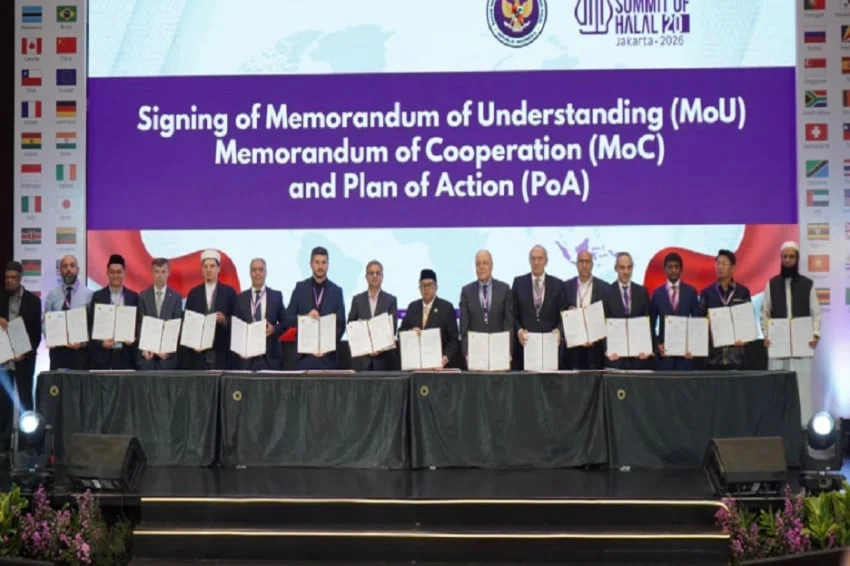
The inaugural day of the 5th Summit of Halal 20 (H20) in Jakarta has marked a significant milestone in the global Islamic economy, resulting in the formalization of 39 strategic partnerships aimed at fortifying the international halal product assurance ecosystem. This summit, which serves as a pivotal forum for global stakeholders, has successfully facilitated a series of high-level agreements, including 15 Mutual Recognition Agreements (MRAs), four Memoranda of Understanding (MoUs), 19 specific Cooperation Agreements (PKS), and a landmark Memorandum of Understanding between the Halal Product Assurance Organizing Agency (BPJPH) and its international strategic partners. These developments signal a concerted effort to harmonize halal certification standards across borders, thereby reducing trade barriers and enhancing consumer trust in the rapidly expanding global halal market.
The Evolution of the H20 Summit
The H20 summit originated as a strategic platform designed to align with the G20 agenda, emphasizing the critical role of halal trade in sustainable global economic growth. Since its inception, the summit has evolved from a regional discussion into a primary international vehicle for regulatory convergence. The 5th iteration of the summit represents the culmination of years of negotiation regarding the standardization of halal audit procedures, laboratory testing protocols, and certification traceability.
In previous years, the global halal industry faced significant fragmentation. Different nations maintained disparate definitions of halal, which often led to redundant certification processes and increased costs for manufacturers. By fostering an environment where 48 countries are now actively participating, the H20 serves as the primary bridge for regulatory bodies to move toward a unified "Halal Global" framework. This year’s event in Jakarta underscores Indonesia’s position as a global leader in halal policy, leveraging its domestic expertise to influence international trade standards.
Breakdown of the Strategic Partnerships
The 39 agreements inked on the first day represent a multi-faceted approach to ecosystem building. The 15 Mutual Recognition Agreements (MRAs) are perhaps the most critical component. These agreements effectively allow for the reciprocal recognition of halal certificates issued by different national bodies, provided they meet the agreed-upon criteria established during the summit.
The 19 Cooperation Agreements (PKS) focus on technical implementation, specifically targeting the capacity building of human resources—such as auditors and inspectors—and the synchronization of digital certification platforms. By digitizing the verification process, BPJPH aims to minimize the risk of fraud and increase the speed of product clearance at customs. The MoUs, meanwhile, provide the broad framework under which long-term cooperation will occur, particularly in research, technology transfer, and the development of halal-certified industrial zones.
Supporting Data and Market Trends
The urgency behind these agreements is underscored by the current trajectory of the global halal market. According to the State of the Global Islamic Economy (SGIE) Report, global consumer spending on halal-certified products—spanning food, pharmaceuticals, cosmetics, and modest fashion—is projected to surpass $2.4 trillion in the coming years. Indonesia, as the world’s largest Muslim-majority nation, has seen a consistent growth in its halal industry exports, contributing significantly to its Gross Domestic Product (GDP).
Data from BPJPH indicates that the demand for international halal verification has increased by approximately 20% year-on-year. This surge is driven by non-Muslim majority nations, such as Brazil, Australia, and various European states, which are increasingly seeking to tap into the Muslim consumer market. The agreements signed at the H20 are designed to accommodate this influx by providing a transparent and credible pathway for international manufacturers to obtain recognized halal certification.
Official Perspectives and Institutional Strategy
Abd Syakur, Deputy for Partnership and Standardization at BPJPH, emphasized that the summit is not merely a diplomatic gathering but a functional necessity for the global supply chain. "The agreements finalized today reflect a clear consensus: the global halal ecosystem cannot survive in silos," Syakur stated during the press briefing. He noted that the integration of halal standards is a prerequisite for a resilient global trade architecture.
"Through these MRAs, we are creating a seamless flow of halal-certified goods. When a manufacturer in a partner country obtains certification that is recognized by BPJPH, the complexity of entering the Indonesian market is drastically reduced. This is a win-win for trade facilitation and for the integrity of the halal assurance system," he added. The strategy is to ensure that the "Halal" label serves as a universal mark of quality, hygiene, and ethical production, transcending religious boundaries to appeal to the global health-conscious consumer base.
Broader Economic and Geopolitical Implications
The implications of the 5th H20 Summit extend well beyond the immediate legal scope of the agreements. For many developing nations, these partnerships provide a framework for developing local halal industries that can compete in the global market. By adopting the standards promoted through the H20, these countries can upgrade their industrial facilities to meet international benchmarks, thereby boosting their export potential.
Furthermore, the focus on Human Resource development is a strategic move to address the shortage of qualified halal auditors globally. As the certification process becomes more rigorous, the demand for trained professionals increases. The agreements signed in Jakarta include provisions for cross-training, where BPJPH experts share technical knowledge with their counterparts in other nations, ensuring a uniform application of halal standards.
From an economic perspective, the reduction of non-tariff barriers through these MRAs is expected to lower the cost of goods for end-consumers. Historically, the multiplicity of certification requirements forced exporters to pay multiple agencies, a cost that was eventually passed on to the buyer. By streamlining this into a system of mutual recognition, the H20 is effectively curbing unnecessary trade friction.
Challenges and Future Outlook
Despite the success of the first day, the path toward a fully integrated global halal ecosystem remains complex. Challenges include varying legal interpretations of halal requirements, political tensions between certain nations, and the need for significant investments in laboratory infrastructure to support the testing of complex, multi-ingredient food products.
The H20 organizers are aware of these hurdles. The roadmap established for the remainder of the summit includes sessions dedicated to harmonizing digital databases. The long-term goal is to establish a global blockchain-based halal tracking system, which would allow consumers to verify the halal status of a product instantly via a QR code. This would represent the next phase of the digital transformation of the halal economy.
The 39 agreements signed on the first day represent a substantial step toward this future. By securing institutional commitments from 48 nations, the H20 is transitioning from a series of bilateral discussions into a cohesive international body. The commitment shown by both the Indonesian government and its global partners suggests that the halal industry is entering a new era of professionalism and standardization.
Conclusion: A New Standard for Global Trade
The 5th Summit of Halal 20 has set a clear agenda for the coming year: to turn these signatures into tangible trade outcomes. The success of the event in Jakarta confirms that the world is moving toward a more structured and transparent approach to halal certification. As the global economy continues to navigate inflationary pressures and supply chain volatility, the efficiency brought about by these 39 new agreements will be a welcome development for businesses and consumers alike.
As the summit proceeds, participants are expected to focus on the technical implementation of these agreements, ensuring that the regulatory frameworks established in Jakarta are effectively adopted by local agencies. With the global halal market showing no signs of slowing down, the initiatives formalized at this summit are set to define the standards of the industry for the next decade, reinforcing the reputation of halal products as a global benchmark for quality and safety. The impact of these actions will be felt not only in the boardrooms of international food corporations but also on the shelves of supermarkets worldwide, as the global trade of halal products becomes more integrated, transparent, and accessible than ever before.
