
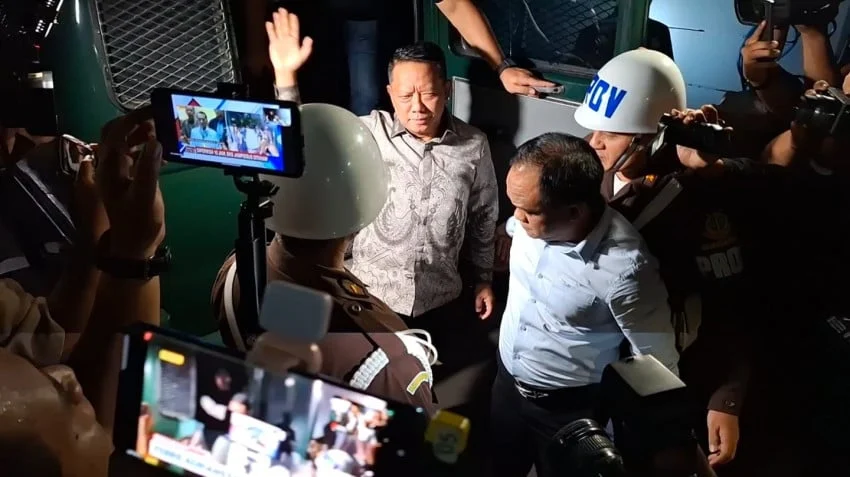
The Indonesian legal landscape witnessed a seismic shift on the evening of Friday, July 24, 2026, as the Attorney General’s Office (Kejagung) officially designated Febrie Adriansyah, the former Junior Attorney General for Special Crimes (Jampidsus), as a suspect in a high-profile corruption and money laundering case. The move, which culminated in Adriansyah being escorted into custody at the Red and White Building in Jakarta, has sent ripples through the nation’s judicial institutions. While the arrest of such a high-ranking official often triggers allegations of political maneuvering, prominent legal experts are stepping forward to frame the development as a definitive victory for institutional professionalism and the rule of law.
Edi Saputra Hasibuan, a respected criminal law observer from University of Bhayangkara Jakarta and a former member of the National Police Commission (Kompolnas) for the 2011–2016 period, emphasized that the decision to name Febrie Adriansyah a suspect is rooted in rigorous legal procedures rather than "criminalization." According to Hasibuan, the steps taken by the Attorney General’s Office investigators reflect a commitment to transparency and adherence to the Criminal Procedure Code (KUHAP). Speaking in Jakarta on Saturday, July 25, 2026, Hasibuan noted that the public must view this case through the lens of objective law enforcement, while simultaneously maintaining a watchful eye to ensure that the principles of justice are upheld for all parties involved.
A Landmark Case in Indonesian Law Enforcement
The naming of Febrie Adriansyah as a suspect is particularly significant given his previous role. As the head of the Jampidsus division, Adriansyah was once the spearhead of Indonesia’s most aggressive anti-corruption campaigns, overseeing the prosecution of multi-trillion rupiah scandals involving state-owned enterprises and natural resource management. His transition from the pursuer of corruption to a defendant facing charges of Graft and the Law on the Prevention and Eradication of the Crime of Money Laundering (TPPU) marks a dramatic turn in the country’s legal history.
Investigators from the Attorney General’s Office have indicated that the decision was not made lightly. The process involved months of intensive evidence gathering, including the analysis of financial flows, witness testimonies, and digital forensics. Hasibuan pointed out that under Article 1, Item 14 of the KUHAP, a suspect is defined as a person who, due to their actions or circumstances, is reasonably suspected of being the perpetrator of a criminal offense based on "preliminary evidence." In Adriansyah’s case, the investigators appear to have surpassed this threshold, providing a solid foundation for his detention and subsequent trial.
Chronology of the Investigation and Detention
The road to Friday night’s detention began several months ago when internal oversight mechanisms and external tip-offs prompted an inquiry into alleged irregularities within the special crimes division. While the specific details of the underlying corruption case remain partially under seal to protect the integrity of the ongoing investigation, sources within the AGO suggest the charges involve the misuse of authority and the illicit movement of funds during Adriansyah’s tenure.
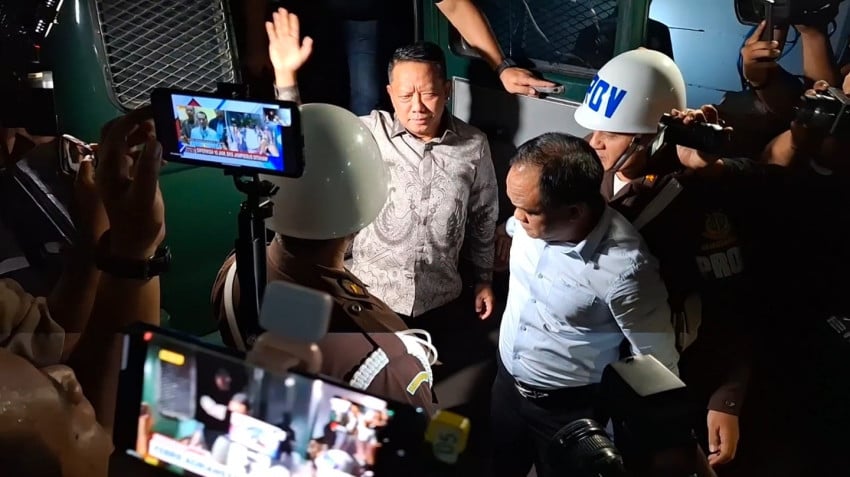
On July 24, 2026, after a marathon interrogation session that lasted several hours, investigators concluded that there was sufficient risk of evidence tampering or flight to warrant immediate detention. Adriansyah was seen being led into the detention facility at the Red and White Building, a site often used for high-level corruption suspects, under heavy guard. The visual of a former Jampidsus in a prisoner’s vest served as a stark reminder of the "equality before the law" principle that the Indonesian government has sought to promote.
The timeline of the case suggests a methodical approach:
- Early 2026: Initial intelligence gathering regarding suspicious financial transactions linked to high-ranking officials.
- May 2026: Formal opening of an investigation into potential violations of the Anti-Corruption Law (UU Tipikor).
- June 2026: Questioning of dozens of witnesses, including junior prosecutors and private sector contractors.
- July 24, 2026: The official status upgrade of Febrie Adriansyah from witness to suspect and his subsequent arrest.
Expert Analysis: Professionalism Over Politics
The discourse surrounding the case has been polarized, with some supporters of the former Jampidsus suggesting that the charges might be a form of "legal revenge" from interests affected by his previous prosecutions. However, Edi Saputra Hasibuan dismissed these claims, asserting that the AGO’s actions are a sign of institutional maturity. "We must see this as the Attorney General’s Office cleaning its own house," Hasibuan stated. "When an institution is willing to prosecute its own high-ranking members, it demonstrates that no one is above the law, and that the system of internal checks and balances is functioning."
Hasibuan’s sentiments were echoed by former investigators from the Corruption Eradication Commission (KPK), who noted that the AGO’s willingness to take such a bold step indicates a level of seriousness that has been demanded by the public for years. They argued that if the AGO had shielded Adriansyah, it would have dealt a fatal blow to the credibility of the entire prosecutorial service. Instead, by following the evidence wherever it leads, the AGO is reinforcing its mandate as a pillar of Indonesian justice.
The Dual Charges: Corruption and Money Laundering
The inclusion of the Money Laundering (TPPU) charges alongside the primary corruption charges is a strategic move by the prosecution. In Indonesian law, TPPU charges allow investigators to follow the money trail far beyond the initial act of bribery or embezzlement. It enables the state to seize assets that have been hidden or converted into other forms, such as real estate, luxury goods, or stocks, even if they are held in the names of third parties.
Legal analysts suggest that by applying the TPPU law, the AGO is signaling its intent not just to punish the individual, but to recover state losses. This "follow the money" approach is essential in modern anti-corruption efforts, as it dismantles the financial incentives that drive high-level graft. For Febrie Adriansyah, the TPPU charges significantly increase the potential prison sentence and the scale of fines he may face if convicted.
Institutional and Public Implications
The impact of this case on the Attorney General’s Office cannot be overstated. For years, the AGO has worked to rehabilitate its image, positioning itself as a more effective alternative to other law enforcement agencies in the fight against "mega-corruption." The arrest of a former Jampidsus is a double-edged sword: while it confirms the presence of corruption within the ranks, it also proves the institution’s resolve to excise it.
Public trust in the judiciary has historically been fragile in Indonesia. High-profile arrests of this nature are often met with a mix of acclaim and skepticism. To maintain public confidence, Hasibuan argues that the AGO must remain transparent throughout the trial process. "The public needs to see the evidence. They need to see a fair trial. This is not just about Febrie Adriansyah; it is about the integrity of the Indonesian legal system in the eyes of the world," he added.
Furthermore, the case has sparked a broader conversation about the need for systemic reforms in how Junior Attorney Generals are appointed and monitored. There are growing calls for more stringent lifestyle audits and periodic wealth reporting for all officials in sensitive positions within the AGO and the National Police.
Looking Ahead: The Trial and the Search for Justice
As the legal team for Febrie Adriansyah prepares its defense, the prosecution is reportedly widening its net. There are indications that the investigation may expand to include other officials who worked closely with the former Jampidsus, as well as private entities that may have benefited from the alleged corruption.
The upcoming trial is expected to be one of the most closely watched legal proceedings in Jakarta. It will test the strength of the evidence gathered by the AGO and the resilience of the Indonesian judiciary under intense public and political pressure. For now, the detention of Febrie Adriansyah stands as a potent symbol of a law enforcement agency that is unafraid to turn its investigative prowess inward.
In conclusion, while the fall of a figure as prominent as Febrie Adriansyah is a somber moment for the legal profession, it is being hailed by experts like Edi Saputra Hasibuan as a necessary step toward a cleaner, more professional government. By adhering to the KUHAP and pursuing the case with transparency, the Attorney General’s Office is attempting to prove that the law remains the ultimate authority in Indonesia, regardless of the rank or status of the accused. The eyes of the nation will remain fixed on the "Red and White Building" as the case progresses toward a verdict that will undoubtedly shape the future of anti-corruption efforts in the country.
