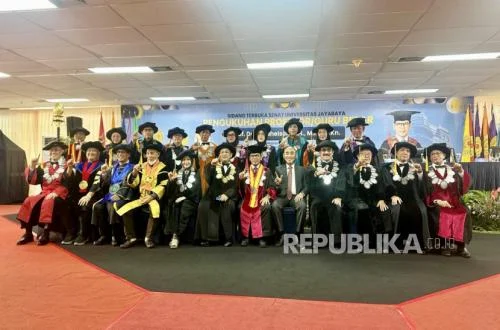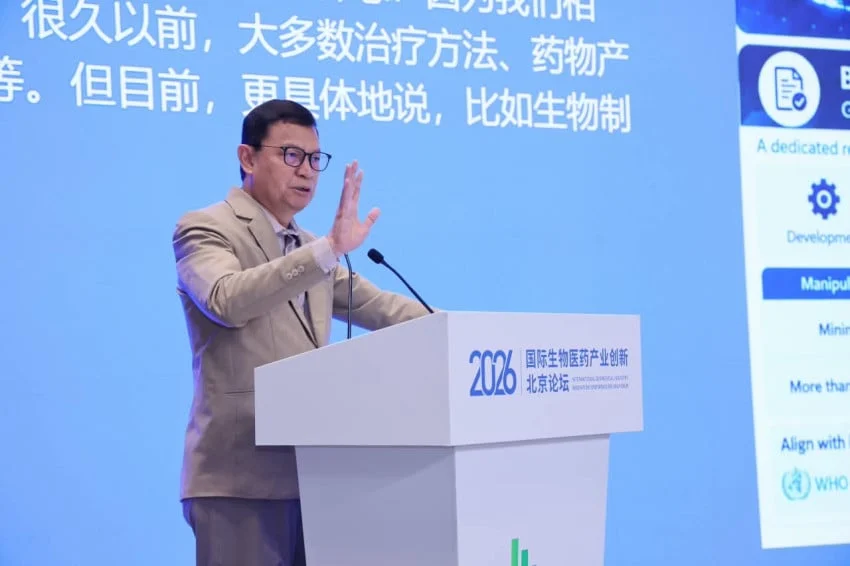
The international academic and scientific footprint of Indonesia’s Head of the National Agency for Drug and Food Control (BPOM), Prof. Dr. Taruna Ikrar, M.Biomed., Ph.D., has expanded significantly following his official appointment as a Visiting Professor at Tsinghua University in Beijing, China. This prestigious academic engagement places the leader of Indonesia’s food and drug regulatory body at the epicenter of global scholarly and technological discourse, reinforcing Indonesia’s strategic positioning in international health diplomacy, advanced biomedicine, and regulatory science.
Tsinghua University, widely recognized as a premier global institution of higher learning, currently holds the top position as the best university in Asia according to the Times Higher Education (THE) Asia University Rankings for 2026. Maintaining this premier ranking for eight consecutive years, the university also commands a formidable global standing, occupying the 12th position worldwide in the THE World University Rankings for 2026. Professor Taruna Ikrar’s integration into the faculty ranks of such a distinguished institution underscores the growing recognition of Indonesian scientific expertise on the world stage, bridging national regulatory frameworks with cutting-edge global innovation.
Strategic Focus Areas: Biomedicine, Artificial Intelligence, and Precision Medicine
Professor Taruna Ikrar’s tenure and academic interactions as a Visiting Professor at Tsinghua University are not merely honorary; they form a core component of a broader initiative to strengthen international academic networks and cross-border scientific collaboration. His lectures and research engagements concentrate heavily on transformative scientific frontiers, including biomedicine, neurosains, artificial intelligence (AI), precision medicine, novel medical technologies, pharmaceutical development, and the future evolution of global health regulation.
In an era defined by rapid technological disruption, the intersection of regulatory science and advanced innovation has never been more critical. During his academic sessions at Tsinghua, Professor Taruna brought forward critical perspectives regarding how artificial intelligence and advanced medical technologies are fundamentally reshaping the paradigm of modern healthcare delivery. The integration of AI with precision medicine, advanced diagnostics, accelerated drug discovery, cell and gene-based therapies, and comprehensive health data utilization is rapidly transitioning from theoretical proposition to clinical reality.
As the head of Indonesia’s regulatory body, Professor Taruna’s engagement with these themes highlights the necessity for modern regulatory agencies to evolve proactively. Traditional regulatory paradigms are increasingly insufficient for evaluating products born from complex, AI-driven drug discovery pipelines and personalized genomic treatments. By participating directly in the academic discourse at a top-tier institution like Tsinghua, BPOM’s leadership gains invaluable foresight into technological trends that will inevitably dominate the global pharmaceutical and medical device markets in the coming decades.
Background Context and Institutional Significance
The appointment of an active Indonesian state official to a visiting professorship at a premier global research university reflects a growing trend of science-based diplomacy. Professor Taruna Ikrar, an internationally acclaimed neuroscientist with a robust publishing record and extensive academic experience in the United States and various global institutions, brings a unique dual perspective to Beijing. He combines rigorous, peer-reviewed scientific inquiry with high-level public administration and regulatory oversight.
For Tsinghua University, hosting a scholar-administrator of Professor Taruna’s caliber enriches its multidisciplinary medical and public health faculties. It provides students and researchers at the Chinese institution with direct insights into the regulatory, ethical, and practical challenges of implementing advanced biomedical technologies in developing nations with vast populations, such as Indonesia.
Conversely, for BPOM and the broader Indonesian scientific community, this collaboration opens vital channels for knowledge transfer. In recent years, Indonesia has aggressively pursued the downstreaming of its domestic pharmaceutical and medical device industries, aiming to reduce heavy reliance on imported active pharmaceutical ingredients (APIs) and high-tech medical apparatus. Gaining direct access to the academic and technological ecosystems of China—a global powerhouse in biotechnology and AI research—serves as a strategic asset for Indonesia’s national health resilience agenda.
Chronology of Scientific Leadership and International Recognition
Professor Taruna Ikrar’s appointment at Tsinghua University builds upon a long-standing career characterized by international academic achievements and leadership roles. His journey from a prominent neuroscientist holding key research positions abroad to heading Indonesia’s pivotal regulatory agency illustrates a trajectory of continuous contribution to global science.
In the years preceding his leadership at BPOM, Professor Taruna was deeply involved in mapping the human brain, contributing foundational research within neurobiology, cardiovascular medicine, and pharmacology. His academic pedigree includes professorships and research fellowships at various prestigious international universities, cementing his reputation as a global thought leader in the biomedical sciences.
Upon assuming leadership of BPOM, Professor Taruna sought to infuse modern scientific rigor, transparency, and international standards into Indonesia’s drug and food safety architecture. His recent presence at Tsinghua University in 2026 represents a continuation of this philosophy—advocating that effective regulation cannot exist in a vacuum; it must evolve synchronously with global scientific breakthroughs. The invitation from Tsinghua University serves as a milestone in a timeline that consistently bridges Indonesian public service with elite international academia.
Broader Implications for Global Health Regulation and National Policy
The implications of Professor Taruna Ikrar’s visiting professorship extend far beyond academic prestige, offering tangible benefits for policy formulation, regulatory harmonization, and public health protection in Indonesia.
First, the collaboration facilitates enhanced regulatory dialogue between Indonesia and China. Given that a substantial portion of raw materials for Indonesia’s pharmaceutical sector originates from Asian manufacturing hubs, including China, establishing strong academic and professional relationships with premier institutions in the region fosters greater transparency, mutual trust, and adherence to international quality standards.
Second, the integration of AI and precision medicine into the regulatory mindset prepares BPOM to address future challenges posed by digital health applications, telemedicine platforms, and algorithm-based diagnostics. As personalized medicine takes center stage, regulatory bodies must adapt to evaluate therapies designed for individual genetic profiles rather than broad population categories. Through his academic engagements at Tsinghua, Professor Taruna is positioned to bring home advanced regulatory frameworks and methodologies capable of safeguarding public safety without stifling innovation.
Finally, this international engagement reinforces BPOM’s institutional capacity building. By maintaining active ties with global centers of excellence, Indonesian regulators and researchers can participate in joint training programs, collaborative research initiatives, and knowledge-sharing networks. This ensures that Indonesia remains a proactive participant—rather than a passive consumer—in the formulation of global health standards.
As Professor Taruna Ikrar continues his academic duties at Tsinghua University alongside his executive responsibilities at BPOM, the synergy between rigorous scientific research and public policy enforcement stands to benefit. Through strategic international partnerships of this caliber, Indonesia continues to elevate its standing in the global scientific community, ensuring that its regulatory institutions are equipped to navigate the complex health landscape of the 21st century.