
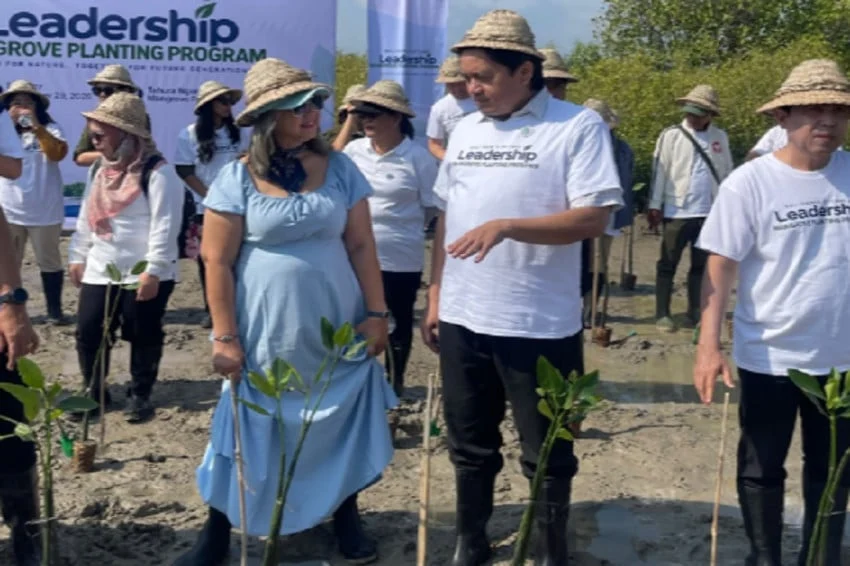
The tropical coastline of Bali served as the focal point for a transformative environmental initiative as government officials, corporate leaders, impact investors, and grassroots conservationists gathered at the Arboretum Mangrove Park. The event, designated as the Bali World of Care – Leadership Mangrove Planting Programme, marked a significant paradigm shift in how ecological restoration is perceived and executed in the region. Moving far beyond traditional, symbolic tree-planting ceremonies, the convening underscored a strategic evolution: integrating mangrove conservation directly into the burgeoning low-carbon economy through the rigorous development and monetization of blue carbon.
The gathering took place against the backdrop of intensifying global climate pressures, rising sea levels, and the persistent degradation of tropical coastal zones. Participants engaged in high-level dialogues aimed at bridging the gap between ecological preservation and financial sustainability. By establishing frameworks that connect environmental stewardship with carbon markets and community economic development, the programme outlines a comprehensive blueprint for coastal management that can be replicated across the Indonesian archipelago and the broader global South.
Evolution of Coastal Conservation: Beyond Symbolic Planting
For decades, mangrove rehabilitation efforts worldwide have largely consisted of one-off planting events driven by public relations campaigns or immediate post-disaster remediation. While these efforts have successfully increased green cover in targeted areas, critics and conservation scientists have long pointed out a critical flaw: high mortality rates among planted seedlings due to a lack of long-term monitoring, inadequate community engagement, and insufficient post-care funding.
The Bali World of Care initiative directly addresses these historical shortcomings by introducing a holistic framework. The event emphasized a continuous lifecycle approach to mangrove management, which encompasses rigorous site selection, species diversification tailored to local hydrology, dedicated post-planting maintenance, systematic ecological monitoring, and scientific carbon measurement.
Cindy Nattaya, Executive Director of Diaspora Carbon Action, articulated the core philosophy driving the program during her address at the Arboretum Mangrove Park. She noted that mangroves possess intrinsic ecological and economic value that extends far beyond shoreline protection. When managed sustainably and integrated into carbon accounting systems, these coastal ecosystems transform into powerful financial assets capable of generating sustained revenue for local economies while actively drawing down atmospheric carbon.
The Science and Economics of Blue Carbon
Blue carbon—the carbon captured and stored by coastal and marine ecosystems such as mangroves, salt marshes, and seagrass meadows—has emerged as one of the most potent nature-based solutions to climate change. Scientific studies consistently demonstrate that mangroves are exceptionally efficient carbon sinks. Per unit area, they can sequester carbon at rates up to ten times higher than tropical rainforests, storing the majority of this carbon deep within their anaerobic organic-rich soils, where it can remain trapped for millennia if undisturbed.
Despite this immense potential, unlocking the economic value of blue carbon requires sophisticated measurement, reporting, and verification (MRV) protocols. The discussions at the Arboretum Mangrove Park placed heavy emphasis on establishing these technical standards. Investors and corporate stakeholders explored how transparent carbon credit generation can attract private capital to conservation projects. By transforming verified carbon sequestration into tradeable credits, coastal communities can secure alternative, long-term streams of income that incentivize the ongoing protection of the forests rather than their conversion for aquaculture, real estate, or agriculture.
Furthermore, the economic implications extend into ecotourism, artisanal fisheries, and coastal protection. Healthy mangrove forests serve as critical nursery grounds for numerous commercially vital fish and crustacean species, directly supporting the livelihoods of local coastal communities. Additionally, their intricate root systems act as natural buffers, mitigating storm surges, reducing wave energy, and preventing coastal erosion—ecosystem services that yield substantial economic savings in avoided infrastructure damage and disaster recovery costs.
Multi-Stakeholder Collaboration and the Role of Mangrove Rangers
A defining characteristic of the Bali World of Care programme is its intentional multi-stakeholder design. Achieving scalable, long-term impact requires dismantling traditional silos between government regulators, private sector financiers, and local implementers.
Government representatives at the event focused on policy alignment, regulatory frameworks, and ensuring that local conservation initiatives harmonize with Indonesia’s enhanced Nationally Determined Contributions (NDCs) under the Paris Agreement. Indonesia, which harbors approximately one-fifth of the world’s mangrove forests, holds a pivotal position in global climate mitigation strategies. National commitments to rehabilitate hundreds of thousands of hectares of degraded mangroves require robust public-private partnerships to mobilize the necessary capital and technical expertise.
Simultaneously, corporate leaders and impact investors engaged in panels regarding environmental, social, and governance (ESG) investments. Increasingly, corporations are seeking high-integrity carbon offset projects that offer verifiable co-benefits, such as biodiversity preservation and community empowerment. The Bali initiative provides a transparent platform for these investors to deploy capital into projects that meet stringent international standards.
Crucially, the programme elevated the voices and operational roles of grassroots organizations, most notably the Mangrove Ranger community. Composed of local residents, youth, and traditional resource users, the Mangrove Rangers serve as the frontline stewards of the ecosystem. Their day-to-day responsibilities include seedling nurseries, planting execution, monitoring illegal harvesting, and tracking ecological health indicators. By integrating these local communities into the economic value chain—through green jobs, ecotourism ventures, and community-based carbon revenue sharing—the programme ensures that conservation efforts are socially equitable and self-sustaining.
Broader Implications and Regional Context
The urgency of the Bali initiative is underscored by broader regional trends across Indonesia. Similar large-scale coastal restoration efforts—such as extensive planting drives in various parts of Java targeting hundreds of thousands of seedlings—reflect a nationwide mobilization against the cascading threats of climate change. Sinking coastal land, escalating tidal flooding, and the loss of traditional livelihoods have forced a national reckoning regarding the state of Indonesia’s littoral zones.
However, experts caution that planting alone is insufficient without addressing the root drivers of mangrove loss. Land-use conversion, unmanaged coastal development, pollution, and upstream deforestation heavily impact the health and hydrological connectivity of mangrove ecosystems. Therefore, the discussions at the Arboretum Mangrove Park extended into integrated coastal zone management (ICZM), which looks at watershed management, pollution control, and spatial planning in tandem with direct ecological restoration.
The integration of blue carbon into Indonesia’s economic framework also positions the nation as a leader in the global carbon market architecture. As international demand for high-quality carbon credits grows, regulatory bodies in Indonesia are actively refining legal frameworks for carbon trading, domestic registries, and benefit-sharing mechanisms. These regulatory developments are crucial for building investor confidence and ensuring that carbon monetization does not bypass the indigenous and local communities who bear the daily responsibility of stewardship.
Conclusion and Future Outlook
The Bali World of Care – Leadership Mangrove Planting Programme at the Arboretum Mangrove Park transcends the traditional boundaries of environmental advocacy. By fusing rigorous ecological science, innovative financial mechanisms like blue carbon, and inclusive community engagement, the initiative establishes a progressive model for climate resilience.
As the impacts of climate change accelerate globally, the success of such programmes will depend on consistent execution, transparent monitoring, and the unwavering commitment of all participating sectors. The collaborative momentum generated in Bali signals a maturing environmental movement—one that recognizes the health of coastal ecosystems and the stability of the global economy are inextricably linked. Through sustained investment, scientific rigor, and community empowerment, initiatives of this scale offer a viable pathway toward a resilient, low-carbon future for Indonesia and the international community.
