
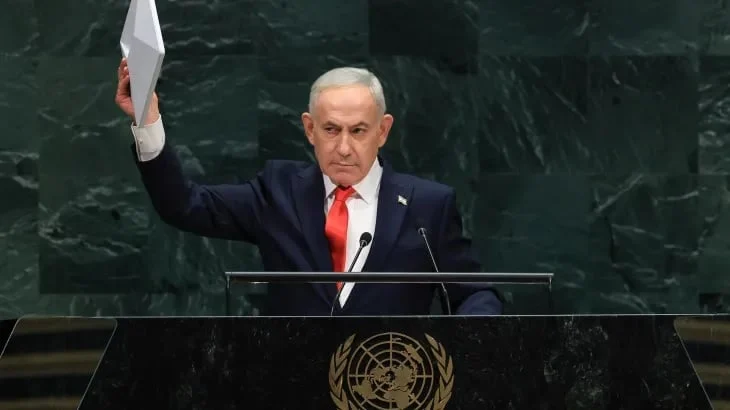
Prime Minister Benjamin Netanyahu has returned to Israel immediately following his address at the 79th session of the United Nations General Assembly in New York. The departure, reported by Israel’s public broadcaster Kan, marked a swift conclusion to a visit characterized by intense diplomatic friction and widespread public demonstrations. While the Prime Minister held several high-level meetings with international counterparts, his stay was significantly truncated compared to standard diplomatic protocols for such a significant international forum. Sources cited by Israeli media suggest that the accelerated timeline for his return was influenced by heightened security concerns, given the volatile geopolitical climate and the intensity of the protests surrounding his presence in the United States.
The Context of the UNGA 79th Session
The 79th session of the United Nations General Assembly (UNGA) has served as a primary stage for global discourse regarding the ongoing conflicts in the Middle East. Netanyahu’s arrival in New York occurred against a backdrop of escalating hostilities between Israel and Hezbollah in Lebanon, as well as the protracted military campaign in Gaza. The UN platform is traditionally used by world leaders to advocate for their national interests, but for the Israeli delegation, the diplomatic environment this year proved exceptionally hostile.
Historically, Israeli leaders have used the UNGA podium to present security threats—most notably Netanyahu’s 2012 presentation featuring a diagram of an Iranian nuclear bomb. However, this year’s address focused heavily on the justification of Israel’s military operations and its strategic objectives in the region. The speech was delivered at a time when the international community is increasingly divided, with many member states calling for an immediate ceasefire and expressing grave concern over the humanitarian crisis in Gaza and the rising death toll in southern Lebanon.
A Diplomatic Standoff: The Walk-Out
Inside the General Assembly hall, the atmosphere was markedly tense. As Netanyahu took the podium, a significant number of diplomats from various nations—including several from the Arab League and other Global South countries—staged a walk-out. This form of diplomatic protest, while not unprecedented, highlighted the deepening isolation of the Israeli government on the international stage.
The walk-out was a symbolic manifestation of the frustration felt by many delegations regarding Israel’s compliance with international law, particularly concerning the blockade of humanitarian aid and the scale of civilian casualties in conflict zones. By exiting the hall, these representatives signaled that the policies championed by the Netanyahu administration have reached a point of incompatibility with the consensus held by a substantial portion of the UN membership.
Public Dissent and Grassroots Activism
Outside the United Nations headquarters, the streets of New York were flooded with demonstrators throughout the duration of Netanyahu’s visit. The protests were multifaceted, featuring a diverse coalition of activists. Among the most notable groups present were Jewish organizations calling for an immediate ceasefire and the release of hostages, who joined broader pro-Palestinian marches under the banner of "Free Palestine."
The protests were not limited to the immediate vicinity of the UN. Throughout Manhattan, security forces were placed on high alert as thousands of marchers voiced their opposition to the Prime Minister’s policies. These demonstrations reflect a broader shift in Western public opinion, where debates regarding the Israeli-Palestinian conflict are increasingly central to domestic political discourse. The intensity of the protests necessitated a heavy police presence and likely contributed to the decision by the Prime Minister’s security detail to limit his exposure in the city.
Security and Logistics: A Shortened Stay
The report from Kan, the Israeli public broadcaster, noted that the Prime Minister’s itinerary was condensed to a single day of high-impact activity. In professional diplomatic circles, a leader traveling to the UN usually stays for several days to conduct bilateral meetings, participate in regional summits, and engage in "sideline" diplomacy. The decision to return to Israel immediately after the speech suggests that the security risk assessment conducted by the Shin Bet (Israel’s internal security agency) was a primary driver for the shortened trip.
The logistical challenges of protecting a high-profile target in a city as large and protest-prone as New York, combined with the real-time security requirements back in Tel Aviv due to the ongoing regional escalations, created a narrow window for the visit. This decision to prioritize speed over traditional diplomatic engagement underscores the fragility of the current situation for the Israeli leadership.
Supporting Data and Geopolitical Analysis
To understand the gravity of the situation, one must look at the data regarding the ongoing conflict. According to the United Nations Office for the Coordination of Humanitarian Affairs (OCHA), the humanitarian situation in Gaza has reached catastrophic levels, with infrastructure collapse and widespread food insecurity affecting millions. Furthermore, recent escalations along the Israel-Lebanon border have resulted in the displacement of tens of thousands of people on both sides, creating a secondary front that threatens to destabilize the entire Levant.
The diplomatic isolation seen at the UN is mirrored in international legal forums. The International Court of Justice (ICJ) and the International Criminal Court (ICC) have been focal points for discussions regarding the legality of Israeli military actions. While Israel maintains that it is acting in self-defense following the October 7 attacks, the discrepancy between this narrative and the reports from international human rights monitors has created a chasm in global political support.
Implications for International Relations
The events surrounding Netanyahu’s visit to New York signify a critical turning point in Israel’s relationship with the international community. The overt display of dissent from UN delegates suggests that the diplomatic costs of the current military strategy are rising. For Israel, maintaining the support of key allies, particularly the United States, remains a strategic imperative. However, the domestic political pressure within the U.S. to temper support for Israel is growing as the conflict drags on.
The walk-out at the UN is more than a gesture; it is an indicator of shifting global alliances. Nations that have traditionally remained neutral are increasingly aligning themselves with resolutions that demand accountability for actions taken during the conflict. This trend threatens to weaken Israel’s leverage in future negotiations and may lead to increased pressure from international bodies to adopt more restrictive policies regarding arms exports and economic cooperation.
Official Responses and Strategic Messaging
While the Israeli government has not officially commented on the specific security details that led to the shortened trip, spokespersons have framed the UN speech as a necessary opportunity to communicate Israel’s security requirements to the world. The Prime Minister’s office emphasized that the address was intended to clarify Israel’s stance against "the axis of terror," specifically referring to groups supported by Iran.
Conversely, representatives from the nations that participated in the walk-out have issued statements emphasizing that their actions were a direct response to the "untenable humanitarian situation" and the perceived lack of progress toward a diplomatic solution. These statements serve to reinforce the message that the current trajectory of the conflict is unsustainable and that a change in strategy is required if Israel wishes to maintain its standing within the international community.
Conclusion: A Difficult Road Ahead
The rapid departure of Benjamin Netanyahu from New York serves as a snapshot of the current state of Israeli diplomacy: isolated on the global stage, pressured by international institutions, and facing significant public backlash in democratic nations. As the conflict continues to evolve, the ability of the Israeli government to balance its military objectives with the demands of the international community will be tested.
The events in New York at the 79th UNGA will likely be viewed by historians as a moment when the divide between Israel’s security narrative and the global call for humanitarian intervention became starkly visible. Whether this leads to a shift in policy or a deepening of current stances remains to be seen, but the clear message from the UN chamber and the streets of Manhattan is that the status quo is increasingly untenable. For now, the Prime Minister’s focus returns to the security situation at home, where the complexities of the conflict continue to demand his immediate and undivided attention.
