
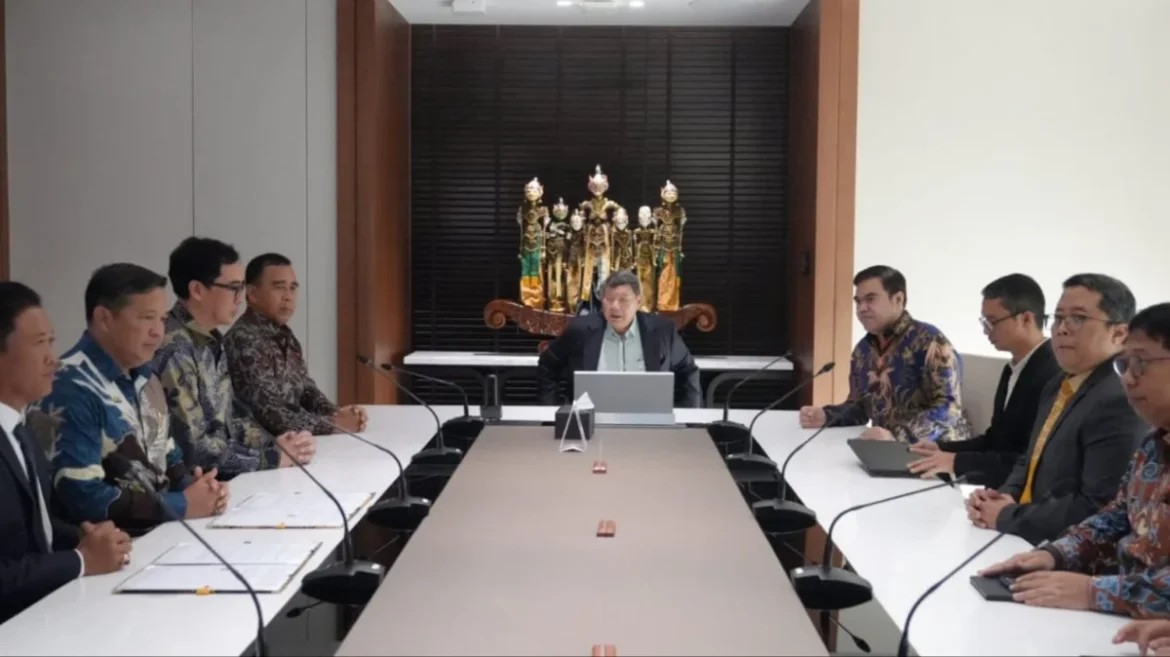
The landscape of Indonesian agriculture is poised for a significant transformation following the formalization of a strategic partnership between the state-owned Holding Perkebunan Nusantara PTPN III (Persero) and PT Karya Unggulan Anak Bangsa (KUAB). This collaborative initiative, unveiled on September 12, 2026, aims to revitalize the nation’s soybean industry, a commodity that has long been a critical component of the domestic diet yet remains heavily reliant on international imports. With the explicit backing of the Special Presidential Envoy for Climate and Energy, Hashim S. Djojohadikusumo, the partnership serves as a cornerstone for a multi-year roadmap designed to achieve national soybean self-sufficiency within the next three to four years.
The Strategic Imperative for Soybean Sovereignty
For decades, Indonesia has faced a structural imbalance in its soybean supply chain. Despite being a staple ingredient for iconic foods like tempeh and tofu, domestic production has consistently fallen short of consumption demands. This dependence on imported soybeans—primarily sourced from the United States, Brazil, and Argentina—exposes the Indonesian economy to volatile global commodity prices and logistical disruptions.
The collaboration between PTPN III and KUAB is not merely a corporate agreement; it is a policy-driven intervention aligned with the broader food security agenda spearheaded by the Ministry of Agriculture under Minister Andi Amran Sulaiman. By leveraging PTPN III’s vast landholdings and KUAB’s technical expertise, the government intends to create a vertically integrated supply chain. This approach seeks to control everything from the development of high-yield seeds to post-harvest distribution, ensuring that Indonesian farmers are equipped with the resources necessary to compete with global imports.
A Phased Approach to Agricultural Revival
The partnership is structured around a pilot project covering 1,000 hectares of land, which will serve as the testing ground for advanced cultivation techniques. The core of this initiative is the establishment of a National Soybean Seed Development Center. The availability of high-quality, climate-resilient seeds is widely considered the "missing link" in Indonesia’s previous attempts to boost soybean output.
According to Hashim S. Djojohadikusumo, the objective is to move beyond mere cultivation. "This is a strategic cooperation for the Indonesian nation," he stated during the signing ceremony. He emphasized that the goal is to build an ecosystem that supplies certified seeds to cooperatives and smallholder farmers across the archipelago. Given Indonesia’s diverse geography, the project will focus on identifying and utilizing land tracts that are scientifically proven to be optimal for soybean growth, effectively turning idle or underutilized plantation assets into productive agricultural hubs.
PTPN III’s Role in Operationalizing the Vision
As the primary vehicle for this state-led initiative, PTPN III (Persero) is tasked with coordinating the logistical and administrative framework. Denaldy Mulino Mauna, President Director of PTPN III, highlighted that the company’s commitment is grounded in rigorous fiscal and operational discipline. The corporation will act as the facilitator, ensuring that the integration of resources within the PTPN Group is managed according to international corporate governance standards.
"PTPN Group is prepared to take a central role in supporting national soybean development through measurable, feasibility-based collaboration," Mauna remarked. He stressed that the program would be executed in phases. This incremental strategy is designed to allow for the continuous evaluation of the business model, productivity metrics, and land readiness. By testing the methodology on a smaller scale before national expansion, the government aims to mitigate financial risk and ensure that the infrastructure developed today remains sustainable for the long term.
Contextualizing the Challenge: Why Soybean Matters
To understand the weight of this initiative, one must look at the broader economic context. Indonesia’s soybean consumption has remained consistently high, driven by the massive popularity of protein-dense traditional foods. However, domestic production has struggled to scale due to several systemic factors:
- Land Competition: Soybean cultivation has historically been sidelined in favor of high-value export commodities like palm oil and coffee, which offer higher profit margins for farmers and plantation companies.
- Technological Lag: A lack of investment in research and development (R&D) has led to stagnating yields per hectare compared to the sophisticated, mechanized farming systems seen in the Americas.
- Fragmented Supply Chains: Smallholder farmers often operate in isolation, lacking access to quality fertilizers, modern machinery, and reliable market channels, which results in high post-harvest losses.
The government’s new roadmap aims to address these issues by providing the "economies of scale" that were previously unavailable. By integrating PTPN’s extensive land assets with centralized seed distribution, the initiative seeks to lower the barrier to entry for local farmers and incentivize them to shift their focus back to soybeans.
Future Projections and Economic Implications
If successful, the move toward self-sufficiency would have profound macroeconomic implications for Indonesia. Reducing the annual import bill for soybeans would significantly improve the country’s trade balance and shield the domestic food industry from the inflationary pressures of global market fluctuations.
Furthermore, the focus on local seed development is a major step toward climate-resilient agriculture. As global climate patterns become increasingly unpredictable, the ability to produce seeds specifically adapted to the Indonesian climate—rather than relying on imported varieties—will be essential for food security. The Special Presidential Envoy’s direct involvement underscores the project’s significance in the government’s 2026–2030 strategic plan.
The next 36 to 48 months will be critical. The success of the 1,000-hectare pilot will determine the pace at which the program is scaled up to include tens of thousands of hectares across Sumatra, Java, and Eastern Indonesia. Observers note that while the ambition is clear, the implementation will require sustained political will, consistent funding, and active participation from the private sector to bridge the gap between initial pilot success and large-scale commercial viability.
Conclusion
The partnership between PTPN III and KUAB represents a pragmatic shift in Indonesia’s agricultural policy. By prioritizing institutional collaboration and focusing on the foundation of the supply chain—the seed—the government is attempting to solve a chronic problem with a structural solution. While the target of self-sufficiency within four years is ambitious, the alignment of PTPN’s logistical capabilities with a clear government mandate provides a credible pathway for achieving a more resilient and food-secure Indonesia. As the pilot project commences, all eyes will be on the efficacy of these new cultivation models and their ability to translate into tangible, high-quality yields for the nation’s farmers.
