
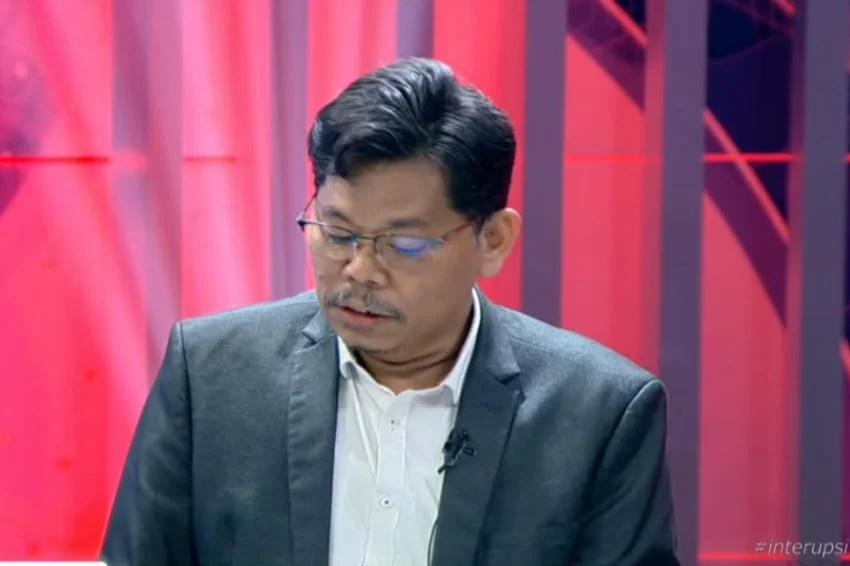
The ongoing public discourse surrounding the educational credentials of Indonesia’s seventh president, Joko Widodo (Jokowi), has taken a new legal and procedural turn. Public policy expert Bonatua Silalahi recently asserted that the authenticity of a university diploma cannot be measured solely by the physical sheet of paper itself. According to Silalahi, the integrity of the entire academic process—from enrollment and coursework to graduation requirements—remains a fundamental criterion for determining the validity of any educational document.
Speaking during a televised current affairs program on iNews TV on Thursday, September 10, 2026, Silalahi elaborated on the multifaceted nature of document verification. His remarks have injected renewed momentum into a controversy that has persisted across various legal and administrative forums for years. As digital literacy increases and public scrutiny over public officials intensifies, the debate highlights broader questions regarding transparency, administrative accountability, and the legal mechanisms available in Indonesia to challenge official credentials.
The Dimensions of Academic Authenticity
During the broadcast of the Interupsi program, Silalahi emphasized that the concept of document falsification extends beyond the physical fabrication of a certificate. In many instances, the discrepancy lies within the procedural journey required to attain the qualification.
"Referring to the term diploma, falsification does not merely happen through the physical document sheet itself, but the process can also be false. It is possible," Silalahi stated during the discussion.
His perspective broadens the scope of the controversy, shifting the analytical focus from a simple visual or material inspection of the diploma to the underlying academic archives, institutional records, and administrative pathways. By highlighting the procedural aspect, Silalahi argued that an academic certificate is merely the final manifestation of a verified educational journey. If the preceding steps—such as admission records, attendance registers, thesis submission, and grade transcripts—are found to be flawed or non-compliant with institutional standards, the legitimacy of the final credential becomes vulnerable to legal challenge.
Also participating as a resource person on the same program was Roy Suryo, a prominent digital forensic analyst and frequent critic, who brought physical documentation to the discussion. Suryo presented papers detailing alleged anomalies within the undergraduate thesis associated with the former president. The presentation of these documents served as a focal point for the debate, illustrating the specific areas of contention raised by critics regarding the academic background of the former head of state.
Pathways to Legal Challenge and the Role of the Administrative Court
Addressing the potential legal consequences if the allegations presented by critics are proven factual, Silalahi suggested that the official documents could theoretically be challenged and nullified through the State Administrative Court (PTUN). He noted that if the evidence withstands judicial scrutiny, formal administrative remedies exist to contest the validity of disputed state or institutional documents.
"Well, if this is true, I think if Brother Roy is indeed correct, this could lead to the trial of the principal case being postponed again. Not at the PTUN, cancel it," Silalahi remarked, outlining the potential procedural intersections between ongoing information disclosure disputes and substantive administrative litigation.
The mention of the PTUN underscores the complex legal architecture governing administrative decisions and state documents in Indonesia. Administrative courts hold the authority to review and potentially annul decisions issued by state administrators or public institutions, provided the plaintiff possesses the legal standing and sufficient evidence to demonstrate procedural violations or abuses of authority.
Historical Precedents and Administrative Comparisons
To contextualize the current controversy, Silalahi drew comparisons with a past administrative case involving the former Regent of Sragen, Untung Wiyono. By contrasting the two situations, Silalahi illustrated how administrative disputes regarding educational credentials are typically investigated and resolved through straightforward bureaucratic audits.
In the case of the former Sragen regent, the verification process relied primarily on examining foundational administrative data rather than protracted public debates. Authorities traced the official’s educational background down to secondary schooling, uncovering discrepancies such as non-existent high school records and duplicate student identification numbers (NIS).
"I will give an example, take the Regent of Sragen, Mr. Untung. It never reached this level of commotion. Simply by examining data like this, the process was already revealed. It turned out his high school did not exist, and his student identification number was actually copied from someone else," Silalahi explained.
This comparative analysis points to the methodology experts believe should govern credential verification: a systematic review of primary archives, institutional registries, and foundational educational milestones rather than reliance on surface-level documentation.
Chronology of the Dispute and Ongoing Legal Battles
The debate surrounding Joko Widodo’s educational background is not a recent development. It represents the continuation of a multi-year saga involving various civil society actors, legal advocates, and state institutions. Over the years, allegations questioning the authenticity of his graduation from Universitas Gadjah Mada (UGM) have surfaced repeatedly across social media platforms and independent media outlets, prompting defensive clarifications from academic institutions and government representatives alike.
Key milestones in this prolonged controversy include:
- Initial Public Claims: Various independent investigators and activists began circulating claims questioning the validity of the former president’s high school and university diplomas several years ago.
- Institutional Clarifications: Universitas Gadjah Mada repeatedly issued official statements and presented historical records confirming that Joko Widodo graduated from the Faculty of Forestry in 1985, affirming the authenticity of his degree.
- Escalation to Oversight Bodies: Activists and legal advocates, including Bonatua Silalahi, pursued formal administrative channels to demand access to related educational archives and institutional records.
- Recent Administrative Actions: Silalahi previously brought formal complaints before the Election Organizer Ethics Council (DKPP) and subsequently pursued public information disputes regarding official archives through the Central Information Commission (KIP), seeking broader transparency and disclosure of foundational documents.
The persistence of these legal maneuvers demonstrates how critics continue to utilize various statutory bodies—ranging from information disclosure commissions to administrative tribunals—to press for institutional accountability and public transparency.
Implications for Public Trust and Institutional Transparency
The ongoing discourse surrounding the credentials of prominent political figures carries significant implications for institutional trust and governance in Indonesia. When doubts are cast upon the educational qualifications of leaders, the debate often transcends personal reputation, touching upon the credibility of the educational institutions that conferred the degrees and the regulatory bodies tasked with oversight.
Analysts note that transparency remains the most effective antidote to prolonged speculation. Educational institutions, as custodians of academic integrity, face the dual responsibility of maintaining rigorous internal archives while demonstrating openness in verifying credentials when challenged. At the same time, the legal framework governing public information and administrative justice provides structured avenues for disputing state or institutional records, ensuring that controversies are addressed through legal channels rather than unverified public narratives.
As public policy experts like Bonatua Silalahi continue to advocate for thorough administrative investigations, the broader legal and political landscape remains sensitive to issues of document verification. Whether the current legal challenges before information commissions and administrative courts will yield substantive changes or further clarify institutional archiving standards remains to be seen. However, the debate underscores the enduring importance of verifiable administrative processes in upholding the legitimacy of public officeholders and democratic governance in Indonesia.
