
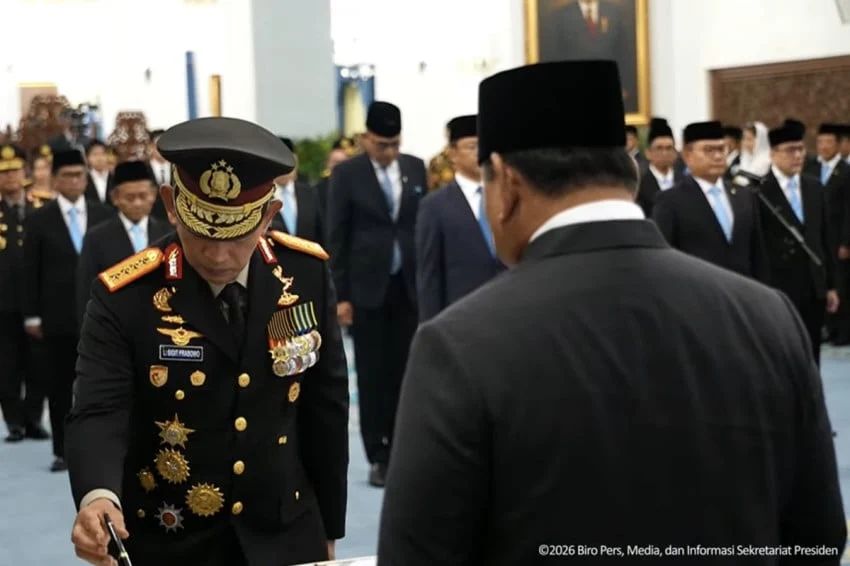
The Indonesian National Police (Polri) has officially enacted a comprehensive new regulatory framework governing internal professional discipline and ethical proceedings, marking a significant structural evolution in how the institution handles high-profile misconduct and accountability. Spearheaded by the leadership of Chief of the Indonesian National Police (Kapolri) General Suyudi Ario Seto, the newly minted Peraturan Kepolisian (Perpol) or Police Regulation introduces critical amendments to disciplinary processes, appeal mechanisms, and investigative audit protocols. Among its primary operational catalysts, institutional representatives have acknowledged that the updated legal framework serves as a necessary administrative preparation for addressing complex ethical trials involving high-ranking active-duty officers, specifically including four-star generals such as former Kapolri and current high-ranking figures like General Listyo Sigit Prabowo.
The introduction of this regulatory instrument reflects an ongoing institutional push toward modernization, procedural clarity, and systemic adaptability within the sprawling law enforcement apparatus. By directly revising the existing baseline—specifically Police Regulation Number 7 of 2022 concerning the Professional Code of Ethics and the Police Ethics Commission—the leadership aims to streamline internal accountability mechanisms. As public scrutiny over law enforcement transparency intensifies across the archipelago, the enforcement of robust, unambiguous, and adaptable disciplinary pathways remains a cornerstone of the national police force’s reform agenda.
Context and Institutional Background of the Regulatory Revision
To fully understand the weight and timing of the new Perpol signed by General Suyudi Ario Seto, one must examine the operational and legal landscape governing the Indonesian National Police over the past decade. For years, internal discipline within Polri was anchored by a patchwork of internal guidelines that occasionally struggled to address the unique complexities posed by senior general officers facing ethical inquiries.
Prior to the current overhaul, Police Regulation Number 7 of 2022 served as the definitive benchmark for handling violations of the professional code of ethics. While that regulation provided a structured approach to prosecuting infractions ranging from minor administrative breaches to severe criminal misconduct involving members of the force, practical implementation revealed several structural bottlenecks. These bottlenecks became particularly pronounced when high-ranking officers—those holding high-tier general ranks—became subjects of investigation or ethical deliberation.
The challenges of prosecuting high-ranking personnel within a hierarchical military-style organization are multifaceted. High-ranking officers often command significant institutional influence, and traditional disciplinary mechanisms can sometimes encounter friction when navigating the intersection of military-grade hierarchy, administrative law, and public accountability demands. Recognizing these systemic vulnerabilities, Polri’s legal division, in coordination with oversight bodies, initiated a comprehensive review of the 2022 regulation. The objective was to craft a legal instrument that is both fair to the accused and unyielding in its commitment to institutional integrity, regardless of the individual’s rank or historical status within the force.
Key Structural Changes in the New Police Regulation
The newly enacted Perpol introduces several targeted yet sweeping modifications to the pre-existing legal framework. According to official disclosures provided by the National Police Headquarters, these changes are designed to close procedural loopholes, accelerate investigative accountability, and refine the scope of appellate rights during ethical tribunals.
The first major amendment focuses on the appeals process, specifically targeting the definition and limitations of who holds the legal standing to challenge an ethics commission ruling. Under the former provisions outlined in Article 1, Number 6 of Police Regulation Number 7 of 2022, the circle of individuals permitted to file an appeal on behalf of a sanctioned officer was remarkably broad. It encompassed not only the primary violator but also immediate family members, including spouses, children, and parents of the offending officer.
The rationale behind the previous inclusion of family members was rooted in humanitarian and holistic welfare considerations, acknowledging that disciplinary outcomes heavily impact the domestic and financial stability of an officer’s household. However, in practice, this provision frequently introduced administrative delays, complicating the finality of judicial and ethical decisions.
Under the newly signed Perpol, this provision has been fundamentally restricted. Kadiv Humas Polri (Head of the Public Relations Division of the Indonesian National Police) Inspector General Johnny Eddizon Isir formally confirmed the shift during a press briefing at police headquarters. "After the revision, the provisions regarding who can file an appeal are strictly limited to the violator alone," Isir stated. By stripping family members of the legal standing to initiate appellate procedures, the institution aims to streamline the review process, ensure personal accountability directly rests upon the shoulders of the disciplined member, and eliminate auxiliary legal maneuvers that have historically bogged down the Ethics Commission.
The second major structural alteration involves the procedural handling of investigative audit findings. The new regulation formally inserts paragraph (4a) into Article 15 of the governing framework. This newly minted clause dictates that any official findings generated by an investigative audit must be systematically followed up with a formal case review, commonly known as a gelar perkara.
Crucially, this mandatory case review is not conducted in an insular vacuum. It requires the active, multidisciplinary participation of various internal divisions to guarantee impartiality, thoroughness, and adherence to due process. The mandated participants include representatives from supervisory functions, human resources, legal divisions, and the internal security and professional standards directorate (Propam). By codifying this multidisciplinary case review into law, Polri has sought to eliminate arbitrary decision-making and ensure that every investigative report undergoes rigorous cross-departmental scrutiny before formal charges or tribunal dates are finalized.
Preparation for High-Profile Proceedings Involving General Officers
One of the most sensitive dimensions surrounding the promulgation of this new Perpol is its explicit linkage to the potential processing of high-ranking officers, notably encompassing four-star generals. While internal police regulations are universally applicable across all ranks theoretically, the logistical, procedural, and legal hurdles of placing a four-star general before an ethics tribunal demand specialized regulatory provisions.
Polri leadership has demonstrated rare institutional candor by openly acknowledging that the drafting and implementation of this regulatory update were accelerated to prepare for potential ethical proceedings involving General Listyo Sigit Prabowo. As a former Chief of the Indonesian National Police and an active-duty high-ranking officer holding the maximum rank within the institutional hierarchy, Jenderal Listyo Sigit Prabowo represents a unique case study in senior-level accountability.
When questioned by reporters regarding whether the timing of the new regulation was specifically engineered to facilitate proceedings for high-level personnel, Inspector General Johnny Eddizon Isir offered a direct and transparent confirmation. "Yes, that is one of the primary considerations," Isir noted, addressing the regulatory adjustments on Wednesday.
This acknowledgment highlights a growing institutional maturity within the Indonesian police force. Historically, holding senior generals accountable to internal ethical standards often lacked clear procedural pathways, leading to public skepticism regarding the enforcement of the rule of law at the highest echelons of power. By proactively establishing clear legal parameters—such as clarifying jurisdiction, streamlining appeals, and mandating comprehensive audits for senior officers—Polri is attempting to demonstrate that no member of the organization, regardless of past or present high office, operates outside the reach of professional ethics regulations.
Technological Modernization: The Integration of Virtual Ethical Tribunals
Beyond the specific amendments concerning appeals and audit reviews, the broader legal package signed by Kapolri General Suyudi Ario Seto introduces critical technological modernization initiatives, most notably the formal authorization of virtual or online ethical trials.
As detailed in concurrent disclosures from National Police Headquarters, the new Perpol formally accommodates the execution of Code of Ethics Commission sessions via digital streaming and remote connectivity platforms. This modernization is more than a mere administrative convenience; it addresses critical logistical challenges that arise when organizing high-stakes tribunals involving senior officials, witnesses scattered across distant jurisdictions, or circumstances requiring heightened security protocols.
The integration of remote trial capabilities ensures that ethical proceedings can proceed without unnecessary delays caused by travel constraints, physical security risks, or logistical bottlenecks. Furthermore, digital integration enhances transparency by allowing supervisory bodies and authorized observers to monitor proceedings with greater ease, thereby reducing opportunities for procedural opacity.
Implications for Institutional Reform and Public Trust
The rollout of this new Police Regulation carries profound implications for the ongoing trajectory of police reform in Indonesia. For decades, civil society organizations, legal scholars, and public watchdogs have consistently advocated for greater accountability, transparency, and internal democratization within the national police force.
Internal disciplinary mechanisms have frequently faced criticism for being overly opaque, lenient toward senior personnel, or bogged down by bureaucratic inertia. By addressing these structural shortcomings head-on—limiting extraneous appeals to focus purely on direct personal accountability, mandating multidisciplinary case reviews following audits, and preparing transparent frameworks for four-star general proceedings—Polri is signaling a concerted effort to align its operational standards with modern governance principles.
Legal analysts have noted that the success of these new regulations will ultimately depend on their rigorous, impartial implementation. While the legal text provides a vastly improved foundation, the true test will lie in how the Code of Ethics Commission executes its mandate when faced with high-pressure, politically sensitive cases involving senior commanders. If applied strictly and without favor, the regulation could serve as a watershed moment for institutional credibility, reinforcing public confidence that the rule of law applies universally within the police force.
Conclusion and Future Outlook
The issuance of the new Police Regulation by Kapolri General Suyudi Ario Seto represents a decisive step in the continuous evolution of Indonesia’s national law enforcement agency. By systematically revising Police Regulation Number 7 of 2022, Polri has demonstrated an institutional capacity for self-correction and legal modernization.
The targeted reforms—ranging from the strict limitation of appellate rights to the mandated integration of multidisciplinary case reviews following investigative audits—demonstrate a deliberate strategy to eliminate procedural delays and enhance accountability. Furthermore, the transparent acknowledgment that these rules serve as groundwork for high-ranking proceedings, including those involving senior figures such as General Listyo Sigit Prabowo, underscores a commitment to addressing internal discipline at the highest levels of command.
As these regulations take immediate effect, all eyes within the legal community, civil society, and the general public will remain fixed on their practical application. The extent to which these modernized procedures successfully govern high-profile ethical trials will undoubtedly shape the public perception of Polri’s integrity and its unwavering dedication to professional accountability in the years to come.
