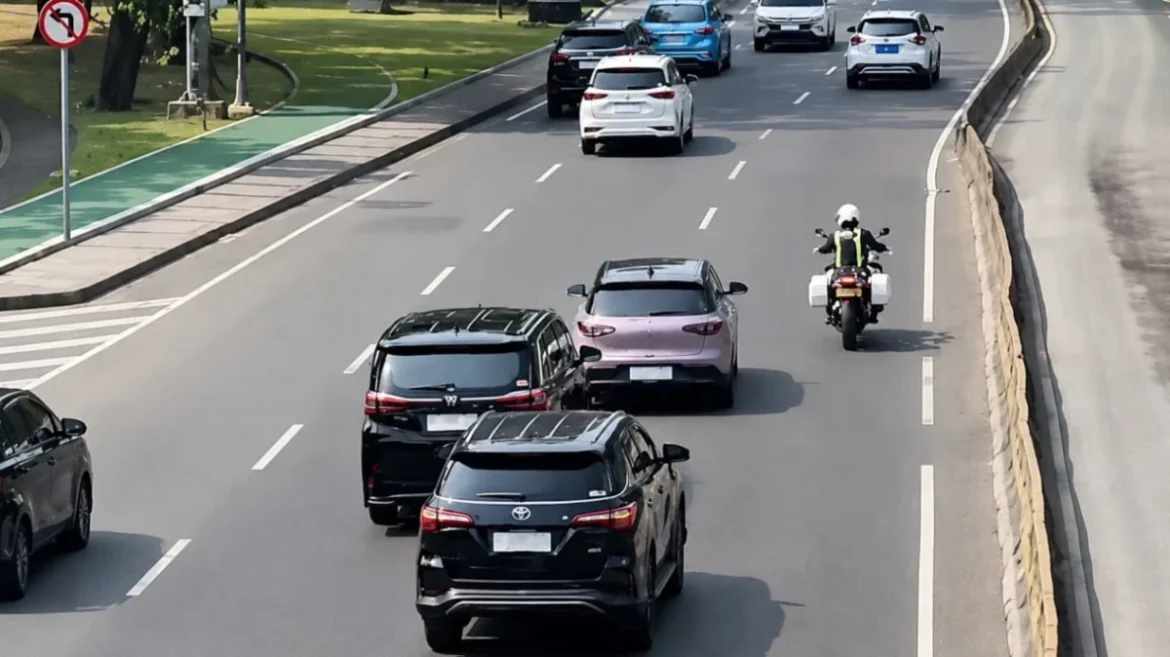
Jakarta, VIVA – July 19, 2026, 17:06 WIB – A video circulating widely on social media captured a striking scene: a pink Geely EX2 electric vehicle continuing to drive in its lane as a convoy, complete with official escorts, passed by. This seemingly mundane event, however, has ignited a significant public discussion, bringing into sharp focus the regulations and propriety surrounding the use of flashing lights (strobes) and sirens by emergency and escort vehicles on Indonesian roadways. The incident has prompted many citizens to re-examine the rules and the perceived misuse of these signals, questioning when and by whom they can be legitimately employed.
The Indonesian legal framework governing the use of emergency vehicle lights and sirens is clearly defined within existing legislation. Specifically, the use of such signaling devices is stipulated by Law Number 22 of 2009 concerning Road Traffic and Transportation, further elaborated by Government Regulation Number 55 of 2012 concerning Vehicles. These regulations aim to ensure public safety and order while granting necessary privileges to vehicles performing critical public service functions.
Decoding the Colors: A Hierarchy of Signals
Article 59 of Law Number 22 of 2009 delineates the specific types of vehicles that can be equipped with flashing lights and sirens, linking their color and accompanying audible signals to their designated functions. This classification system is designed to provide immediate visual and auditory cues to other road users about the nature and urgency of the approaching vehicle.
-
Blue Lights and Sirens: These are exclusively reserved for vehicles belonging to the Indonesian National Police (Polri). Their use signifies law enforcement activity, including pursuit, traffic control, and responding to emergencies requiring police intervention. The siren accompanying blue lights indicates an urgent need for other vehicles to yield.
-
Red Lights and Sirens: This combination is designated for a range of critical public service vehicles. It is employed by vehicles transporting detainees, convoys of the Indonesian National Armed Forces (TNI) when on official duty requiring expedited passage, fire trucks responding to emergencies, ambulances carrying patients, and vehicles providing immediate assistance at traffic accidents. The red light and siren combination communicates the highest level of urgency and the imperative for all other traffic to clear the way.

-
Yellow Lights: Unlike the blue and red lights, yellow flashing lights are primarily used as warning signals. Their application is broader and typically does not involve the use of a siren. Vehicles authorized to use yellow lights include those involved in road maintenance and cleaning, toll road patrol vehicles, vehicles monitoring traffic infrastructure, tow trucks, and those transporting special or oversized cargo that necessitates a degree of caution and awareness from other road users. The yellow light serves to alert other drivers to potential hazards or slow-moving vehicles, facilitating smoother and safer traffic flow.
Privileges on the Road: Who Has Priority?
Beyond the signaling devices, Law Number 22 of 2009, in Article 134, also establishes a hierarchy of vehicles that are granted primary rights on the road. This recognition is granted to vehicles performing essential public duties where delays could have severe consequences. This category includes:
- Firefighting vehicles actively engaged in responding to a fire.
- Ambulances transporting individuals requiring urgent medical attention.
- Vehicles involved in providing immediate aid at the scene of a traffic accident.
- Vehicles carrying leaders of Indonesian state institutions.
- Vehicles accompanying state guests.
- Funeral processions.
- And, crucially, certain vehicles under the escort of officers from the Indonesian National Police.
The presence of a pink Geely EX2, a model known for its distinctive color and electric powertrain, within or alongside an official convoy, raises questions about its inclusion and the potential for misinterpretation or misuse of signaling devices. While the video does not explicitly state the nature of the convoy or the role of the Geely EX2, its visual presence alongside official vehicles has sparked public inquiry.
Korlantas Polri’s Guidelines: Towards a More Humanized Approach
In an effort to standardize and improve the implementation of traffic escort procedures, the Traffic Corps of the Indonesian National Police (Korps Lalu Lintas or Korlantas Polri) issued technical guidelines in 2026. These guidelines aim to ensure that the use of strobes and sirens is not only lawful but also conducted in a manner that minimizes disruption and maximizes safety for all road users.
VIVA Otomotif’s review of these guidelines, as of Sunday, July 19, 2026, highlights several key directives. One of the most emphasized points is the need for the proportional use of strobes and sirens. This means employing these signals only when absolutely necessary and avoiding their continuous or excessive use. Furthermore, escorts are instructed to refrain from performing maneuvers that could endanger other road users, such as sudden braking or aggressive lane changes. The guidelines also stress the importance of adopting a more "humanistic approach" when requesting priority on the road. This suggests a shift towards clearer communication and less intimidating tactics, fostering a sense of cooperation rather than confrontation with the general public.
The Viral Phenomenon and Public Scrutiny
The viral video of the pink Geely EX2 has become a catalyst for public discourse. While the specific circumstances surrounding the vehicle’s presence in the convoy remain unclear, the visual has resonated with a segment of the population that has, perhaps, witnessed or experienced instances where emergency vehicle signals were used inappropriately. Such instances can range from routine travel with lights and sirens activated unnecessarily to more egregious cases of misuse by unauthorized individuals or vehicles.

The public’s reaction, as observed in social media comments, often oscillates between curiosity, mild annoyance, and genuine concern. Many users have expressed a desire for greater transparency and accountability in the use of these powerful signaling tools. The pink Geely EX2, by its very non-traditional appearance in such a context, has inadvertently become a symbol for these broader concerns.
Data and Precedents: Understanding the Scope of the Issue
While specific statistics on the misuse of strobes and sirens in Indonesia are not readily available in the public domain, anecdotal evidence and online discussions suggest it is a recurring issue. In neighboring countries, similar debates have led to stricter enforcement and public awareness campaigns. For example, in Singapore, the Land Transport Authority (LTA) clearly defines the authorized use of flashing lights and sirens, and violations can result in penalties. While Indonesia’s legal framework is in place, its enforcement and public perception are areas that can always be improved.
The increasing number of vehicles on Indonesian roads, coupled with a growing awareness of traffic laws and citizen rights, naturally leads to heightened scrutiny of official actions and privileges. The proliferation of dashcam footage and social media platforms provides a powerful tool for citizens to document and share their observations, thereby holding authorities and other road users accountable.
Broader Implications: Balancing Urgency with Public Order
The incident involving the pink Geely EX2, while specific, touches upon a broader societal tension: the balance between the necessity of granting priority to emergency and official vehicles and the need to maintain public order and prevent the abuse of power.
- Public Trust: The perceived misuse of strobes and sirens can erode public trust in law enforcement and other official bodies. When citizens witness these signals being used without a clear justification, it can lead to cynicism and a sense of unfairness.
- Safety Concerns: Inappropriate use of sirens and strobes can create confusion and panic among other drivers, potentially leading to accidents. The element of surprise, when not warranted, can be as dangerous as a lack of warning when it is needed.
- Rule of Law: The consistent and lawful application of traffic regulations is fundamental to the rule of law. When regulations regarding emergency vehicle signals are not adhered to, it can create a perception that certain individuals or groups are above the law.
- Technological Advancement: The rise of electric vehicles like the Geely EX2, with their often quiet operation, adds another layer to the discussion. While this particular incident involved lights and sirens, the future may see discussions about how new vehicle technologies interact with existing traffic management systems and regulations.
The Korlantas Polri’s emphasis on proportionality and a humanistic approach in their 2026 guidelines is a positive step towards addressing these concerns. Continued public education campaigns, coupled with robust enforcement of the existing laws, will be crucial in ensuring that the privileges granted to certain vehicles are used responsibly and for the intended purpose of public safety and service. The viral video, while perhaps unintended in its consequence, has served as a valuable reminder of the importance of these principles in maintaining a safe and orderly road environment for everyone.