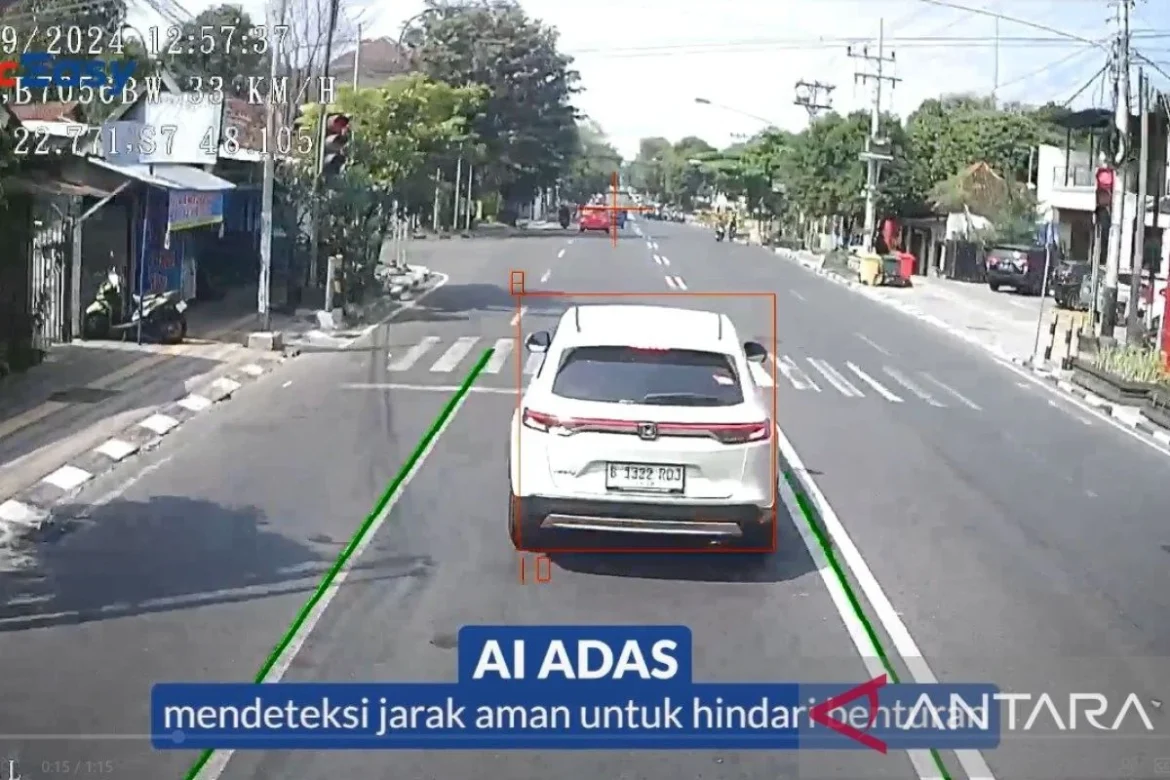
The global automotive landscape is undergoing a profound structural transformation, shifting its primary focus from conventional performance metrics, cabin luxury, and infotainment dimensions toward proactive, intelligent safety architectures. In contemporary vehicle manufacturing, the integration of Advanced Driver Assistance Systems (ADAS) has transitioned from an exclusive luxury add-on found only in high-end flagship models to a baseline expectation across mass-market vehicles. This paradigm shift is driven by a convergence of stricter international regulatory frameworks, rapid advancements in sensor and artificial intelligence technologies, and an intensifying competitive race among global automakers striving to capture safety-conscious consumers.
At its core, ADAS represents an intricate network of electronic technologies engineered to assist drivers throughout the driving lifecycle. By leveraging sophisticated suites of optical cameras, high-frequency radars, ultrasonic sonars, and increasingly advanced LiDAR systems, modern vehicles can continuously scan, interpret, and react to their surrounding environments. These systems synthesize real-time data to issue visual, auditory, or haptic warnings, and in critical scenarios, execute automated physical interventions such as emergency braking or steering corrections. Prominent features such as Forward Collision Warning (FCW), Automatic Emergency Braking (AEB), Lane Keeping Assist (LKA), Adaptive Cruise Control (ACC), and Blind Spot Monitoring (BSM) have become standard terminology for modern car buyers. However, despite these sweeping technological leaps, regulatory bodies worldwide maintain a unified stance: ADAS does not equal autonomous driving, and the ultimate legal and operational responsibility remains firmly with the human behind the wheel.
Regulatory Pressures and the 2026 Euro NCAP Protocol Shift
A major catalyst accelerating the widespread adoption of ADAS is the continuous evolution of vehicle safety testing standards on a global scale. Regulatory agencies and independent safety organizations are steadily raising the bar, shifting their evaluation methodologies from passive safety—how well a car protects its occupants during a collision—to active safety, which measures a vehicle’s capability to prevent accidents from occurring altogether.
A milestone in this regulatory evolution is the implementation of the updated Euro NCAP testing protocols. Designed to rigorously challenge modern automotive engineering, these protocols place unprecedented emphasis on active safety systems and driver assistance technologies. Under the expanded framework, systems like Autonomous Emergency Braking and Lane Support are subjected to vastly more complex scenarios that closely replicate chaotic real-world driving environments. These tests now explicitly evaluate how well a vehicle interacts with vulnerable road users, including pedestrians, cyclists, and motorcyclists, across a multitude of lighting and weather conditions.
Furthermore, Euro NCAP has integrated multi-sensor fusion data—combining cameras, radar, and LiDAR—into its testing benchmarks, particularly when evaluating speed assistance technologies in real-world traffic. This aggressive tightening of safety standards has forced automotive manufacturers to fast-track the integration of high-performance ADAS technologies into their production lines, turning compliance into a make-or-break factor for market viability.
Technological Anatomy: How Modern Sensors Empower ADAS
The operational success of ADAS relies entirely on the sophistication of its hardware and software ecosystem. Modern vehicles function as rolling supercomputers, processing gigabytes of sensor data every second to map their surroundings and make split-second driving decisions.
Cameras serve as the primary visual cortex of the vehicle, responsible for recognizing lane markings, reading traffic signs, detecting pedestrians, and identifying color-coded traffic signals. Meanwhile, radar systems excel in adverse weather conditions where optical visibility is compromised, utilizing radio waves to calculate the precise distance, trajectory, and velocity of surrounding vehicles, even at high speeds. To bridge the gap in complex environments, high-end systems increasingly incorporate LiDAR, using laser pulses to generate high-resolution 3D maps of the vehicle’s environment in real time.
This sensor fusion is exemplified by recent industry milestones. Demonstrating the global democratization of high-tier safety technology, Euro NCAP’s rigorous evaluation cycles highlighted vehicles equipped with state-of-the-art sensor arrays achieving top-tier safety ratings. The competitive push to secure five-star ratings has incentivized manufacturers to deploy advanced sensor suites even in compact and affordable vehicle segments, fundamentally altering the baseline expectation of automotive safety.
Mitigating Human Error: The Core Benefits of ADAS
The fundamental justification for the proliferation of ADAS lies in its proven ability to mitigate the primary cause of traffic accidents: human error. Statistics compiled by transportation safety authorities consistently show that the vast majority of collisions stem from driver distraction, fatigue, delayed reaction times, or compromised situational awareness.
-
Collision Mitigation and Avoidance: Features like Automatic Emergency Braking act as a crucial final safety net. When sensors detect an imminent collision and register that the driver has failed to apply adequate braking pressure, the system initiates autonomous deceleration to either prevent the crash entirely or significantly mitigate the kinetic energy of the impact. Similarly, Forward Collision Warning systems provide early acoustic and visual alerts, buying precious milliseconds for human corrective action.
-
Alleviating Driver Fatigue on Long Journeys: Long-distance driving inherently degrades human concentration over time. Adaptive Cruise Control helps combat driver fatigue by automatically modulating vehicle speed to maintain a safe, pre-set following distance from the vehicle ahead. Complementary technologies like Lane Centering Assistance reduce the physical and mental toll of micro-steering adjustments required during extended highway transit.
-
Bridging Visibility Gaps: Blind spots represent a persistent hazard during lane changes in congested traffic. Blind Spot Monitoring systems continuously survey hard-to-see lateral zones, illuminating warning indicators on side mirrors when an adjacent vehicle is present. Advanced iterations, known as Blind Spot Intervention, can actively apply gentle steering torque or differential braking to deter a driver from executing an unsafe lane change into an occupied space.
The Autonomous Illusion: Understanding the Limits of Driver Assistance
Despite the marvels of modern engineering, transportation authorities—including the U.S. National Highway Traffic Safety Administration (NHTSA)—have continually issued strong reminders regarding the operational boundaries of ADAS. Misconceptions surrounding the capabilities of these systems remain a significant safety hazard.
NHTSA categorizes driving automation into distinct tiers. Systems falling under Level 1 and Level 2—which encompass the vast majority of consumer-facing ADAS technologies on the market today—are classified strictly as driver assistance systems rather than automated driving systems. Under Level 1, the vehicle may independently control either steering or acceleration/braking, but not both simultaneously. Under Level 2, the vehicle can handle both longitudinal and lateral control concurrently—combining adaptive cruise control and lane centering—but the human operator must maintain continuous supervision and remain fully engaged with the driving task at all times.
Industry analysts emphasize that terms such as "semi-autonomous" or "self-driving" are frequently misconstrued by consumers, leading to dangerous over-reliance. Environmental factors such as torrential rain, heavy snow, faded lane markings, glare from direct sunlight, or obstructed camera lenses can temporarily degrade or completely disable ADAS sensors. Consequently, the industry heavily stresses that human oversight is irreplaceable; ADAS functions strictly as an intelligent co-pilot, not an autopilot.
Market Dynamics and Industry Competitiveness
As safety technologies become central to purchasing decisions, the automotive marketplace has evolved into a fiercely competitive arena. Automakers can no longer rely solely on horsepower, fuel economy, or interior aesthetics to differentiate their products. Active safety ratings and the sophistication of onboard driver assistance suites have emerged as decisive commercial differentiators.
This dynamic has leveled the playing field, allowing emerging global automotive players to challenge established legacy brands by offering comprehensive, high-value safety packages as standard equipment. The successful deployment of advanced safety systems across diverse vehicle segments illustrates a broader industry trend: the democratization of high-tech safety.
Ultimately, the widespread integration of Advanced Driver Assistance Systems marks a permanent, forward-looking evolution in automotive engineering. By synergizing cutting-edge sensor technology with rigorous regulatory benchmarks, the modern automobile is transforming from a passive metal shell into an active partner in human mobility. While technology continues to expand its capacity to protect, the ultimate responsibility for road safety remains anchored behind the steering wheel, reinforcing the principle that the most effective safety feature in any vehicle remains an attentive and focused driver.