
Jakarta, VIVA – A comprehensive survey conducted by the Center of Economic and Law Studies (Celios) has cast a critical spotlight on the performance of President Prabowo Subianto’s cabinet after its first year in office, identifying Minister of Energy and Mineral Resources (ESDM) Bahlil Lahadalia as the minister with the lowest approval ratings from both public respondents and expert judgment. The findings, released on Tuesday, October 21, 2025, have initiated a fresh wave of discussions concerning government accountability and public perception of key ministerial portfolios.
The survey, meticulously carried out by Celios, a prominent independent research institution known for its focus on economic and legal policy analysis, positioned Minister Bahlil Lahadalia at the bottom of the ministerial performance index. According to the public survey segment, Minister Bahlil garnered a deeply negative score of -1320, signaling significant dissatisfaction among the general populace. This sentiment was further echoed in the expert judgment segment, where he received a score of -151, indicating a consensus among specialists regarding his perceived underperformance. The stark figures underscore a critical juncture for the Ministry of Energy and Mineral Resources, a sector pivotal to Indonesia’s economic growth and sustainable development.
Contextualizing President Prabowo’s Administration’s First Year
The survey’s timing is particularly salient, marking approximately one year since President Prabowo Subianto and Vice President Gibran Rakabuming Raka officially assumed office following their inauguration in October 2024. The initial year of any new administration is often a period of intense scrutiny, as the government establishes its policy direction, implements its agenda, and navigates the myriad challenges inherited or newly emerging. Public and expert evaluations during this phase are crucial indicators of the government’s perceived effectiveness and its ability to deliver on campaign promises. The Prabowo-Gibran administration, having campaigned on a platform of continuity and accelerated development, faces the challenge of managing public expectations while addressing complex issues ranging from economic stability to social welfare and environmental sustainability. Minister Bahlil Lahadalia’s portfolio, the Ministry of Energy and Mineral Resources, is at the forefront of several such critical national agendas, including the ambitious energy transition, sustainable management of natural resources, and attracting investment in key strategic sectors.
Celios Survey: Delving into the Data and Methodology
The Celios survey, which gathered data between October 2 and October 17, 2025, employed a robust methodology designed to capture a broad spectrum of public opinion. A total of 1,338 general public respondents participated, meticulously selected from diverse geographical and socioeconomic backgrounds, encompassing rural areas, suburban fringes, and bustling urban centers across Indonesia. This wide reach aimed to ensure a representative sample reflecting the varied experiences and perceptions of the Indonesian populace.
The data collection was primarily conducted digitally, utilizing target-based advertisements on popular social media platforms such as Facebook and Instagram. While this method offers advantages in terms of reach and cost-efficiency, particularly in a digitally connected nation like Indonesia, it also carries potential limitations, such as the digital divide and the possibility of self-selection bias among respondents active on these platforms. Nevertheless, Celios, as a reputable research body, is expected to have employed statistical adjustments and validation techniques to mitigate such biases and ensure the reliability of its findings. The inclusion of an "expert judgment" component further strengthens the survey’s credibility, providing a comparative perspective from individuals with deep knowledge and experience in relevant policy domains. The consistently negative scores for Minister Bahlil across both public and expert evaluations suggest a widespread and informed perception of underperformance in his ministry.
Minister Bahlil’s Response and Defense

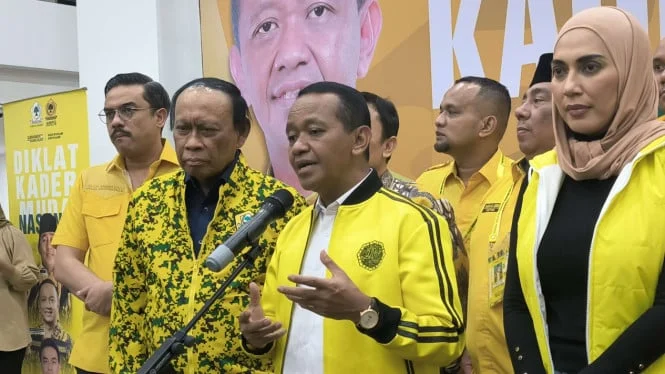
In response to the damning survey results, Minister Bahlil Lahadalia, when questioned at the DPP Partai Golkar headquarters in Jakarta, maintained a cautious stance. "I haven’t read it yet, I’ll read it first," he stated, as quoted on Tuesday, October 21, 2025. Despite not having reviewed the specifics of the Celios report, the Minister expressed confidence in his performance during the first year of President Prabowo’s administration. "Everything is good, everything is good," he asserted, suggesting a discrepancy between his self-assessment and the survey’s findings.
This reaction is not uncommon among public officials facing critical evaluations. It often reflects a combination of strategic deflection, a genuine belief in one’s efforts, or a desire to project stability and competence. However, in a system increasingly reliant on public accountability and data-driven policy-making, dismissing or downplaying such survey results without thorough examination could potentially undermine public trust and signal a lack of responsiveness to public sentiment. Political analysts suggest that a more proactive approach, involving a detailed review of the survey and an articulated plan to address identified shortcomings, might serve to bolster confidence in the ministry’s leadership.
Challenges in the Energy and Mineral Resources Sector
The Ministry of Energy and Mineral Resources (ESDM) is arguably one of Indonesia’s most critical and complex portfolios, grappling with a multitude of challenges that could contribute to public and expert dissatisfaction. Key areas of concern often include:
- Energy Transition: Indonesia has committed to ambitious renewable energy targets and a significant reduction in carbon emissions. Progress in shifting away from fossil fuels, developing geothermal, solar, and hydro power, and attracting green investments has been a subject of ongoing debate. Perceived slowness or policy inconsistencies in this transition could weigh heavily on public opinion, especially given the global focus on climate change.
- Mining Governance and Regulation: The mining sector, a cornerstone of Indonesia’s economy, is frequently mired in issues related to environmental degradation, land disputes, illegal mining, and the equitable distribution of resource wealth. Policies concerning mining permits, concessions, and the oversight of mining operations are under constant public scrutiny. Any perceived lack of transparency, effective enforcement, or fairness in these regulations could lead to significant public discontent. The recent discourse around potential changes allowing religious organizations to manage mining concessions, while outside the survey’s immediate timeframe (as per the linked article from July 2026), illustrates the kind of high-stakes policy decisions and potential controversies that often characterize the ESDM sector.
- Investment Climate: Attracting foreign and domestic investment into the energy and mineral sectors is crucial for growth. Bureaucratic hurdles, policy uncertainty, and perceived corruption can deter investors, impacting job creation and economic development.
- Oil and Gas Production: Maintaining and increasing oil and gas production to meet domestic demand and reduce reliance on imports remains a significant challenge, requiring substantial investment in exploration and new technologies.
- Electricity Access and Affordability: Ensuring universal access to affordable and reliable electricity, particularly in remote areas, is a fundamental government responsibility. Failures in this regard can directly impact daily lives and economic activities.
- Environmental Concerns: The extractive industries under the ESDM ministry’s purview often have significant environmental footprints. Balancing economic development with environmental protection is a delicate act, and any perceived bias towards industry at the expense of environmental safeguards can fuel public outrage.
Any combination of these factors, or specific policy decisions made by the ministry, could have contributed to the negative perception captured by the Celios survey.
Other Ministers Under Scrutiny
Beyond Minister Bahlil Lahadalia, the Celios survey also highlighted several other ministers with significantly low performance scores, indicating broader areas of public dissatisfaction within the administration:
- Natalius Pigai (Minister of Human Rights – HAM): Scoring -346, Minister Pigai’s low rating likely reflects ongoing concerns regarding human rights issues in Indonesia, particularly in regions like Papua, and the government’s perceived effectiveness in addressing violations, promoting civil liberties, and ensuring justice. The human rights portfolio often attracts intense scrutiny from civil society organizations and international bodies.
- Zulkifli Hasan (Coordinating Minister for Food – Menko Pangan): With a score of -253, Minister Zulkifli Hasan’s performance assessment points to challenges in the critical food sector. Issues such as food price stability, national food security, agricultural productivity, and the distribution of staple goods are perennial concerns for Indonesian households. Fluctuations in prices, particularly for essential commodities, or perceived failures in ensuring adequate supply, can quickly erode public confidence.
- Widiyanti Putri Wardhana (Minister of Tourism): Receiving a score of -180, Minister Widiyanti Putri Wardhana’s rating suggests difficulties in revitalizing or developing the tourism sector. While tourism is a major contributor to Indonesia’s economy, it has faced numerous challenges, including infrastructure development, promotion strategies, environmental sustainability of tourist destinations, and potentially the lingering effects of global travel uncertainties.
- Fadli Zon (Minister of Culture): With a score of -170, Minister Fadli Zon’s assessment indicates concerns within the cultural domain. This could relate to policies on cultural preservation, promotion of Indonesian arts and heritage, support for artists and cultural institutions, or the integration of cultural values into national development. The cultural sector often involves nuanced discussions about national identity and heritage, making it susceptible to varying public opinions.
The collective low scores across these diverse ministries suggest that the Prabowo administration may be facing challenges in multiple key sectors, not just energy and mineral resources.
The Broader Implications for Governance and Public Trust

The findings of the Celios survey carry significant implications for the Prabowo administration’s trajectory. First and foremost, they serve as a critical feedback mechanism, highlighting areas where government performance is perceived to be falling short of public expectations. Such data can inform internal evaluations, potentially leading to policy adjustments, strategic reorientations, or even cabinet reshuffles in the future.
For Minister Bahlil Lahadalia, the lowest ranking is a direct challenge to his leadership and could intensify calls for greater transparency and effectiveness within the ESDM ministry. The public and experts will likely scrutinize upcoming policy decisions and initiatives from his ministry with renewed skepticism.
More broadly, the survey results underscore the importance of accountability in a democratic system. Independent research institutions like Celios play a vital role in holding public officials to account and fostering informed public discourse. When ministers are perceived to underperform, it can erode public trust in the government’s ability to deliver on its mandate, potentially affecting future electoral prospects and the overall stability of the political landscape.
The Role of Independent Polling in a Democratic Society
The Celios survey exemplifies the crucial function of independent polling and research in a vibrant democracy. By providing objective, data-driven assessments of government performance, such institutions contribute to:
- Transparency: Making government actions and their outcomes visible to the public.
- Accountability: Holding elected and appointed officials responsible for their duties.
- Informed Discourse: Equipping citizens, media, and civil society with information to engage constructively with policy discussions.
- Policy Improvement: Offering valuable insights that can guide policy adjustments and improve governance.
While government officials may sometimes dispute survey findings, their existence and widespread dissemination are vital for maintaining a healthy checks-and-balances system.
Looking Ahead: Potential Responses and Future Dynamics
The Celios survey’s revelations will undoubtedly prompt various reactions. The Presidential Palace may choose to acknowledge the findings and reiterate its commitment to improving ministerial performance, or it might downplay the significance of the survey. For the ministers directly implicated, particularly Minister Bahlil, the pressure to demonstrate tangible improvements in their respective sectors will intensify. This could manifest in more aggressive policy implementations, increased public engagement, or a re-evaluation of current strategies.
The political landscape will also be influenced. Discussions within political parties, particularly Golkar, where Bahlil holds a prominent position (Ketua Umum Partai Golkar, or Chairman of the Golkar Party), may arise concerning the implications of these ratings for the party’s image and future political alignments. As the Prabowo administration moves beyond its first year, the ability to address these public concerns effectively will be crucial for solidifying its mandate and navigating the remaining years of its term. The Celios survey serves as a potent reminder that in a democracy, public opinion is a powerful force that continuously shapes the narrative of governance and the destiny of political leaders.
