
Robert Pattinson has openly shared his profound enjoyment in portraying antagonists, a sentiment particularly evident in his recent work as Antinous in Christopher Nolan’s highly anticipated film, "The Odyssey." The actor revealed his strategy for inhabiting such characters: to deliberately manage audience expectations before delivering a performance that transcends those initial perceptions. This approach, he stated, allows him to surprise and captivate viewers, a method he finds immensely satisfying.
"I love it. I love lowering people’s expectations. That’s always been my favorite thing, it’s always been the best place for me," Pattinson confided in an interview with People on July 10th. He elaborated on his personal mantra: "Don’t promise too much upfront, but deliver far better – that’s my motto." This philosophy appears to be a guiding principle for his career choices, particularly when stepping into complex and often morally ambiguous characterizations.
The acclaimed actor’s portrayal of Antinous, a suitor vying for Penelope’s hand and seeking to usurp Odysseus’s throne in "The Odyssey," is a departure from some of his more heroic roles. Despite the character’s ruthless ambition and political machinations, Pattinson offered a surprisingly nuanced perspective, describing his interpretation of Antinous as a unique form of romance. He confessed to a degree of personal amusement and even slight apprehension about how his portrayal might be received.
"It’s actually funny. I think Antinous doesn’t seem that bad. I’m a little worried now. Maybe if I watch it with an audience, I’ll be horrified," Pattinson shared with TODAY. However, his solitary viewing experience led him to a more pragmatic view: "But because I watched it alone, I was thinking, ‘He’s just a regular guy.’" This internal dialogue highlights the actor’s dedication to understanding his characters from various angles, even if it means finding common ground with individuals whose actions are objectively villainous.
Beyond the psychological intricacies of his role, Pattinson also delved into the visual and stylistic elements that define Antinous, particularly the character’s inherent sense of privilege and allure. He collaborated closely with the film’s costume department to ensure that every garment, down to the undergarments, exuded an aura of wealth and elevated status.
"Not long after I read the script, I was like, ‘I want to have cheetah-print underwear.’ I thought Antinous was the type of guy who would be like that. He has a kind of sensuality about him, ‘I just like gratification,’" Pattinson explained, a smile evident in his voice. He further elaborated on the sartorial choices, stating, "And because of that, I thought he’d want to have the most luxurious underwear he could get." He acknowledged the perceived absurdity of such a detail, yet emphasized its importance in his process: "It sounds ridiculous, but it’s my job to think like that." This meticulous attention to detail underscores Pattinson’s commitment to fully embodying his characters, from their inner motivations to their outward presentation.
The Odyssey: A Nolan Retelling and Pattinson’s Antinous
Christopher Nolan’s "The Odyssey" is positioned as a highly anticipated cinematic event, reimagining the ancient Greek epic for a modern audience. While details surrounding Nolan’s specific interpretation remain largely under wraps, the involvement of Pattinson as Antinous suggests a focus on the complex interpersonal dynamics and political intrigue that characterize the original myth. The epic poem, attributed to Homer, chronicles the arduous ten-year journey of Odysseus, King of Ithaca, as he attempts to return home after the Trojan War. During his prolonged absence, his palace is overrun by a multitude of suitors vying for his wife Penelope’s hand and his kingdom. Antinous is consistently depicted as the most arrogant and aggressive of these suitors, often leading their disruptive behavior.
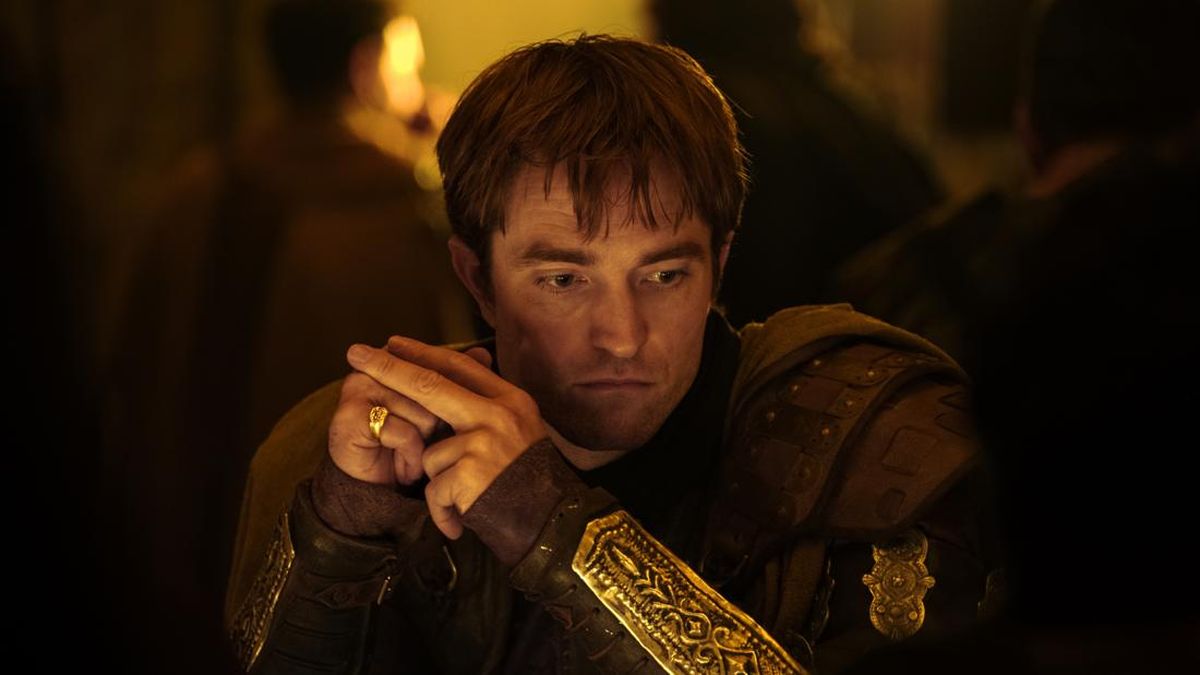
Pattinson’s performance as Antinous, therefore, carries significant weight. His character is central to the dramatic tension of Odysseus’s protracted absence and Penelope’s struggle to maintain her sovereignty. By embracing the villainous aspects of Antinous, Pattinson is not merely playing a stock antagonist but exploring the motivations and psychological landscape of a character driven by entitlement and ambition. This approach aligns with Nolan’s known penchant for exploring flawed characters and morally ambiguous narratives, suggesting that "The Odyssey" will likely offer a fresh and complex perspective on the timeless tale.
A Pattern of Antagonism: Pattinson’s Villainous Turn in "Dune: Part Three"
"The Odyssey" is not the sole project where audiences will witness Robert Pattinson embracing an antagonistic persona. He is also set to reprise his role as a villain in the upcoming "Dune: Part Three." In Denis Villeneuve’s expansive science fiction saga, Pattinson portrays Scytale, a character with formidable shapeshifting abilities. Scytale is slated to play a pivotal role in a plot to depose Paul Atreides, portrayed by Timothée Chalamet, from his position as emperor of the known universe.
The character of Scytale, a member of the Bene Gesserit sisterhood, presents a different kind of villainy compared to Antinous. The Bene Gesserit are known for their intricate political maneuvering, long-term genetic planning, and subtle manipulation of galactic events. Scytale’s shapeshifting powers add an element of direct threat and unpredictability to his antagonism. This dual engagement in villainous roles across different genres and directorial visions—Nolan’s grand epic and Villeneuve’s intricate sci-fi world-building—indicates a conscious career move by Pattinson towards exploring the darker facets of character.
Thematic Resonance: Why Actors Embrace Villainy
The appeal of playing villains for actors is multifaceted. Psychologically, antagonists often provide a broader canvas for emotional exploration, allowing actors to delve into darker impulses, moral complexities, and extreme behaviors that might be less accessible in heroic roles. The freedom to explore the "bad" aspects of human nature can be creatively liberating and intellectually stimulating.
From a narrative perspective, villains are frequently the engine of conflict. Their desires, actions, and opposition to the protagonist drive the plot forward and create dramatic tension. Actors portraying these roles often have access to some of the most compelling dialogue and impactful scenes. Furthermore, as Pattinson himself noted, playing a villain allows for a deliberate subversion of audience expectations. This can lead to memorable and surprising performances that redefine an actor’s range and capabilities in the eyes of critics and the public alike.
The allure of villainy can also extend to the visual and thematic presentation. Costuming, production design, and directorial style can amplify the impact of a villain, imbuing them with a distinctive presence that lingers long after the film has ended. Pattinson’s focus on Antinous’s luxurious undergarments, for instance, exemplifies how even seemingly minor details can contribute to the overall construction of a memorable villainous character.
Broader Implications for Pattinson’s Career Trajectory
Robert Pattinson’s recent career choices, particularly his embrace of complex and often villainous characters in major studio productions, signal a deliberate evolution beyond his earlier, more romanticized roles. His work in films like "The Lighthouse," "Tenet," and his upcoming turns in "The Odyssey" and "Dune: Part Three" demonstrate a commitment to challenging himself artistically and engaging with demanding directorial visions.
This strategic shift has been met with critical acclaim, solidifying his reputation as a versatile and serious actor capable of inhabiting a wide spectrum of characters. By consistently seeking out roles that push his boundaries and offer substantial character development, Pattinson is not only expanding his acting repertoire but also cementing his status as one of the most compelling performers of his generation. His ability to find both personal enjoyment and critical success in portraying antagonists suggests a discerning eye for compelling narratives and a profound understanding of character archetypes. The anticipation for "The Odyssey" and "Dune: Part Three" is further amplified by the knowledge that Pattinson will be bringing his unique brand of intensity and nuance to these pivotal villainous roles.
